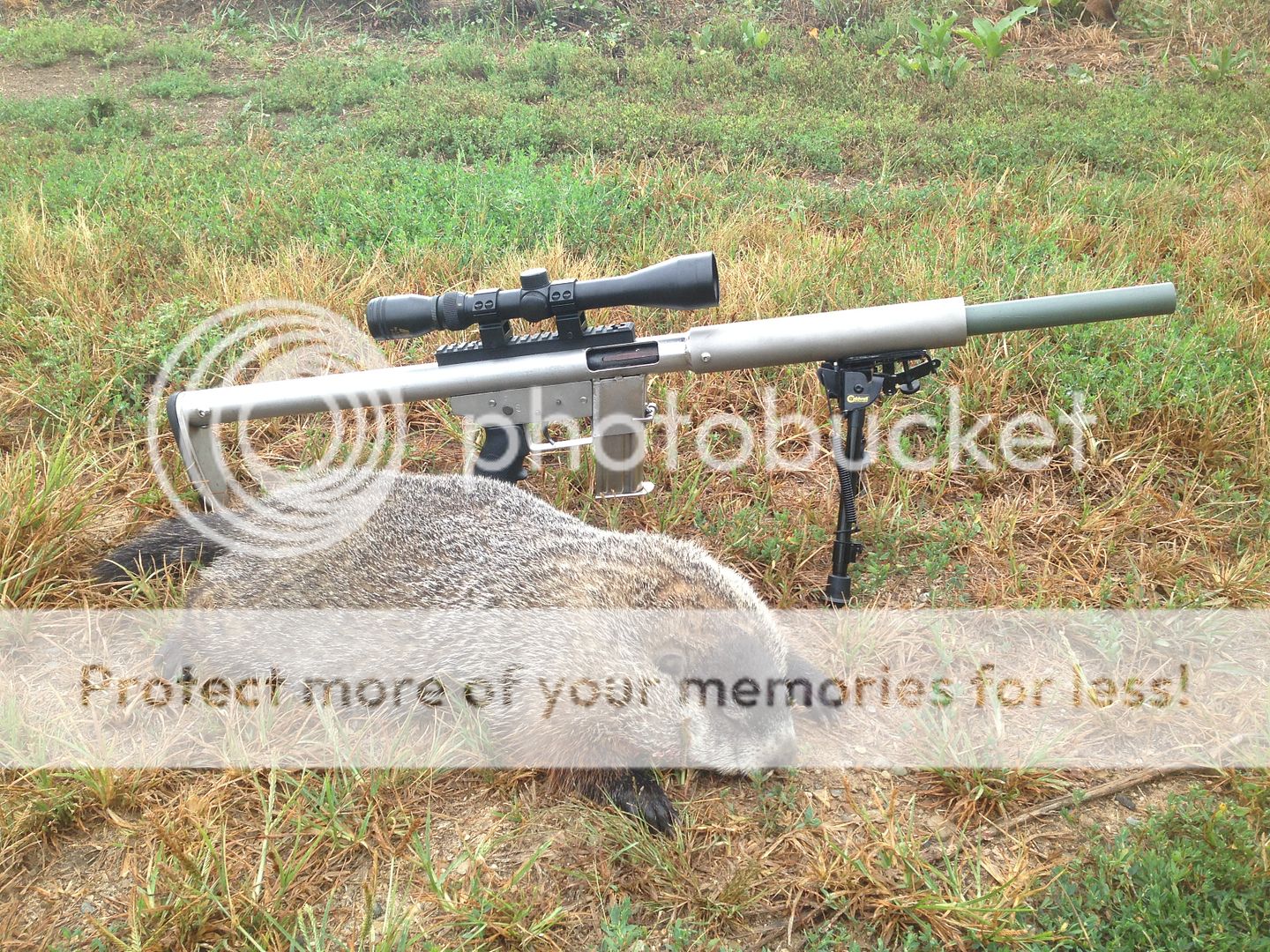
Earlier this summer, I rebarreled an older Savage Axis with a 26" Shilen select match barrel in 6x45. I started load development for the new barrel with N133 and got predictable results - with an 87 grain v-max, I was getting 2685fps average with 22 grains of N133. However, when I started a ladder test with 87 grain Berger VLD's and IMR 8208XBR, I started seeing some high speeds and pressure signs very early in the series. The test was 23.9 to 26.0 grains at 0.3 grain intervals (pulled from the Lee reloading book). I only got 3 shots into the series before things got too spicy for my comfort. I was getting 2818fps at 24.5 grains. The book showed a max speed of 2729 at a charge of 26 grains, but I was getting 2730 fps right out of the gates at 23.9 grains. Does anyone have any thoughts on why N133 load data is close to expected values from the book but the 8208XBR seems to be running hot?


You are using an out of date browser. It may not display this or other websites correctly.
You should upgrade or use an alternative browser.
You should upgrade or use an alternative browser.
6x45 - strange results with 8208XBR
- Thread starter cjclemens
- Start date
Widow maker 223
Well-known member
I dont have any direct answers. 8208 is not much slower than the N133. But you changed bullets in this equation. How much longer is the VDL than the V max ? I bet the longer VLD caused pressure to spike bringing up velocity, this seems to be an extreme example. What COAL are you loading them to ?

AWS
Custom Accessory Maker & Retired PM Staff
Internal ballistics are a crapshoot from any given rifle, that's why there are so many powders in the same burn rate and why we work up loads. If powders were predictable for a given cartridge there would be only one powder on the shelf for that given cartridge. If a powder gives you wonky results in your cartridge/rifle combination, abandon it.
Here's my unsolicited opinion, which some find not worth a dam or even irritating. I've been shooting shooting a 6x45 for 30+years. The heaviest bullet I've run is a 70gr Match bullet. Small capacity 6's made their bones with 75gr and under between 2800 and 3000 fps. The most accurate small capacity 6's ran with slightly more capacity than the 6x45. The 6x47 Rem, and various improved versions of it and the 6mm PPC have a proven track record 200 yards and under.
Stretching the distance became the realm of more capacity, the 6mm International (6mm-250 Sav) and now the 6XC and Creed.
The 6x45 is a wonderful LITTLE cartridge.
Good luck with it.
Here's my unsolicited opinion, which some find not worth a dam or even irritating. I've been shooting shooting a 6x45 for 30+years. The heaviest bullet I've run is a 70gr Match bullet. Small capacity 6's made their bones with 75gr and under between 2800 and 3000 fps. The most accurate small capacity 6's ran with slightly more capacity than the 6x45. The 6x47 Rem, and various improved versions of it and the 6mm PPC have a proven track record 200 yards and under.
Stretching the distance became the realm of more capacity, the 6mm International (6mm-250 Sav) and now the 6XC and Creed.
The 6x45 is a wonderful LITTLE cartridge.
Good luck with it.
The VLD is a bit longer than the v-max. I did not measure OAL on these - on this ladder test, I was looking specifically at cartridge base to ogive measurements and trying for a consistent 10 thousands of jump.I dont have any direct answers. 8208 is not much slower than the N133. But you changed bullets in this equation. How much longer is the VDL than the V max ? I bet the longer VLD caused pressure to spike bringing up velocity, this seems to be an extreme example. What COAL are you loading them to ?
Any feedback is welcome. I've been reloading for a long time but, for some reason, the learning curve has been a bit steeper for me with the 6x45. My first thought literally was that I was just pushing too hard with a relatively small capacity case and I should just be happy with the 87 v-max and N133. 2685fps is pretty respectable, given the size of the cartridge, and it's already proven it can reach out to 750 yards as long as there's little to no wind. Unfortunately, my curiosity just gets the best of me sometimes!Internal ballistics are a crapshoot from any given rifle, that's why there are so many powders in the same burn rate and why we work up loads. If powders were predictable for a given cartridge there would be only one powder on the shelf for that given cartridge. If a powder gives you wonky results in your cartridge/rifle combination, abandon it.
Here's my unsolicited opinion, which some find not worth a dam or even irritating. I've been shooting shooting a 6x45 for 30+years. The heaviest bullet I've run is a 70gr Match bullet. Small capacity 6's made their bones with 75gr and under between 2800 and 3000 fps. The most accurate small capacity 6's ran with slightly more capacity than the 6x45. The 6x47 Rem, and various improved versions of it and the 6mm PPC have a proven track record 200 yards and under.
Stretching the distance became the realm of more capacity, the 6mm International (6mm-250 Sav) and now the 6XC and Creed.
The 6x45 is a wonderful LITTLE cartridge.
Good luck with it.
Widow maker 223
Well-known member
I know the VLD is longer, it maybe a case volume thing. That length goes into the case taking up room, with the different bullet ogives. Have you tried the VLD with the N133 ?

I think the extra length is mostly outside the case. They might be a tad deeper than the V-MAX, but I basically have them as long as you can make them in a metal AICS pattern .223 magazine. I did try the 87 Berger VLD's with N133. Velocities were mild - close to the V-MAX (and book data as well), with no unexpected pressure signs. Barring some other explanation, I'm thinking maybe this might be a cumulative thing, like small case + slower powder + long barrel = excess pressure. I'm definitely open to the possibility that I'm asking too much of a relatively small case. I was just hoping for a little more speed with the 87 Bergers to help tighten things up when I'm shooting at my 750 yard target. That said, this thing has already turned out to be a sleeper, considering how it shoots with the V-Max and N133. I was just hoping to get a better understanding of what I was seeing in my ladder test with 8208XBR.I know the VLD is longer, it maybe a case volume thing. That length goes into the case taking up room, with the different bullet ogives. Have you tried the VLD with the N133 ?
OutdoorEdventure
Member
Despite velocity jump how’d it shoot? If you are achieving capable velocities and it’s accurate. Go for it.
It was a ladder test, and I didn’t get enough shots in to really find a good node. I might try one more test with it on the low end and see how it looks.Despite velocity jump how’d it shoot? If you are achieving capable velocities and it’s accurate. Go for it.

spotstalkshoot
Well-known member
I haven't loaded for the 6/45 but if you seat a longer bullet for a specific ogive length there is the possibility of case volume reduction. As in a compressed/near compressed powder charge. That can raise pressure = velocity quickly. It can happen in any cartridge with heavy for cartridge bullets.
K-22hornet.
Well-known member
Different manufacturers bullets can do that.
One has a longer bearing surface which might increase friction, which might increase pressures. Plus the 'softness' of the internal lead might come into play.
A Nosler Partition is supposed to give higher pressures due to the partition not being as pliable as the lead core.
Before Barnes added 'rings' to the 'X' bullets, they were supposed to produce higher pressures than a cup-and-core bullet
Did you change brass manufacturers between 8208 and N133?
Lot's of variables to consider.
One has a longer bearing surface which might increase friction, which might increase pressures. Plus the 'softness' of the internal lead might come into play.
A Nosler Partition is supposed to give higher pressures due to the partition not being as pliable as the lead core.
Before Barnes added 'rings' to the 'X' bullets, they were supposed to produce higher pressures than a cup-and-core bullet
Did you change brass manufacturers between 8208 and N133?
Lot's of variables to consider.