
snowcamoman
New member
I have and use quite a few of the electronic callers on the market today. I’ll go through a portion of the callers I have hunted with and try to explain what I like and do not like about each of them. I’ve purchased all of these callers, so I’m not brand loyal. I use what works and whatever doesn’t work, stays on the shelf. I like to collect callers, so I typically keep them, even if not in used for hunting. I’m not going to get into the nitty gritty specs of each caller here. There was another e-caller review done with very good information on tech details. If you do a search in Google for 2009 E-caller review, you’ll find it, should be the top link. All I can say is do your homework and read as much as possible if you feel as though you have to have a caller with x frequency response that plays CD quality sounds. If it’s that important start another thread about it so this one doesn’t get locked down instantly. Please note that I hunt in temperatures down to around -42ºF (ambient temperature, no wind). These conditions are typically far more extreme than what most hunters are willing to hunt in. The extreme cold is very tough on caller materials, batteries, and basically anything for that matter. I must have equipment that is reliable in the cold. Having to take gloves off to tinker with small pieces and screws or wires is simply asking for frost bite and misery. I also travel by snowmachine (snowmobile) around 500 to 800 miles a year with my callers strapped on the back, pounding along on tundra trails. My photos do not necessarily depict how you would receive the callers if you purchased them. I add white tape and/or paint to them to camo them up as well as camo wrap to help quiet any ringing sounds or the occasional branch that hits them while hiking in the woods. Remotes get additional items as well once I get them so they will do exactly what I want. Some companies will try to customize a caller to your liking, others will tell you not to mess with their products or you’ll void a warranty.
Somebody is bound to be offended if I slam the caller they feel is the “best”. If you’re offended, get over it. Post a question or tell us what callers you’ve used and compared to make your sound opinion. Saying so and so won a contest with Brand X means absolutely nothing in relation to what a good e-caller is, period. If you put the right guy behind a record player he’ll be able to kill animals. Every piece of electronics can have a problem. Just because Jimmy Bob’s cousin’s caller had a remote range of 2 inches, does not indicate that all products from that manufacturer are low quality. Every manufacturer will have problem products and components at some point it’s a part of working with anything electronic. Any one of them that claims otherwise is lying. How they handle it and take care of you and your purchase is important. Do your homework.
Email me at snowcamoman@gmail.com if you have questions that you feel you can’t post here.
If I receive new information from a manufacturer about this post, I’ll update and edit.
And please do not ask me for sounds, I do not send people sounds and do not appreciate being asked.
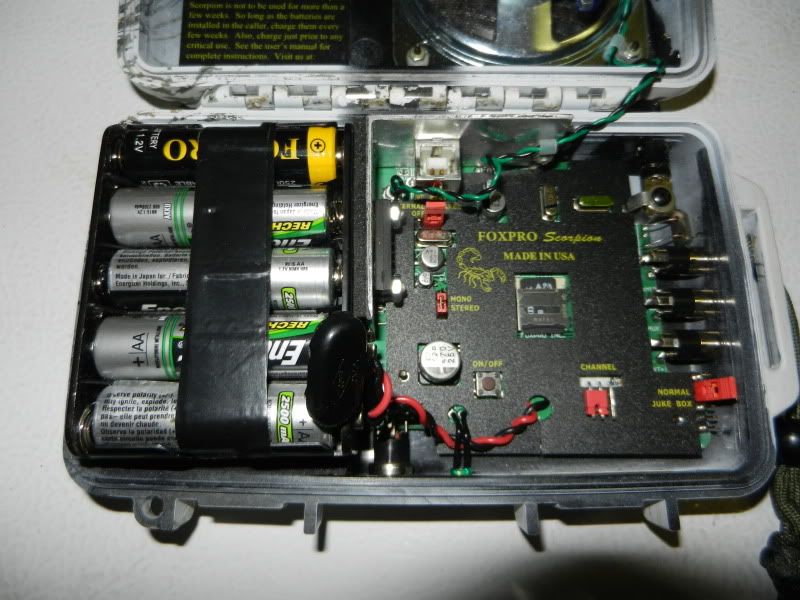
I do not have the newest models of the Minaska Ultimate One and do not know what changes have been made since I purchased mine. I’d wager the caller form and function is the same, with the possibility of maybe new circuit design. The FoxPro Scorpion was put in here just because it’s been a great little caller. FoxPro has a newer/improved Scorpion (X1B) that utilizes the same case, yet different remote and circuitry. I have several Wildlife Technologies callers on the line due to all of the questions and comments I receive from people about them and some of the differences. I was going to write this as a spec sheet type review, but didn’t. I’ll just write what is good and not so good about the callers. Ask as many questions as you want and I’ll try to give you as much information as I can. This is a small portion of the callers I own. If you have a different model and have a specific question, please ask and I’ll try to help you out.
Callers from left to right.
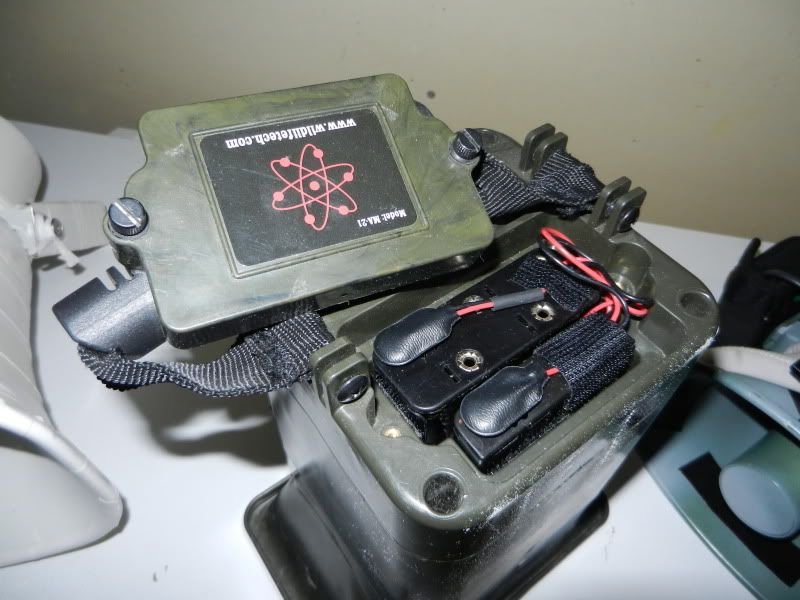
Minaska Ultimate One, WT KAS2030 (Original 2030 model, circa 2005/2006), WT MA-21, WT KAS2030MS (circa 2009), FoxPro Scorpion (front), FoxPro CS-24
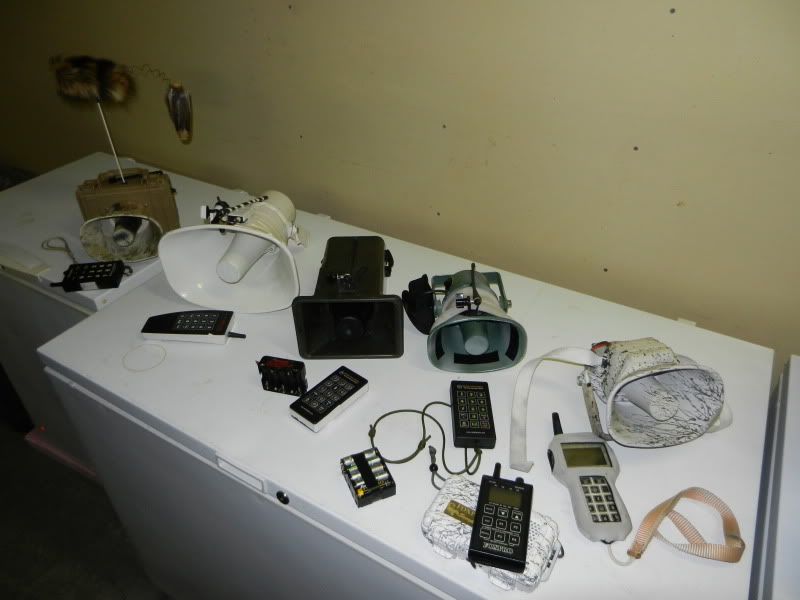
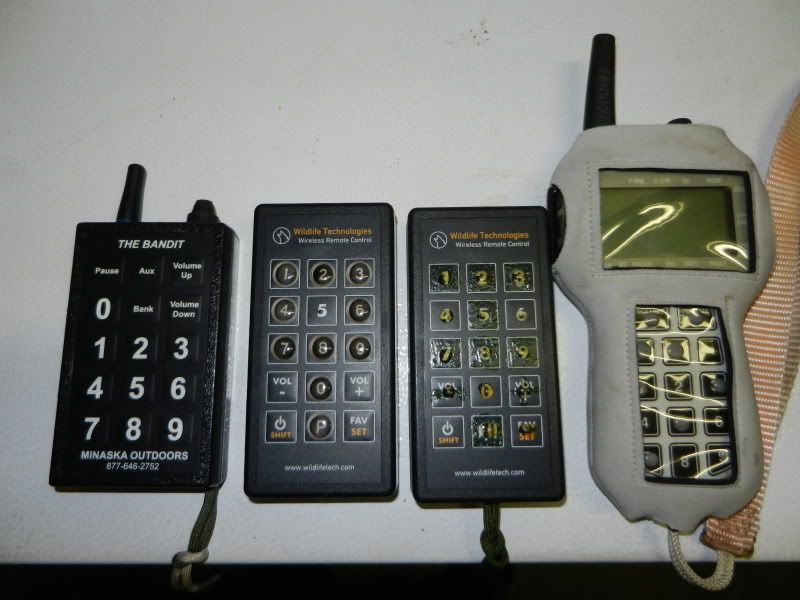
Remotes from left to right.
Minaska UO, WT 2030MS, MA-21, FoxPro TX500
#1 E-caller
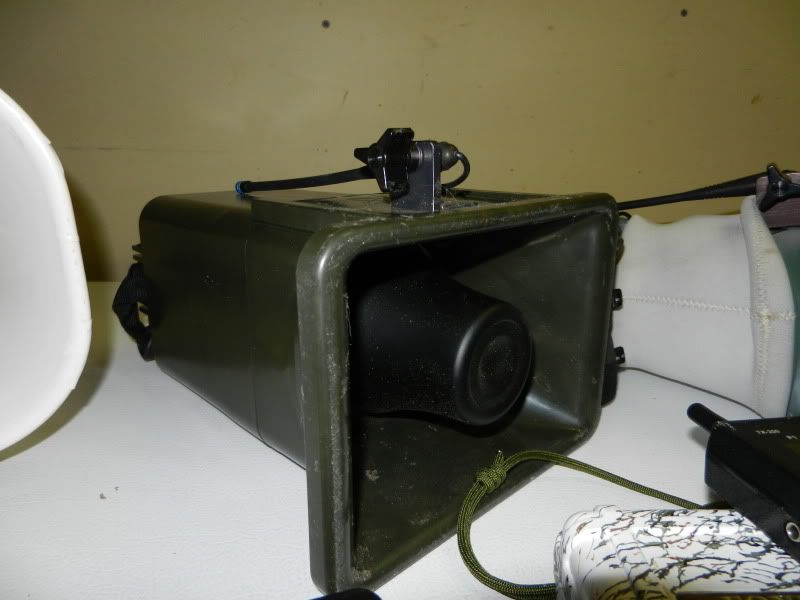
The best caller on the market in MY opinion is the FoxPro CS-24, customized to my specs. My specs simply include dual external power jacks. I had my caller made like this so I can run dual packs, and so I can quickly remove my battery and wires in the field. I use 14.8 Li-Ion battery packs with the CS-24. FoxPro made me some custom 90 degree fittings with heavy duty arctic wires so that they lay flatter to the TOA speaker cap. This caller is almost indestructible. I have some straps mounted around the caller for even quicker attachment to the cam lock buckles installed on my snowmachine.
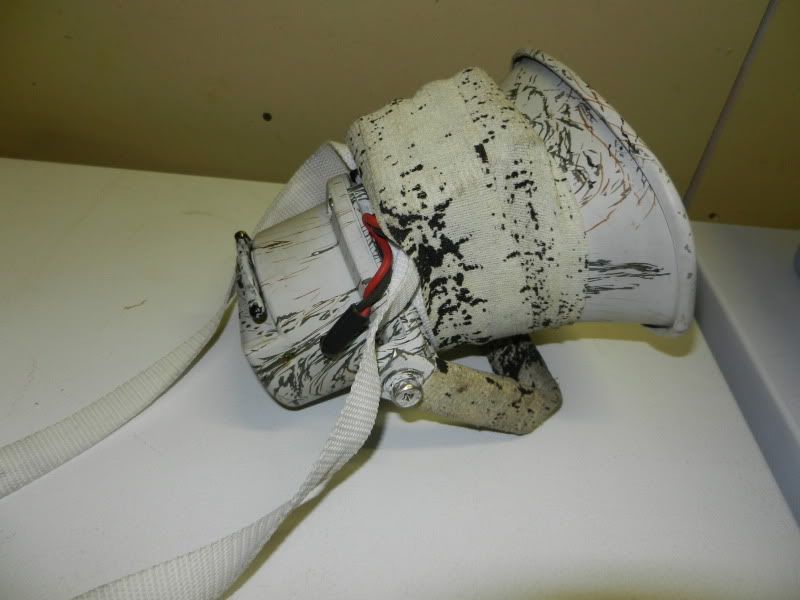
The caller has plenty of volume and has been 100% reliable for me. It’s light, tough, and just works outstanding. As is, my CS-24 weighs right at 2 pounds 11 oz. It’s programmable and I have ton of JS, WT, Minaska, FoxPro and everything else on it. I would never own a non-programmable caller in this day and age, plain and simple. At -40, I like to simply push a single button and let my 15 minute custom sound sequences do the work for me. The remote screen can be very sluggish in the cold with the LCD screen. The buttons all work fine, but the LCD screen will lag drastically. The easy fix is to just put a foot warmer pack onto the remote.
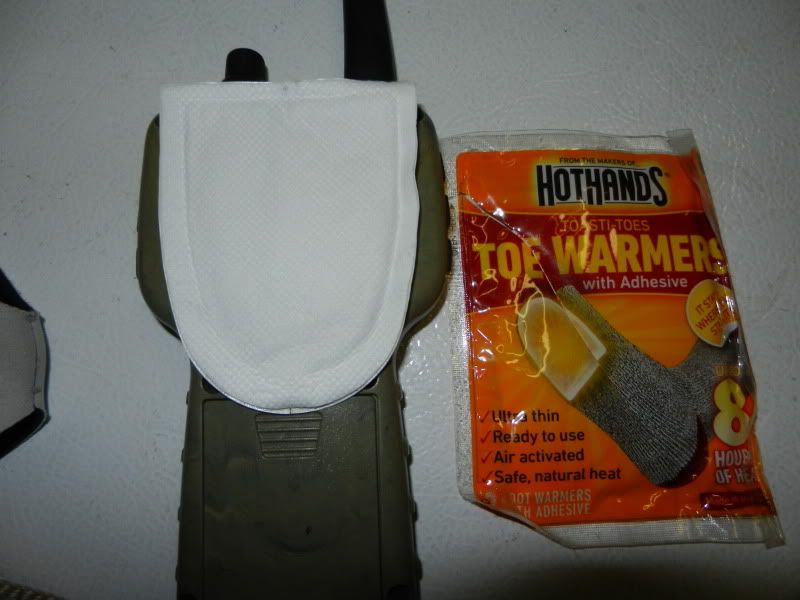
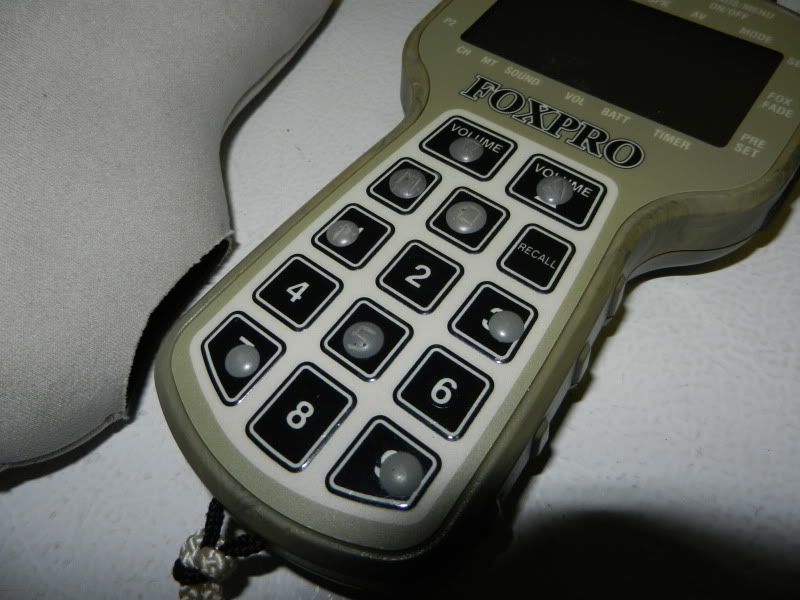
These packs keep the screen going strong in the coldest weather and also keep my hands a bit warm too if I do decide to hold onto the thing. I also use a Boondocks Outdoors neoprene case for my TX500 remote, which keeps it quiet and insulated a bit. You need to be careful with the side buttons on the remote. It’s easy for me at times to accidentally smash a side button and have a sound start playing. The solution is to just make sure I’m not smashing the thing down on my jacket when I sit down. For night hunting, the remote is the absolute best. Nothing compares to it, or even close to it without modifications. I put small dots of JB Weld on my TX500 remote for easy finger location without having to look. I don’t do every button, but a pattern that allows me to feel things better.
With this caller, I can also run another external speaker and control a decoy if I choose. I don’t utilize those features, but they’re on it if needed. I many times carry a little MOJO Critter that I’ll stick in the snow or wedge onto the CS-24 speaker/bracket. For sound programming, three screws must be removed from the TOA rear cap. Then, just plug in the USB cord and it will show up on your computer as a removable storage device. Use FoxPro’s programming utility, or manually number the sounds.
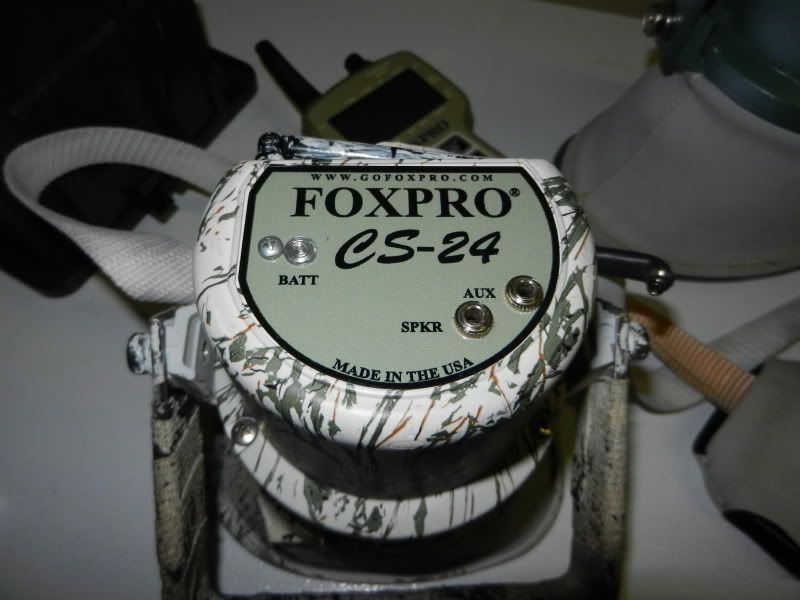
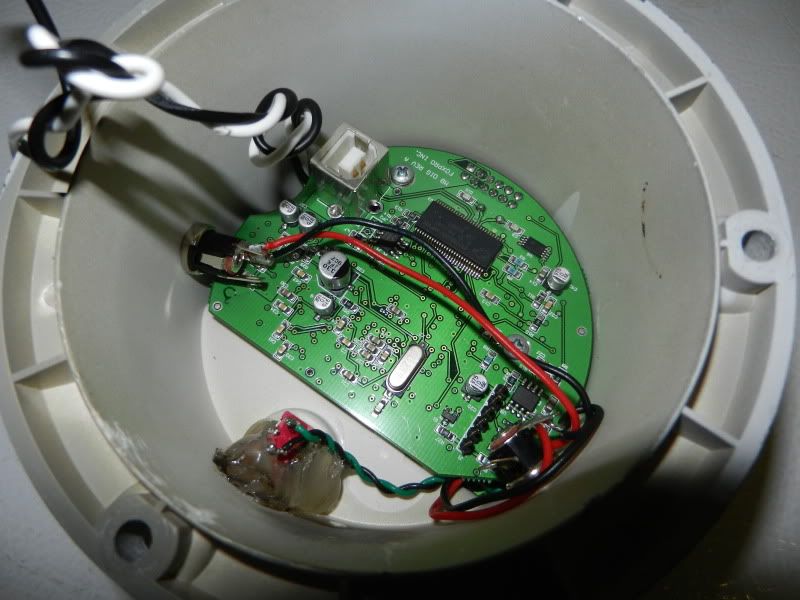
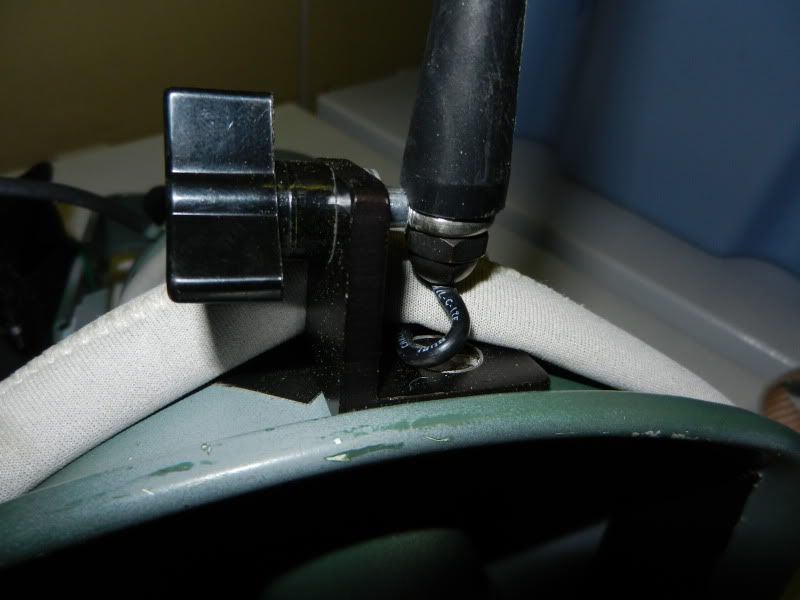
Note: Wrap your TOA speaker bracket with some camo tape or some other type of thermal break if you’re hunting in the cold. That metal bracket sucks the heat right out of the hands. Plus, it keeps the caller quiet if a branch smacks that bracket.
#2 E-caller
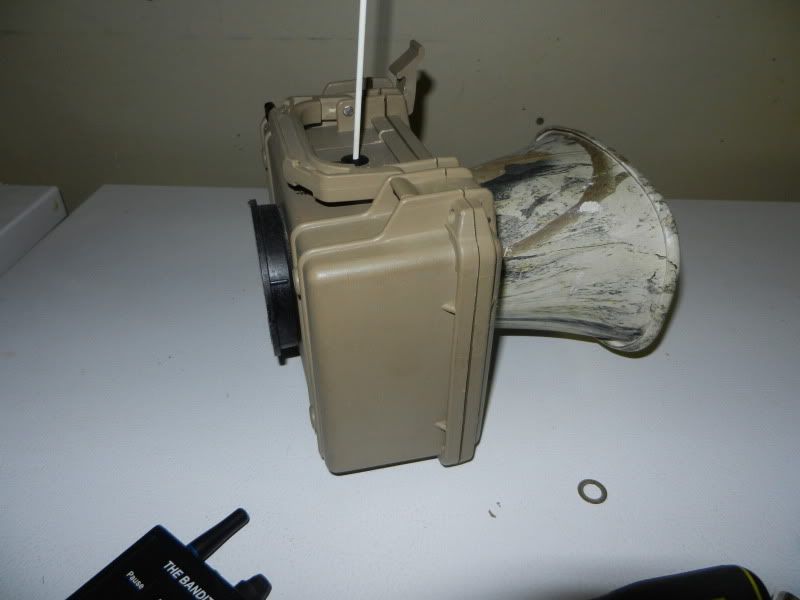
The second best in my opinion out of the callers I have and have used is the Minaska Ultimate One. This is also a very tough caller and has handled the cold well. I’ve added foam padding to the inside to help insulate the batteries (10 AA).
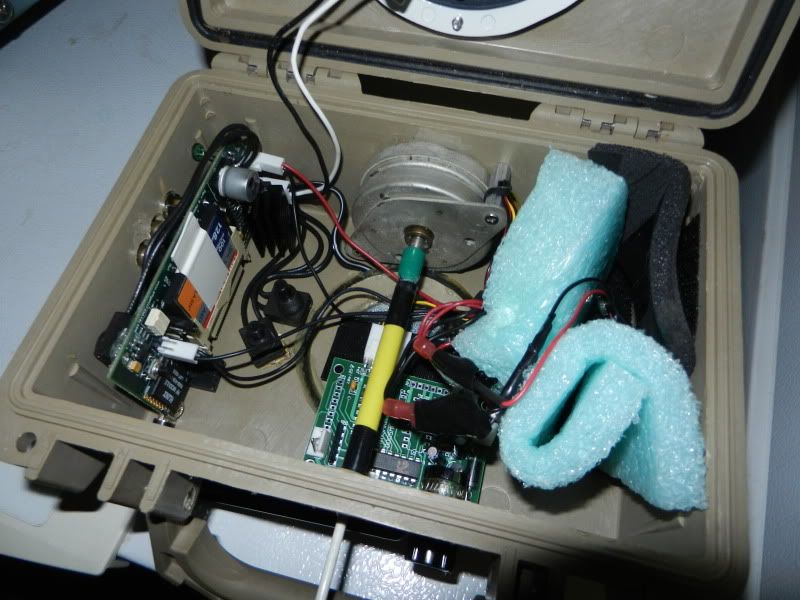
I wanted to run the 14.8volt Li-Ion packs I use, but was told that it was not recommended by the manufacturer. Not a huge deal, I have plenty of 10AA packs. The Ultimate One has a built in decoy, which is handy when I want to use a decoy at times. I had to add a small section of fiberglass arrow shaft to my UO so I could more easily install my decoy. In the cold, the plastic tube that the decoy goes into was near impossible to fit without proper alignment. With the fiberglass tubing and a little bit of chamfering of the plastic tubing, the decoy rod goes in easily in the cold. Batteries seem to drain quicker on this caller than the other models. I’ll typically use up a 10AA pack and a good portion of another one in a long day of calling along with running the decoy intermediately. Weight of the Ultimate One as is for me with the 10AA packs is right at 4 pounds 10 ounces. The geometry of the Pelican case and speakers makes this caller tougher to carry around the waist on a strap, like I do at times. Slinging another item around my shoulder along with the rifle is a pain when post holing in the snow or moving. Moving branches out of the way and such is just a pain with something heavy in my hands. It’s not that huge of an issue, but something that is important to me to stay light and fast in the field. This is the only caller in the list with dual speakers. I do not use dual speakers or play stereo sounds, plain and simple. The additional cone speaker is just added weight to me. I’ve thought about getting another Pelican case and making it with just the single TOA speaker, but don’t care to mess with that project since I almost exclusively use my CS-24 now. This caller plays MP3 files only and is programmable, a definite bonus to this tough caller. The Minaska will often ride with me in the truck as my back-up caller.
#3. FoxPro Scorpion
This little caller is in a totally different class “as is”, but add an external TOA 10W speaker or SP-55 and it runs up there with the big boys on the volume scale. My Scorpion is an older model, but has been very reliable. Being able to stick it in a pocket is very handy and makes for the quickest and lightest “hunting” on the snowmachine, due to me not having to unstrap it. The newer Scorpions use the new, antenna-less TX9 remote and have several new features that my older model lacks. It’s still a great caller that has worked flawlessly for me. If you have back problems, or simply do not need a ton of volume, the Scorpion would be worth looking at. I break out the Scorpion every so often and use it if I’m hunting close to home on the snowmachine and want to go uber-light. Sounds are programmed via USB plug and FoxPro Programming Utility or manually numbered and named. Battery is also stored and changed inside the case.