
Tasco 6x24x42 Mil dot....

Bummy

New member
A friend of mine picked up a Tasco 6x24x42 scope with the Mil dot reticle and brought it over yesterday. Seems like a decent scope for the price, which was nearly nothing. He asked me about the zoom level of the scope to use the mil dot for ranging, but I wasn't sure about it on that scope. No paperwork when he bought it. I'm thinking that the Mil dot is used for ranging on the 10x setting, but not sure. Anyone else have this scope or try ranging with it using the mils?
I did manage to find a pdf manual on the scope, but all it says is calibrated at 8x. Not sure if this is the setting to use while ranging with the mils.
Any suggestions?
http://www.tasco.com/products/manuals/mil_dot_ret_6lim_insert.pdf
 
That looks about right to me. I'd check it at the range though to be sure using some measuring system. The best way is to just use a big piece of cardboard with marks on it 36" apart and check that at 8x, such that the entire 10 mil gap brackets it perfectly.

That optic has a lot of flexibility built into it for rangefinding and downrange zeroing though. U don't have to use it at the cald. power for rangefinding or downrange zeroing (the system is very close to being exactly inversely proportional). U could adjust the power to about 14.5 and it would be about 2.0 inch per hundred yds. between dots, and the dot size itself becomes about .4" (at 24x it's even smaller yet @ 1.2 IPHY between dots). Much better than the 3/4" dot it will be at 8x. That dot system as designed is very similar to Sightrons. They use a .22 mil dot size too.

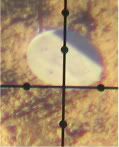
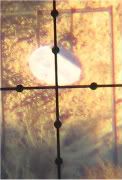
Here's what i mean. The 2 pics below show the mil-dot bracketing a 12" disc at 300 yds. The 1st is at cald. power (12). The 2nd pic is at a higher more accurate rangefinding power (18). See how it changes--the power INCREASES but the reticle measurements (subtensions) DECREASE--
IMG_0713.jpg

IMG_0712-1.jpg
 
Last edited:
Thanks for the info SS...we'll give the cardboard idea a try and see how much difference, if any it makes. It's nice to hear that there shouldn't be much difference between the 8x, 10x, etc. Thanks a bunch
 
Sure thing. I've heard that at 24x that scope is not the clearest of them all. If it were me i'd probably stick to the 14.5 setting to make math a bit easier and magnification a bit better. If u decide to go that route just do the same measurement system as stated above only this time make the marks at 20" apart (2" x 10 units) and mark the scope with a different witness mark as accurately as possible. Here's the rangefinding calc. (" to yds.)--

tgt. size (") x range of reticle subtension measurement (usually 100 yds.) / reticle subtension (") / quantity of "gap" tgt. occupies (decimal equivalent) = range (yds.)

...looks complicated, but super simple to apply. Suppose the measurement between dots above in the 1st pic was 2.0" per hundred yds. Suppose the discs above were about 11" (same as the back to brisket of a coyote), and it appears to occupy a little over 1.1 subtension units, now just fill in the variables--

11 x 100 / 2.0 / say 1.15 = 475 yds.

Now to make it easier u can see that 11x100/2 is a constant of 550. Just enter that into the calculator's memory, and make the calcs. faster if your just setting the optic up for 1 tgt. size (like a coyote). Just put it all on a sticker like this that i have for a coyote using a different reticle, and put it all into a Butler Creek Blizzard-style objective scope cap cover--

 
Back
Top