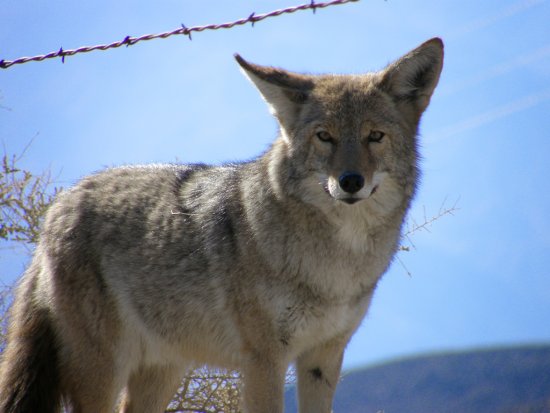
There or to many variables envoled to say that I always set up one particular way. That being said I am alway's aware of where my scent is going, and if I can set up where I can see the downwind side I do. That doesn't necesarily mean at my back.It could be a cross wind.You can bet that a coyote will get the scent advantage any time he can when aproaching a call. I try and set up so when he does try and get the advantage he has to expose himself. In certain set ups where there are obsticles that deter him from doing so I don't worry so much about it. If you set up where you can't see your scent cone, You will be giving up the most possible avenue of a approach.
This all being said, I hunt some country that has some ridges that offer great vantage points into big valleys I will often drop down off the edge of the ridge and call even if the wind is in my face. I know if they hear the call they will most likely respond, and have a hard time getting downwind before I get a shot (natural barrier).
Predator hunting requires a lot of common sence to be constantly sucessfull. What I always do when choosing a set up is to think it out first. I ask myself these questions. Where do I think he is? When I blow the call, where do I think he'll go? And, can I get a shot from here when he does it.
I don't use any cover scents or scent's to try and confuse their nose. I have in the past with mixed results. I have found that it is better for me to set up where I don't depend on them. Coyotes have a very sofisticated sence of smell, and I believe that it is next to impossible to defeat it. Others have had success in using the misters, but I have learned it's works better for me to play the wind and make em pay for it. A simple bark or lip squeek will usually stop them as they aproach your scent cone.
Main thing is to use comon sense, stay flexible, get as many things in your favor before you blow the call, and have fun /ubbthreads/images/graemlins/laugh.gif .
Good Hunting
Byron /ubbthreads/images/graemlins/laugh.gif