

This is the kind of storytelling that is easy to:

Brian set up on the mesa with a rifle, covering everything, while I dropped into the brush with nothing but a shotgun and an idea. That was the plan—simple, maybe questionable.
Walking in, I caught a coyote standing on the ridge ahead of me. I froze—should’ve brought a rifle. The moment he spotted Brian climbing the mesa to my right, he spooked and melted back into the same cover we were about to target. As I was setting up, he lit off with threat barks, letting us know he knew we were there. That yapper put a knot in my gut. The stand already felt thin, but I called it anyway.
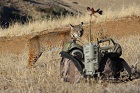
A few minutes into the sequence, a bobcat showed up on the ridge, framed against a cedar, just over 100 yards out. Again—should’ve brought a rifle. She didn’t rush. She didn’t flinch. She just sat there, reading the room, owning the moment.
I worked the FOXPRO X24—volume up, volume down, silence in between—letting Cagie Cottontail do its job. Brian held fire and gave me the room to work. That patience was the turning point.
Slowly, almost reluctantly, she started to move. A few steps. A pause. Another look back. Each one felt heavier than the last until she finally crossed an invisible line and slipped into shotgun range.
That was the moment the whole stand made sense.
Walking up on her, adrenaline still buzzing and the dust settling, it hit me—I was damn glad I didn’t bring a rifle.

I’m no shotgun aficionado like GC, Bob, or Dave. I ranged the spot she stood next to at 47 yards. The #4 TSS through a .670 choke broke her front legs in multiple places and sealed the deal—proof that sometimes the right tool isn’t the one with the longest reach, but the one that forces you to let the story come to you.
Calling in artillery with the ATRIS 650 V2 LRF —Splash over, splash out.
(Call-for-fire comms, minus the howitzers.)
Brian set up on the mesa with a rifle, covering everything, while I dropped into the brush with nothing but a shotgun and an idea. That was the plan—simple, maybe questionable.
Walking in, I caught a coyote standing on the ridge ahead of me. I froze—should’ve brought a rifle. The moment he spotted Brian climbing the mesa to my right, he spooked and melted back into the same cover we were about to target. As I was setting up, he lit off with threat barks, letting us know he knew we were there. That yapper put a knot in my gut. The stand already felt thin, but I called it anyway.
A few minutes into the sequence, a bobcat showed up on the ridge, framed against a cedar, just over 100 yards out. Again—should’ve brought a rifle. She didn’t rush. She didn’t flinch. She just sat there, reading the room, owning the moment.
I worked the FOXPRO X24—volume up, volume down, silence in between—letting Cagie Cottontail do its job. Brian held fire and gave me the room to work. That patience was the turning point.
Slowly, almost reluctantly, she started to move. A few steps. A pause. Another look back. Each one felt heavier than the last until she finally crossed an invisible line and slipped into shotgun range.
That was the moment the whole stand made sense.
Walking up on her, adrenaline still buzzing and the dust settling, it hit me—I was damn glad I didn’t bring a rifle.
I’m no shotgun aficionado like GC, Bob, or Dave. I ranged the spot she stood next to at 47 yards. The #4 TSS through a .670 choke broke her front legs in multiple places and sealed the deal—proof that sometimes the right tool isn’t the one with the longest reach, but the one that forces you to let the story come to you.
Calling in artillery with the ATRIS 650 V2 LRF —Splash over, splash out.
(Call-for-fire comms, minus the howitzers.)
Last edited by a moderator: