Inside and outside cartridge neck dimensions

17remhunter

Active member
Question for experienced reloaders. Should the inside neck width dimensions be the same from case to case ? And should the outside neck diameter be the same? Im talking about Lapua or Peterson brass. If the outside neck diameter’s are different would that mean after neck sizing that there would be different bullet tension from load to load? Do you want equal bullet neck tension from load to load?
 
Question for experienced reloaders. Should the inside neck width dimensions be the same from case to case ? And should the outside neck diameter be the same? Im talking about Lapua or Peterson brass. If the outside neck diameter’s are different would that mean after neck sizing that there would be different bullet tension from load to load? Do you want equal bullet neck tension from load to load?

As a general rule, yes, those dimensions should be the same from case to case. Ideally. If you don't neck turn, even with Lapua, they won't ever be though. Even Lapua BR cases often show .0003 or so neck thickness variation on a single case, even more on one or two out of a hundred. With RemChester grade brass, .0015 and more is typical. So, it actually matters "where" on the circumference you measure. You might get different measurements at different points around the circumference on a single case.

Measuring inside diameter to the tenth isn't easy without the right tool though. And not necessary. Neck wall thickness variation is the most important. A ball mic is all you need to measure that. Otherwise, simply loaded round O.D. is more than sufficient for almost anyone and all you need for that is an outside mic. If all you have are calipers, forget about it. You won't get meaningful measurements unless your brass is just complete crap. Which, honestly, a lot of brass IS. But if it's Lapua, nah, forget about it, calipers won't get you there.

But yes, consistent neck tension matters. Depending on how much difference you are seeing, what kind of chamber you have, what kind of dies and how you are using them, what your accuracy expectations are, the differences you are seeing might not matter. Or, they might. It depends.

About the only time I ever anneal is when forming one case from another and moving a lot of brass around. Otherwise, I've never seen any benefit for my purposes. But, again, depending on your brass, chamber, loading practices etc., it might have some benefit for you?

- DAA

 
As a general rule, yes, those dimensions should be the same from case to case. Ideally. If you don't neck turn, even with Lapua, they won't ever be though. Even Lapua BR cases often show .0003 or so neck thickness variation on a single case, even more on one or two out of a hundred. With RemChester grade brass, .0015 and more is typical. So, it actually matters "where" on the circumference you measure. You might get different measurements at different points around the circumference on a single case.

Measuring inside diameter to the tenth isn't easy without the right tool though. And not necessary. Neck wall thickness variation is the most important. A ball mic is all you need to measure that. Otherwise, simply loaded round O.D. is more than sufficient for almost anyone and all you need for that is an outside mic. If all you have are calipers, forget about it. You won't get meaningful measurements unless your brass is just complete crap. Which, honestly, a lot of brass IS. But if it's Lapua, nah, forget about it, calipers won't get you there.

But yes, consistent neck tension matters. Depending on how much difference you are seeing, what kind of chamber you have, what kind of dies and how you are using them, what your accuracy expectations are, the differences you are seeing might not matter. Or, they might. It depends.

About the only time I ever anneal is when forming one case from another and moving a lot of brass around. Otherwise, I've never seen any benefit for my purposes. But, again, depending on your brass, chamber, loading practices etc., it might have some benefit for you?

- DAA

So do you want the outside circumference of your necks to be the same? I would think that having the minimum neck tension would also benefit accuracy Just enough to hold the bullet. Like using a .273 neck bushing instead of a .272
 
Last edited:
So do you want the outside circumference of your necks to be the same? I would think that having the minimum neck tension would also benefit accuracy Just enough to hold the bullet
Outside really doesn't mean squat, it's the inside that matters.

Minimum tension is fine for a bench gun loading single shot, sucks when having to run them through a magazine, especially in a semi-auto. Tension can be a tool used when testing for accuracy. Some powders may prefer a little more tension.

So the ultimate goal for accuracy is a perfect loaded round, which can be lost in the noise of an off the shelf rifle.
 
Outside really doesn't mean squat, it's the inside that matters.

Minimum tension is fine for a bench gun loading single shot, sucks when having to run them through a magazine, especially in a semi-auto. Tension can be a tool used when testing for accuracy. Some powders may prefer a little more tension.

So the ultimate goal for accuracy is a perfect loaded round, which can be lost in the noise of an off the shelf rifle.
Another question. I bought some new nosler brass for 17 Remington. Loaded them up but when chambering them they felt tight then I couldn’t drop the bolt handle without some effort. I checked the head space case length bullet seating. No issues. I had an inside case reamer for the 17. Then chambered a bullet and no problems. But i was told not to do that but to turn my necks instead. Your thoughts
 
Outside really doesn't mean squat, it's the inside that matters.

Minimum tension is fine for a bench gun loading single shot, sucks when having to run them through a magazine, especially in a semi-auto. Tension can be a tool used when testing for accuracy. Some powders may prefer a little more tension.

So the ultimate goal for accuracy is a perfect loaded round, which can be lost in the noise of an off the shelf rifle.
Explain a perfectly loaded round.
 
Last edited:
It starts with a proper chamber.....

Twice fired brass, annealed, neck turned to zero variation, full length sized with the proper bushing size, and zero runout on the loaded round.
 
The first question you should ask is what kind of accuracy do I want? I went through all the benchrest process with Lapua brass for a Savage Precision Carbine in 223. The effort reduced my groups by ZERO. The rifle, and its chamber, were just not capable of benefiting from all the work i put into case preparation.

If you are trying to go from shooting 1” groups to something less, you might see the benefit, but who knows. Are you a good enough shooter to shoot into the 3s? If not, I would work on shooting long before I worked on anal retentive brass prep.

Some of it is just good practice for reloading in general, but much of it has little benefit for the average shooter/rifle.
 
The first question you should ask is what kind of accuracy do I want? I went through all the benchrest process with Lapua brass for a Savage Precision Carbine in 223. The effort reduced my groups by ZERO. The rifle, and its chamber, were just not capable of benefiting from all the work i put into case preparation.

If you are trying to go from shooting 1” groups to something less, you might see the benefit, but who knows. Are you a good enough shooter to shoot into the 3s? If not, I would work on shooting long before I worked on anal retentive brass prep.

Some of it is just good practice for reloading in general, but much of it has little benefit for the average shooter/rifle.
The average Joe with the average rifle probably won't gain any precievable difference.
Unless a full custom barrel/gun with custom cut chamber, you're probably just waisting your time.
 
I only turn necks for enough clearance in the chamber. Lapua 222 wouldn't chamber I n my .250 neck chamber, Win and Starline chamber fine. Turning necks in an already loose chamber doesn't seem to do much. Most rifle meant to chamber anything don't seem to gain much from neck turning. I'd toss brass that is extremely thick on one side and thin on the other turning it will just give you brass with thin necks and you'll just have to work the brass in the necks that much more
 
Yeah, in a standard chamber, I’m not sure it would make a difference even with excessive variance. Even runout makes little actual difference in the average rifle.

The guys I know shooting PRS (top 3 finishes) don’t neck turn.

ETA: neck turning when converting brass is something that may be necessary.
 
Last edited:
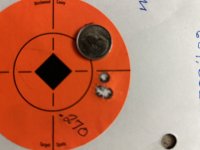
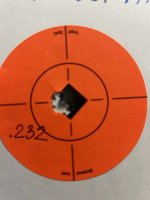
I turn my necks on my 17 Remington for the same reason AWS does on his 222. My 6 Creedmore is a custom build by T S Customs. Makes a difference
 

Attachments

  • IMG_6613.jpeg
    IMG_6613.jpeg
    58.5 KB · Views: 22
  • IMG_6614.jpeg
    IMG_6614.jpeg
    34.5 KB · Views: 22
alot of guys are using expand mandrels. redding just came out with sets you can buy with mandrels I think in .0005 increments. its an effort to get neck tension more consistent. without an expand mandrel you really need to neck turn your brass, its not a big deal because its something you only do one time. but with your regular bushing only setup. you are moving the brass thickness inward to where the bullet is. in some cases you can cause more bullet runout. these mandrels should move whatever thickness is left even after neck turning back to the outside. I don't know if it worth it for my purposes but its more crap to buy and something to vex your mind.
 
Back
Top