Non-Partisan Stuff

Stu Farish

Director / Webmaster
Staff member
A place for crap that belongs to all of them
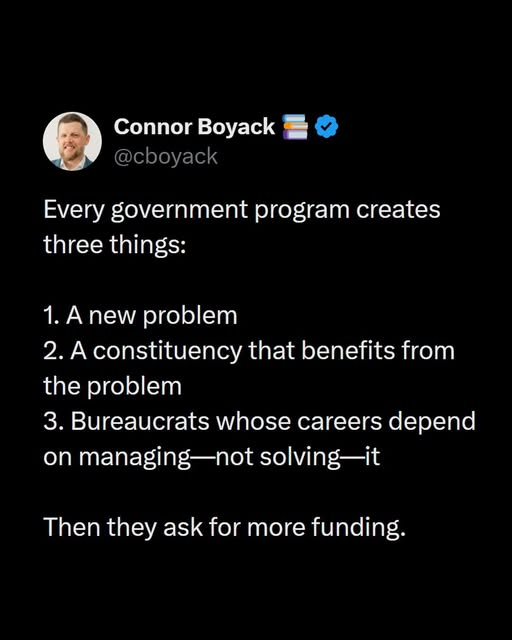

1776184747925.png
 
At this point, calling people “partisan” feels way too polite. It’s not just left vs. right anymore—it’s turned into full-on ride-or-die mode for whatever team you picked.

You’ve got people tossing around labels like MAGA, groypers, III%ers, Antifa, BLM, Youth Liberation Fronts—like they’re trading cards—so they don’t even have to think about what the other person is actually saying. Once the label’s slapped on, the conversation’s basically over.

If their side wanders straight into a quagmire, they’ll defend it like it’s family—spin it, excuse it, blame the other side, whatever it takes. But let the “other team” do something that actually makes sense? Suddenly it’s garbage, dangerous, or part of some bigger scheme. No credit, no nuance, just automatic booing.

It all boils down to: “My side good, your side evil.” No gray area, no common sense—just knee-jerk reactions based on who said it, not what was said.

At that point, it’s not really politics anymore—it’s more like tribal loyalty with a comment section.
 
I’ve caught myself getting stuck to a label too—and even when you try to peel it off, it’s got that weird magnetic pull that drags you right back in. You start noticing how thick the tension gets, like everyone’s already decided who you are before you even open your mouth. Assumptions everywhere—so dense you could cut them with a knife.

Then you step back and look at the bigger picture. Both sides are constantly “exposing” each other—corruption, scandals, all kinds of dirt. And every time it feels like this is the one that should actually matter…nothing really happens. No real consequences, no follow-through—just another talking point to fire up their base. And that’s the part that starts to feel off. Instead of holding anyone accountable, it just pulls people in tighter. Makes you pick a side, defend it harder, ignore the cracks, and double down while they keep playing the same game. Meanwhile, the people at the top keep moving forward like nothing happened.

At some point you realize—you’re not being informed, you’re being worked. Not really part of the process, just part of the reinforcement. Tools, if you want to put it bluntly.
 
I believe the average American voter, regardless of affiliation, actually LIKES all the scandals, the misbehavior, the lawbreaking by their elected officials. All that stuff is a get out of jail free card for us peasants. "Hey if they can do it, why can't we?" Nobody has a reason to feel bad about cheating on a spouse, cheating on taxes, defrauding someone, or whatever because our elected "leaders" have clearly shown us it's okay.
 
I believe the average American voter, regardless of affiliation, actually LIKES all the scandals, the misbehavior, the lawbreaking by their elected officials. All that stuff is a get out of jail free card for us peasants. "Hey if they can do it, why can't we?" Nobody has a reason to feel bad about cheating on a spouse, cheating on taxes, defrauding someone, or whatever because our elected "leaders" have clearly shown us it's okay.
I get the point you’re making, but I don’t think it’s accurate to say the “average American voter” actually likes scandals or lawbreaking. Most people don’t enjoy it—they’re more likely burned out by it, desensitized to it, or resigned to the idea that “that’s just how it is now.” There’s a difference between accepting something as normal and endorsing it as acceptable behavior.

Regarding law and crime—there are man-made laws, and then there is morality, and they don’t always perfectly overlap. There are also crimes of passion and crimes of the heart that complicate how people behave versus what they know is right. That gap is where a lot of human behavior lives.

Personally, I believe there is one ultimate authority, a loving God. And while people often say integrity is doing the right thing when no one is watching, if you live under that higher standard, then you’re never really “unwatched.” That changes the framework entirely—it’s not about whether others are getting away with something, but about what standard you choose to hold yourself to regardless of what anyone else is doing.
 
For example, I’m a recovering alcoholic. I haven’t had a drink in 24 years—but I’m still an alcoholic, and I will be until the day I die. That’s something a lot of people misunderstand and reduce to just a “choice.” But alcoholism isn’t really about willpower. When people say “just stop,” they miss what powerless actually means. It didn’t mean I couldn’t quit—it meant I couldn’t stay quit on my own. The real issue wasn’t just the drink; it was the mind. And my slightly unhinged but consistent thought process looks something like this:

It starts as a mental loop—an obsession that builds and repeats. And if it runs long enough, it eventually turns into action the moment the first drink is taken. Today, I’ve been given a daily reprieve from that loop—but it isn’t based on self-will alone. That space where obsession used to live has been replaced with something else: a conscious connection with God.

Instead of being pulled by that cycle, I’ve learned to step out of it before it takes over. Because when the mind runs unchecked long enough, it eventually drives behavior. For me, that means staying aligned with a higher standard—so I don’t block myself off from what I’d call the “sunlight of the spirit,” the thing that keeps me steady. Or put more simply:

“Be still, and know that I am God.”
 
I get the point you’re making, but I don’t think it’s accurate to say the “average American voter” actually likes scandals or lawbreaking. Most people don’t enjoy it—they’re more likely burned out by it, desensitized to it, or resigned to the idea that “that’s just how it is now.” There’s a difference between accepting something as normal and endorsing it as acceptable behavior.
I get your point. I suppose the better way to word that is not that the folks like the bad behavior in and of itself, they like what it means for them. It is a vicious circle, and maybe not wholly connected. But you can see that as our leaders' behavior gets worse, so does that of the peasants. And it keeps going in that downward spiral. Even the god-fearing folks who have driven the country's morality for generations are way more accepting of bad behavior that used to be taboo. We are sliding into a social cesspool of our own making. We're all complicit, even if we don't endorse it.
 
I get your point. I suppose the better way to word that is not that the folks like the bad behavior in and of itself, they like what it means for them. It is a vicious circle, and maybe not wholly connected. But you can see that as our leaders' behavior gets worse, so does that of the peasants. And it keeps going in that downward spiral. Even the god-fearing folks who have driven the country's morality for generations are way more accepting of bad behavior that used to be taboo. We are sliding into a social cesspool of our own making. We're all complicit, even if we don't endorse it.
Standards don’t collapse—they erode. What used to be a hard “no” becomes background noise. Maybe that’s what people mean by the “decline and fall of Western civilization”—not some sudden crash, but the slow widening gap between what we say we value and what we’re willing to live with.
 
Back
Top