
Close cover for coyotes

AWS

Custom Accessory Maker & Retired PM Staff
I'm a day hunter and find close/thicker cover far more productive than open country. Even in open country coyotes seem to use every bit of cover to hide their approach. I believe I'm hunting mostly bedded coyotes.

Here on the desert I like to hunt thicker cover within a half mile of some type of water. I've also had great luck hunting small openings in even thicker cover. The action can be exhilarating with coyotes appearing from nowhere.

So how many of you like to hunt in the thick instead of trying to call them out of it?
 
I preferred to hunt the edges. Water sources are important here as well.
1787676856690.png
 
Water is super important here in southern Nevada but read an article somewhere about coyotes traveling up to 10 miles in a night to get water. I have to stretch that radius from water a bit more than a 1/2 mile down here in my experience but definitely within a couple miles or maybe a litte more.
 
Day hunting which I do very little of is always in a thicket with a scatter gun here in SW PA. As said above, fast and furious, it can be. The last I shot was at 12-15yds and I only saw him at 25ish.
 
Hunting thick cover with a shotgun and hand calls is definitely my favorite. I find it less successful than an ecall and rifle but seems more rewarding when it pans out.
 
We do pretty good on calling in coyotes in open country and in areas we can only see 25 to 40 yards. We call in coyotes quite often in areas that there is no water for 2 or 3 miles. By using a shotgun in thicker cover it gives us thousands of more acres to hunt, that would be very hard to hunt coyotes with a rifle.

Even in wide open country we almost always have a shotgun and a rifle on our calling stands. If we had two rifles on our calling stands we had quite a few coyotes get away because we couldn't get them to stop. With a shotgun and rifle on our calling stands we didn't have very many coyotes get away.

IMG_8757 by https://www.flickr.com/photos/156463377@N08/, on Flickr

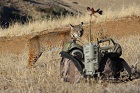
I got this above coyote with my shotgun by laying down on my back about 15 yards away from my Foxpro. I can no longer lay on my back and sit up to shoot coyotes with my shotgun like I did when I was younger.

IMG_2400 - Copy (2) by https://www.flickr.com/photos/156463377@N08/, on Flickr
IMG_2408 - Copy by https://www.flickr.com/photos/156463377@N08/, on Flickr
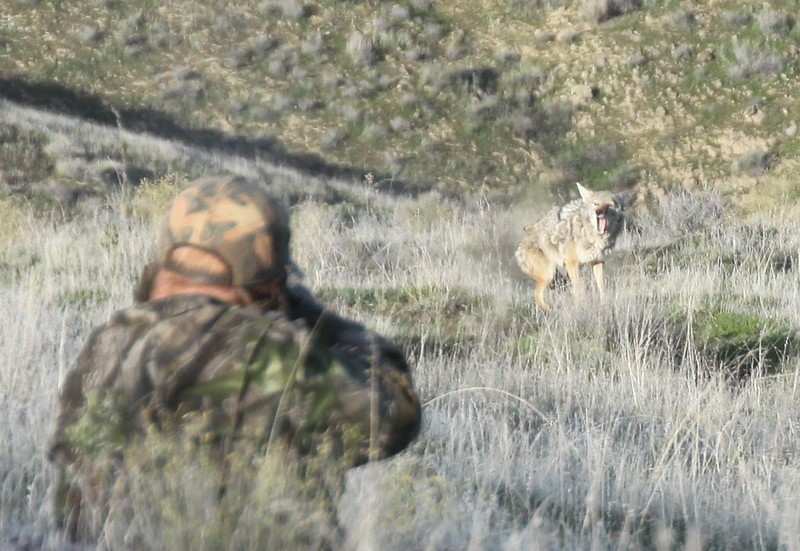
The two above pictures are my son sitting up to shoot a coyote with his shotgun from laying on his back.

If I could only make one type of calling stand, it would be sitting in the shade of a juniper or sage brush with my shotgun where I can only see about 40 yards. I don't miss very many coyotes with my shotgun when they are 40 yards away or less.
IMG_8036 - Copy by https://www.flickr.com/photos/156463377@N08/, on Flickr
 
I think it depends where you're hunting. In places like Arizona, I've seen guys do really well in thick stuff and most of their kills are with a shotgun. In Idaho, Montana and South Dakota, I've seen guys do well in more open stuff.

I hunt mostly Utah, Wyoming, and Nevada. I like to sit on the edge of the brush when I can but sometimes the area doesn't allow that so you better pack a shotgun 😉

It's all about learning your region and perfecting it.
 
I'm a day hunter and find close/thicker cover far more productive than open country. Even in open country coyotes seem to use every bit of cover to hide their approach. I believe I'm hunting mostly bedded coyotes.

Here on the desert I like to hunt thicker cover within a half mile of some type of water. I've also had great luck hunting small openings in even thicker cover. The action can be exhilarating with coyotes appearing from nowhere.

So how many of you like to hunt in the thick instead of trying to call them out of it?
We started hunting Red Fox 1964. Most any given day(day light hours). The Reds would be holed up(sleep in) a den hole or field drive culvert tube. Roughly 1:10 days they would bed down out in open areas. We started hunting coyotes Fall/Winter 1968. Pretty much the same odds as the reds. However, rather than sleeping bedding down in a culvert tube or den hole. The coyotes chose ground cover(weedy areas, timber & brambles). What I'm getting at is. 10% of my hunts. Of red fox or coyotes. Would bed down for the day out in open areas. They are the ones I laid eyes on.
 
Last edited:
We started hunting Red Fox 1964. Most any given day(day light hours). The Reds would be holed up(sleep in) a den hole or field drive culvert tube. Roughly 1:10 days they would bed down out in open areas. We started hunting coyotes Fall/Winter 1968. Pretty much the same odds as the reds. However, rather than sleeping bedding down in a culvert tube or den hole. They coyotes chose ground cover(weedy areas, timber & brambles). What I'm getting at is. 10% of my hunts. Of red fox or coyotes. Would bed down for the day out in open areas. They are the ones I laid eyes on.
Speaking of coyotes. Some will already be bedded down pre-Sunrise. The rest will be in transit heading towards a bedding area. Up until until around to 9-10am. Very few will still be on the move after 11am. My observations were very consistent over many decades of hunting coyotes.
 
Last edited:
Speaking of coyotes. Some would already be bedded down pre-Sunrise. The rest would be in transit heading towards a bedding area until around to 9-10am. Very few would still be on the move after 11am. My observations were very consistent over many decades of hunting coyotes.
One more thing about once a coyote is bedded down for the day. Other than a stimulus that will make them get up & move. They will stay put all day. Other than rising up on their feet. When the wind direction changes. They will rotate their body so the wind is at their backside again. When the wind does change direction. They will typically only move a few feet from where they were bedded down initially.
 
One more thing about once a coyote is bedded down for the day. Other than a stimulus that will make them get up & move. They will stay put all day. Other than rising up on their feet. When the wind direction changes. They will rotate their body so the wind is at their backside again. When the wind does change direction. They will typically only move a few feet from where they were bedded down initially.
Is there a rough approx. time they tend to get up during the afternoon or evening and remain up/ active? I understand this will be completely dependent on the specific coyote and/or the environment they live in but just wondering if you've noted this in your observations over time. TIA
 
Is there a rough approx. time they tend to get up during the afternoon or evening and remain up/ active? I understand this will be completely dependent on the specific coyote and/or the environment they live in but just wondering if you've noted this in your observations over time. TIA
What I have observed is. Most coyotes will bed down for the day. Pre-Sunrise up until around 11am. Very few will be on the move, traveling to & fro. And or hunting past 11am. They will remain bedded down all day until darkness comes(typically). When bedded down they will angle their backside AWAY from the prevailing wind. Even a slight wind. 99% of the time when bedded down. Their muzzle/face will always be angled down wind in a varied angle. In a very high wind, say 20mph. Their muzzle will be pointed "directly down wind". I've used those behaviors for decades. In order to not be scented, heard or seen. As I close the gap on them. 9x out of 10. They will choose some sort of land structure or ground cover. To cut the wind off of their body. Experienced hunters know all of these behaviors & use them to their advantage. Whether sneaking up on a bedded coyote. Or walking to a call stand area. One thing worth noting is. Their hearing is top notch. They miss very few sounds, even slight soft sounds. So whether a hunter is a stalker or caller. Remain silent like a stalking cat on your way in.
 
What I have observed is. Most coyotes will bed down for the day. Pre-Sunrise up until around 11am. Very few will be on the move, traveling to & fro. And or hunting past 11am. They will remain bedded down all day until darkness comes(typically). When bedded down they will angle their backside AWAY from the prevailing wind. Even a slight wind. 99% of the time when bedded down. Their muzzle/face will always be angled down wind in a varied angle. In a very high wind, say 20mph. Their muzzle will be pointed "directly down wind". I've used those behaviors for decades. In order to not be scented, heard or seen. As I close the gap on them. 9x out of 10. They will choose some sort of land structure or ground cover. To cut the wind off of their body. Experienced hunters know all of these behaviors & use them to their advantage. Whether sneaking up on a bedded coyote. Or walking to a call stand area. One thing worth noting is. Their hearing is top notch. They miss very few sounds, even slight soft sounds. So whether a hunter is a stalker or caller. Remain silent like a stalking cat on your way in.
When I would see a bedded coyote. I would triangulate it's position. I would use land features to do that. Then I form my stalk plan. I come in on them from their up & crosswind angle. Which puts me behind them & cross wind from them. So they can not see me or scent me. The only aspect I have then is. Remaining stealthy silent. As I crest the last ridgeline. They are facing away from me. Another thing I will say about their vision is. Their field of view is beyond 220 degrees. I figure if I can seen any part of their eye. Then they can catch any moment I may make. Their abilities are remarkable.
 
What I have observed is. Most coyotes will bed down for the day. Pre-Sunrise up until around 11am. Very few will be on the move, traveling to & fro. And or hunting past 11am. They will remain bedded down all day until darkness comes(typically). When bedded down they will angle their backside AWAY from the prevailing wind. Even a slight wind. 99% of the time when bedded down. Their muzzle/face will always be angled down wind in a varied angle. In a very high wind, say 20mph. Their muzzle will be pointed "directly down wind". I've used those behaviors for decades. In order to not be scented, heard or seen. As I close the gap on them. 9x out of 10. They will choose some sort of land structure or ground cover. To cut the wind off of their body. Experienced hunters know all of these behaviors & use them to their advantage. Whether sneaking up on a bedded coyote. Or walking to a call stand area. One thing worth noting is. Their hearing is top notch. They miss very few sounds, even slight soft sounds. So whether a hunter is a stalker or caller. Remain silent like a stalking cat on your way in.
Thanks Joe. Much appreciated. I’ve witnessed this bedding behavior one time last season. Watched a coyote 600 yds from us walking away from our location (may have bumped it on our way into a stand). Watched it walk for 5 minutes to the approximate location where it bedded down. This ranch has sparse oak trees/ very little cover and is rolling hills of grass/ pasture land. It bedded down in a small flat spot in the wide open grass JUST a few feet lower than the top of a large hill and JUST enough out of the wind, but not completely. Its back was to the prevailing wind and was facing exactly down wind overlooking a huge valley. We were on the opposite side of this bedded coyote. My son and I snuck back over the ridge and walked parallel to where we knew it was bedded. We snuck back over the ridge and used a few oak trees and their shadows to sneak our way down the hill. We sat in a great spot in the shadow of an oak tree approximately 800 yds across from it. We sat for 30 minutes and just observed. I played a few sounds on the e call just to see its reactions. Other than a few ear twitches and a slight lift of its head 1 time, we didn’t get much reaction because it could smell the wind coming from behind it and could see EVERYTHING in front of it (probably caught us sneaking in across from it). Was the perfect scenario for the coyote. It’s nose is essentially keeping track of any danger approaching from behind and it’s eyes and ears are watching everything it’s nose can’t smell. Almost 360 degrees of “security”. Not quite, but you get my drift. Was really cool to witness it be a “coyote” and do what it does to survive.
 
Back
Top