
CV32,
I've owned and shot swifts for what seems like forever, and have never owned a 22-250, but have shot plenty. The swift is a great cartridge if you reload with good equipment. As far as brass flowing into the necks, I just run an inside neck reamer into the case mouth each time before I resize. You can do a hundred cases in just a few minutes. When you compare it to deburring flash holes and uniforming primer pockets, inside neck reaming is very little bother.
B.C. is B.C. no matter what diameter your bullet, or it's weight! You'll be fine with a .224 if you twist it accordingly for your intended bullet weight. If you go to a 1 in 8" or 9" for the heavier bullets, I'd personally not go any lighter than 55 grainers, YMMV. The downside to burning a lot of powder through a small bore diameter is barrel life, you can't escape it! The way the swift "earned" it's reputation as a "barrel burner", although somewhat of a bad rap, was by using the factory 48 grain bullets at over 4100fps. Shooting 55's at 3800 will extend barrel life significantly.
I've not been completely hooked on the AI thing, although the performance is definitely there, you've got to burn up some barrel life fireforming brass. If you're satisfied with the ballistics of the parent cartridge that you'll shoot to make your AI cases, why not just stay with the parent round to begin with? Some folks like to tinker, and that is as enjoyable as using the final product to some, but I'm not one of them. Just let me do enough R&D to get the performance I'm after, and I'll load a pile of it and concentrate on killing stuff!YMMV... /ubbthreads/images/graemlins/grin.gif /ubbthreads/images/graemlins/wink.gif
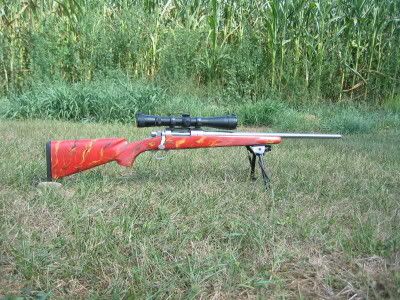
As far as light stocks for your carry around rifle, the Mickey light weight Edge stocks can't be beat, but are very pricey. I've used several Bansner's at around 20 oz's. They require a lot of clean up, bedding and painting, but they're light and pretty tough. Jim Borden also makes a good tough stock, Brown's are very rough for their price. HS's are heavy and you've got to bed them to keep them stress free, that aluminum bedding insert does more harm than good,IMHO. GOOD LUCK!! /ubbthreads/images/graemlins/grinning-smiley-003.gif
F1
I've owned and shot swifts for what seems like forever, and have never owned a 22-250, but have shot plenty. The swift is a great cartridge if you reload with good equipment. As far as brass flowing into the necks, I just run an inside neck reamer into the case mouth each time before I resize. You can do a hundred cases in just a few minutes. When you compare it to deburring flash holes and uniforming primer pockets, inside neck reaming is very little bother.
B.C. is B.C. no matter what diameter your bullet, or it's weight! You'll be fine with a .224 if you twist it accordingly for your intended bullet weight. If you go to a 1 in 8" or 9" for the heavier bullets, I'd personally not go any lighter than 55 grainers, YMMV. The downside to burning a lot of powder through a small bore diameter is barrel life, you can't escape it! The way the swift "earned" it's reputation as a "barrel burner", although somewhat of a bad rap, was by using the factory 48 grain bullets at over 4100fps. Shooting 55's at 3800 will extend barrel life significantly.
I've not been completely hooked on the AI thing, although the performance is definitely there, you've got to burn up some barrel life fireforming brass. If you're satisfied with the ballistics of the parent cartridge that you'll shoot to make your AI cases, why not just stay with the parent round to begin with? Some folks like to tinker, and that is as enjoyable as using the final product to some, but I'm not one of them. Just let me do enough R&D to get the performance I'm after, and I'll load a pile of it and concentrate on killing stuff!YMMV... /ubbthreads/images/graemlins/grin.gif /ubbthreads/images/graemlins/wink.gif
As far as light stocks for your carry around rifle, the Mickey light weight Edge stocks can't be beat, but are very pricey. I've used several Bansner's at around 20 oz's. They require a lot of clean up, bedding and painting, but they're light and pretty tough. Jim Borden also makes a good tough stock, Brown's are very rough for their price. HS's are heavy and you've got to bed them to keep them stress free, that aluminum bedding insert does more harm than good,IMHO. GOOD LUCK!! /ubbthreads/images/graemlins/grinning-smiley-003.gif
F1