

You are using an out of date browser. It may not display this or other websites correctly.
You should upgrade or use an alternative browser.
You should upgrade or use an alternative browser.
Anyone call coons? Advice?
- Thread starter LeviSS
- Start date
ksyotecallr
New member
I and a buddy have been having pretty good success during the daylight hours the last couple of years. You can order a cd from Minaska. We just plug it in a boom box and let er rip. Like Cdog stated be ready from the get go. Things can and will happen fast. So far as what to look for as den trees, the bark will usually look scuffed up going up the tree sometimes with scat around the base.
One of my 1st closed reed calls, was made by Cdog911. It was the best closed reed call, I ever owned or used. If I recall, it was a double reed?
I don't call coon. Anyway, another guy & myself was set-up on a large section of CRP & timber to call coyote. I was calling from upwind, he was the gunner down range overlooking a wide valley.
I would use one palm to apply back pressure[waffle]. I played it loud with varied pitch & itensity. A coon came from over a rise & was running full bore right @ me. I used my rifle barrel to keep him from piling onto my lap.
Coon ran away after some convincing[thumped him with my barrel]. I let a couple minutes go by[stinkin coons, anyway]. I commenced to squall again, samo...samo. Here came that coon full bore, same scenario all over again.
Useing [waffling back pressure & varying my out-take pitch]. Sounded like to coon fighting, to me. Who knows why that coon kept charging.
If my wingman, wouldnt've been near, straight down range of me @ the time. I'd stuffed a .223 BT rd, down that coon's snout.
Cdog911, makes a great closed reed call.
Unfortunately I lost mine afield, two yrs ago.
I don't call coon. Anyway, another guy & myself was set-up on a large section of CRP & timber to call coyote. I was calling from upwind, he was the gunner down range overlooking a wide valley.
I would use one palm to apply back pressure[waffle]. I played it loud with varied pitch & itensity. A coon came from over a rise & was running full bore right @ me. I used my rifle barrel to keep him from piling onto my lap.
Coon ran away after some convincing[thumped him with my barrel]. I let a couple minutes go by[stinkin coons, anyway]. I commenced to squall again, samo...samo. Here came that coon full bore, same scenario all over again.
Useing [waffling back pressure & varying my out-take pitch]. Sounded like to coon fighting, to me. Who knows why that coon kept charging.
If my wingman, wouldnt've been near, straight down range of me @ the time. I'd stuffed a .223 BT rd, down that coon's snout.
Cdog911, makes a great closed reed call.
Unfortunately I lost mine afield, two yrs ago.

Cdog911
New member
If you watch the minaska 'crumblin coons' dvd they shoot some while still in the hole and they come on out; BUT I would NOT recommend this!!!! If
I called Steve and Todd on those scenes because we strongly discourage shooting any coon until it is completely out of and away from the den hole for the reasons stated. But, to the Borlands' credit, what you cannot see in that pic is that those trees are what we call "stove pipes", which are fully hollow from top to bottom and accessible at the base should a coon go back in, die, and succumb to gravity. I can't recall if that is noted in the voice over on the video or not. I'll have to watch it again! /ubbthreads/images/graemlins/smile.gif
We look for sign, the most obvious being holes in the tree. The most used holes will often be "slick", with a dark coloration on the bottom side where the wood going in and out has been worn smooth and colored by the oils in their fur. Other sign would include droppings at the base of the tree, a bare ring of dirt around the tree where leaves and other debris have been kept back by their regular activity there, scuffed and broken bark where they've been climbing up and down, and trails leading to, from and by.
As far as success rates go, like calling coyotes, it's a hit and miss proposition. Funny thing is, though, they all either seem to be hitting or missing. If we go 5-8 trees and don't get a bite, we move on to something else. On a good day, you can whack a half-dozen coons in an hour pretty easy in good country. I've hunted coons with hounds for years and I can do as well in a couple hours at mid-day calling then I did with competition grade hounds in the same time frame at night. My houndsmen friends know what my M-1 is capable of doing and they aren't very happy with me sometimes /ubbthreads/images/graemlins/smile.gif
On a related note, it's illegal to call and kill coons at night in Kansas with artificial light, so calling them at night isn't an option for me. Know your laws.
The best thing about coons is that they don't seem to mind those aspects that are detrimental, i.e. moon phase, wind, warm temps. We incorporate coon calling into our regular calling scheme resulting in more overall fur. We call coyotes or 'cats in the morning, then when the winds pick up, or it's too warm, or if the moon isn't right for coyotes, we switch out the 22-250's for lesser firepower and head for the river.
I called Steve and Todd on those scenes because we strongly discourage shooting any coon until it is completely out of and away from the den hole for the reasons stated. But, to the Borlands' credit, what you cannot see in that pic is that those trees are what we call "stove pipes", which are fully hollow from top to bottom and accessible at the base should a coon go back in, die, and succumb to gravity. I can't recall if that is noted in the voice over on the video or not. I'll have to watch it again! /ubbthreads/images/graemlins/smile.gif
We look for sign, the most obvious being holes in the tree. The most used holes will often be "slick", with a dark coloration on the bottom side where the wood going in and out has been worn smooth and colored by the oils in their fur. Other sign would include droppings at the base of the tree, a bare ring of dirt around the tree where leaves and other debris have been kept back by their regular activity there, scuffed and broken bark where they've been climbing up and down, and trails leading to, from and by.
As far as success rates go, like calling coyotes, it's a hit and miss proposition. Funny thing is, though, they all either seem to be hitting or missing. If we go 5-8 trees and don't get a bite, we move on to something else. On a good day, you can whack a half-dozen coons in an hour pretty easy in good country. I've hunted coons with hounds for years and I can do as well in a couple hours at mid-day calling then I did with competition grade hounds in the same time frame at night. My houndsmen friends know what my M-1 is capable of doing and they aren't very happy with me sometimes /ubbthreads/images/graemlins/smile.gif
On a related note, it's illegal to call and kill coons at night in Kansas with artificial light, so calling them at night isn't an option for me. Know your laws.
The best thing about coons is that they don't seem to mind those aspects that are detrimental, i.e. moon phase, wind, warm temps. We incorporate coon calling into our regular calling scheme resulting in more overall fur. We call coyotes or 'cats in the morning, then when the winds pick up, or it's too warm, or if the moon isn't right for coyotes, we switch out the 22-250's for lesser firepower and head for the river.
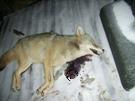
LeviSS
New member
Quote:
I've hunted coons with hounds for years and I can do as well in a couple hours at mid-day calling then I did with competition grade hounds in the same time frame at night.
OK, one more question and I'll leave you alone /ubbthreads/images/graemlins/wink.gif
Is the middle of the day the best time to call them? What time do you usually hunt them.
Thanks again, it's really appreciated!
I've hunted coons with hounds for years and I can do as well in a couple hours at mid-day calling then I did with competition grade hounds in the same time frame at night.
OK, one more question and I'll leave you alone /ubbthreads/images/graemlins/wink.gif
Is the middle of the day the best time to call them? What time do you usually hunt them.
Thanks again, it's really appreciated!
Cdog911
New member
Some guys say they have better luck in the mornings, and afternoons. Again, we usually call both coyotes and coons on the days we're out and generally switch over to coons around 10-11 a.m., calling them until 2 or 3 in the afternoon. That's one of the easy things about them. They're hideouts are easy to identify and pinpoint, so you set up right on them and don't try to make them come too far to the call. Also, watch the perimeter. There are often times runners that will come out of a tree in the distance and charge hard to the call. Geez, those coons love a good fight.
Im going to try my luck at coon calling next year.I saw a raccoon two days ago near an old abandoned farm house and I know where another old farm house is that has two hanging around it.Places like this is where Im plannin on doing most of my coon callin.I know where a bunch of possible coon tree dens are but Im not sure if they are just hollow trees or if a raccoon is actually in there.
Yes Cdog911 they mentioned the "stove pipe" type trees in the Crumblin Coons video.I know where one of those are and Im almost positive a raccoon is living in it but I dont know if he will stick around until next December or not.I sure hope it does cause I need to get in on some of this fun.There is alot of great info on this thread keep it up. /ubbthreads/images/graemlins/grinning-smiley-003.gif
Yes Cdog911 they mentioned the "stove pipe" type trees in the Crumblin Coons video.I know where one of those are and Im almost positive a raccoon is living in it but I dont know if he will stick around until next December or not.I sure hope it does cause I need to get in on some of this fun.There is alot of great info on this thread keep it up. /ubbthreads/images/graemlins/grinning-smiley-003.gif

The Bandit
New member
Quote:
If you watch the minaska 'crumblin coons' dvd they shoot some while still in the hole and they come on out;
We normally do not shoot them while they are in the hole, that tree just happened to be hollow all the way up with a huge opening at the bottom like a chimney. When we first started calling I saw one of the coons run into the bottom of the tree and crawl up to the top hole where his buddy was looking out otherwise I would not have taken that shot. Then I just lucked out when both of them kicked their way out of the top hole.
If you watch the minaska 'crumblin coons' dvd they shoot some while still in the hole and they come on out;
We normally do not shoot them while they are in the hole, that tree just happened to be hollow all the way up with a huge opening at the bottom like a chimney. When we first started calling I saw one of the coons run into the bottom of the tree and crawl up to the top hole where his buddy was looking out otherwise I would not have taken that shot. Then I just lucked out when both of them kicked their way out of the top hole.

Aaron_Proffitt
New member
I'd frown on anything that meant all that seperated me from an irate, foreclosed-on 'coon was a strand of barb wire.
ksyotecallr
New member
I'll second that Aaron!!!
Amen!I knocked one out of a tree with a 22 when I was about 12, went to pick it up ,It wernt dead and was real unhappy.
Thats the closses I've come to shooting my self.Its hard to shoot stumbling back words with a 35lb bore trying to chew your leg off.Its funny now but it scared the bajesus out of me at the time.LOL.
Thats the closses I've come to shooting my self.Its hard to shoot stumbling back words with a 35lb bore trying to chew your leg off.Its funny now but it scared the bajesus out of me at the time.LOL.
Last edited: