Originally Posted By: nastynatesfishI've hear that the glueing on a bolt helps alot if you live someplace or hunt someplace that is cold enough that you shouldn't be there. The way I've heard/read is it'll keep your bolt from freezing up in your action. As far as the barrel fluting I have 2 with fluting and I do like it. It is suppose to make a barrel some given percent stiffer than a non fluted barrel. If it's a heavy barrel I don't think it would matter?
Cell phone revisions or Jerry Springer Show? I'm guessing cell phone. Glueing on a bolt might cause it to freeze up in your action at any temperature. I am curious however as to how you know when it is so cold that "you shouldn't be there"
A fluted barrel is stiffer than a non-fluted barrel of the same weight. Both barrels having the same weight means that the unfluted barrel is skinnier/thinner in profile. Fluting a barrel does not add stiffness.
From the Lilja web site:
Fluted Barrels
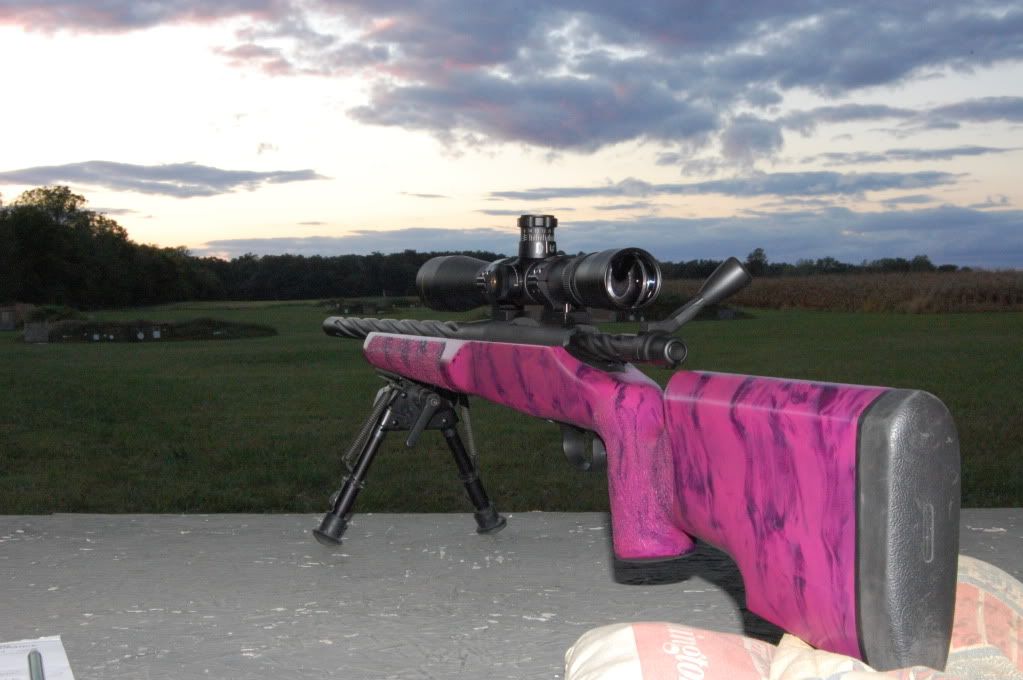
Fluting barrels for both competitive target and hunting rifles is quite popular. There are two advantages to using a fluted barrel. Improved accuracy is one advantage because of increased barrel stiffness. If we compare a fluted barrel to one that is not fluted, both weighing the same, the fluted barrel is stiffer. This is because the fluted barrel will be of a larger diameter than the unfluted barrel of the same weight and length. Increasing the diameter of a barrel greatly increases its rigidity. Fluting may also allow for a longer barrel, if weight is a consideration. Another advantage to fluting is the increased cooling rate of the barrel because of the greater amount of surface area exposed to the air. Please look at our FAQ section on fluting too.
If you skim read the statement, it sounds like fluting a barrel improves barrel accuracy by increasing barrel stiffness. If you read the whole statement and take it in total, they are simply saying that a fluted barrel will generally be more accurate than an unfluted barrel (of the same weight) because it is larger in diameter and hence stiffer.
Fluting a barrel can affect accuracy on an already finished barrel, like when fluting is done on some factory rifles. Most good smiths and barrel makers recommend that fluting be done prior to boring and rifleing. If done after boring, etc., the fluting process can induce accuracy hurting stresses in the barrel. I have several fluted barrels and like them, yet one very good custom smith I use does not guarantee accuracy from a fluted barrel if that is what you order. He's had too many complaints about fluted barrels not shooting as well as non-fluted in his business experience.
The barrels I'm talking about with this smith were factory fluted by the barrel maker. His belief is that some fluted barrels might be fluted after boring by the barrel maker as orders arrive, and hence accuracy may suffer from barrel to barrel. The smith will not do fluting himself on a bored and rifled barrel for this reason.
I'm not certain what their current policy is but at one time Hart barrels would not guarantee their normal level of accuracy from a fluted barrel that was fluted after boring. Others disagree considerably, so it seems the jury is divided on the accuracy issue.
In total, in absolutes, all fluting of a barrel does is reduce the weight of the barrel and make it look nice to most eyes if done properly. And a gun smith makes more money selling a fluted barrel. The accuracy part is a variable that might change from barrel to barrel and when the fluting is done.
There are those who say a fluted barrel increases cooling of a barrel. Military testing using infrared technology shows it does. However, other tests done for the military using the same infrared technology shows that bead blasting a barrel surface also increases surface area and is perhaps a better process for cooling barrel steel. Same result with a different processes. With this too, there is no complete agreement on which process is better for cooling.