

Can somebody explain this whole 223 vs. 22-250 fur friendly thing to me?

Okie Hunter

New member
Can somebody explain this whole 223 vs. 22-250 fur friendly thing to me? Some say the 223 is more fur friendly than it’s brother the 22-250. As I see it the two guns shoot the same bullet. Although the 22-250 may (or it may not depending on load) shot that same bullet faster. They are none the less the same projectile. If this is the case, is it bullet velocity alone that makes the 250 un-fur friendly?

It would seem to me there are only a couple of logical conclusions to draw from the debate. Slow the bullet down coming from the 22-250 and it will be just as fur friendly as the 223 or bullet selection is the all (or maybe the only) important factor when it comes to fur damage.

If my assumptions are correct, either caliber gun will have the same effect on fur, either good or bad.

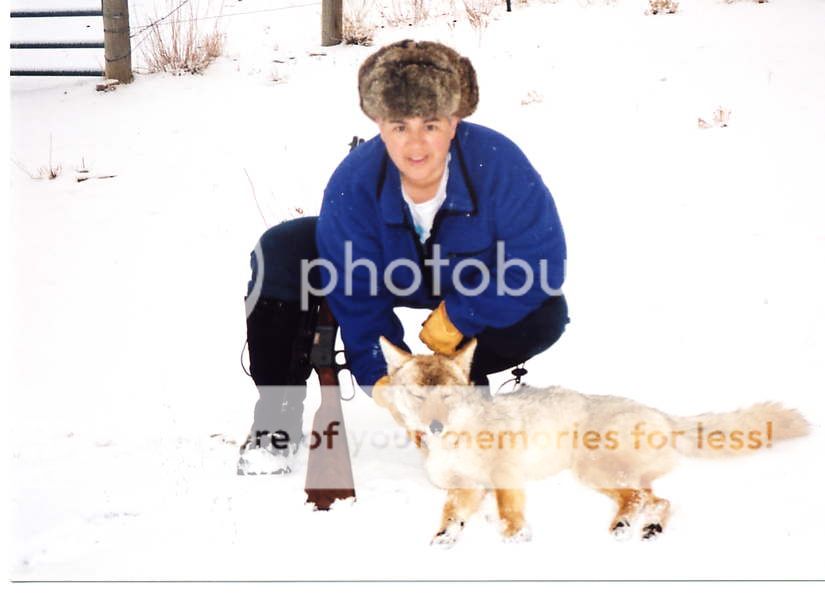
I have little experience with a 22 caliber gun, I just bought a 22-250 and so far have not killed anything but paper. I have killed about 25 or 30 coyotes this past year with a 25 wssm shooting a 85 grain Nosler Ballistic Tip. All have been clean kills, very little movement after the shot, some are easy on the fur and some were not. Fur damage, in my view, has largely been a product of bullet placement.

My question is, why do some folks think the 223 is better on fur than a 22-250? Is it the bullet speed thing?
 
Speed is the only factor that makes the 223 more fur friendly than the 22-250. The 223's slower speed imparts less damage to the animal, in turn making it less devastating on fur.

Like you said earlier, slow the 250 down and it will be just as fur friendly as the 223. After all, they use the same .224" bullet.

Your figures seem to all be correct. /ubbthreads/images/graemlins/grinning-smiley-003.gif
 
Sooooooooo, is it accurate to say that a:

223 is to a 22-250, like a
30-06 is to a 300 win mag, like a
38 special is to a 357 magnum
and so on?
 
QUOTE: "Fur damage, in my view, has largely been a product of bullet placement."

Bingo.........that's it right there in my book.
 
O.H.
In the late 70's I was using a 22-250 for fox and coyote and fur prices were too good to risk gaping holes. Tried fmj's but didn't like the results. Went to 53gr Sierra match hp's and loaded down to about 3100. I held out for head shots on the reds and shot coyotes any angle I could. On broadside yotes it left exits in the nickle to quarter size range. On reds all you had to do was graze the head and they were down for the count.
I remember walking back to the truck one moonlit night on the snow, after calling yotes till I was too cold to sit any longer. A shadow came up out of a draw upwind and I thought it was a coyote at first. I found it in the scope and it was a big red. I went down on one knee and tried to get steady for a 60 yd head shot. I was to cold and shaking to much to take the horizontal movement out of the crosshairs. He moved and stopped again at about 80 yds. I had sat down in the snow and had my elbows between my knees, still could not hold still. He moved again and stopped at maybe 120yds. This time I was prone with my elbows in 6 inches of crusted snow and still could not take the horizontal wobble out of the crosshairs. So I moved the crosshairs of the BRAND NEW 220 SWIFT "I had just recently sighted in with factory amo" back to the ribcage and with numb fingers and watery eyes broke the shot.
I could have cut him in half with an axe and saved more fur. I remember getting 7$ for that fox and 55 for the one I had head shot with the 250 the day before.
 
Your thinking is correct. However if you slow down the 22.250 to .223 velocities all you have is another .223. The benefit of the 22.250, because of it's increased velocity makes it a longer range gun than the .223. IMO--the .223 is at it's limit by 300 yards, while the 22.250 still has enough kinetic energy to go another 100 yards.
 
The point I am trying to clarify in my mind is there is not difference in the fur damage in a 223 and a 22-250 or for matter a 25-06 or a 270, except the size of the entry hole, assuming it is shooting the same bullet type at the same velocity and it hits the poor critter in the same location.

So all the bantering back and forth about which caliber is best is mostly personal preference, right?

If you want a fur friendly gun, look first at bullet placement, then bullet type and lastly bullet speed. The last thing you would consider is 223 or 22-250, that is a consideration for range not result on fur, or am I missing something here?
 
First off, the only caliber I can safely say is fur freindly would be the .17 Remington! With that said, I have seen it do some funny things from time to time.

I have seen .223's tear up fur just as much as the 22-250. Bullet selection for each one is the factor in my opinion. If you can run the right bullet in the 250 fast enough you get no exit which would be ideal. However, this may not work everytime. Same with the .223 but you don't have as much speed to play with. If you load the 250 down to .223 vel it should perform like the .223 with the same type bullet. The purpose of a 250 is fast, flat, and more range with heavier bullets.

Soft point bullets generally cut fur damage but there is no magic bullet in these calibers. If you hit bone, even SP will tear a new one! Either of these calibers will tear up a fox.

For the .223, a bullet that has a tougher jacket that will not expand rapidly would be something to look at. Same thing in a 250 but you should be able to find a bullet that can expand completely without exit at 250 speeds.

Remember, nothing is perfect.
 
Trying to collect fur with a rifle is a crapshoot. You can use the most explosive bullets at the highest velocity hoping for internal blowups and no exit, or you can use tough bullets at lower velocities hoping for small exit wounds.

Both philosophies are very dependent on angles and if you hit bone. A rifle is just not a reliable fur collection device no matter how you go about it.

Jack
 
I havent seen the 22 250 be fur friendly unless you was using a FMJ bullet. I shoot a 55 gr BT and i know there not. I have a .223 too it isnt ruff on it as bad as the 22 250. Becasue i am not loading the .223 to the max like i am the 22 250. The fur isnt much good here. So i hunt with the 22 250 becasue it gives me more range than the .223. VM
 
Jack,

You better tell Q-Wagoner he's wasting his time shooting all those coyotes then. /ubbthreads/images/graemlins/crazy.gif
 
OkieHunter:

I think you are right on the mark with your last post. A lot of it is preference. If you hit the animal in the wrong place, the bullet is going to react, pure and simple.

I use a 22-250 mainly for Coyotes and my 223 for PD's, 25-06 for big game now a days.

The reason I use the calibers I do for the game I chase is simple.... the 22-250 isn't going to let me down from point blank range to 400 yards if I choose to shoot that far. Also, I don't heat the barrel up from repeated shooting like I would in a PD town.

The 223 is less recoil, less report and easier on the barrel.... which makes it better suited in my opinion for playing in PD towns.

My 25-06 is a knock'em dead right there Deer and Elk rifle.... not going to wear it out either like I would in a PD town.

Anyway, that's where I'm at with it........some may agree and some may not......oh well.
 
Jack, I'm just responding to your statement:

"A rifle is just not a reliable fur collection device no matter how you go about it."

I just beg to differ.It may be a little easier in the skinning process to trap them,and dispatch them with a .22 rimfire,with no sewing.But to say that a rifle(centerfire) is not reliable is just not true.I just used Q as an example.There are MANY MANY people that kill,skin,and sell alot of coyotes each season.All of which are shot while calling with centerfire rifles.Just something to think about.Good Hunting Chad
 
I'll admit that Q stacks up a lot of coyotes. I think what Jack was trying to say (correct me if I'm wrong, this is my take on it) is that few fur harvesters have the time, dedication, energy, and access to coyote-producing country that Q has to make fur collection with a rifle even remotely profitable. A rifle and call only work while you're on stand, traps work 24/7. Few can argue the efficiency of that. Rifles and calls are reliable in the right hands, but efficient and productive over the long run in very few.
 
DesertRam,

To run an efficient PROFITABLE trapline takes ALL the things you mentioned above.I agree that they are working(traps)24/7.But thats only part of it.The time,dedication,and energy to run a trapline and make money at it especially if your trapping(targeting) coyotes is no small chore.Cats are alittle different because if you get one bobcat it's like about 10 coyotes(money wise).I know what Jack's saying and it does make sense.Rifles(centerfire) are not designed to make tiny little holes in a valuable pelt.But if you have the time and don't mind sewing the holes,and you use the right bullet/rifle combination it can really pay off for you.Good Hunting Chad
 
Okie Hunter, Yes. Your last comment was correct, IMO---- In theory, if a .223 bullet and a 22.250 bullet travel the same velocity, and hit the same spot on the animal, then the damage should be the same. Beyond that you haven't missed a thing. I bought a .223 for the vast amounts of ammo available, and although I like to carry my .223 in the field, (cause the rifle is light), I much prefer the killing power and range of the 22.250. But there is cost for the extra velocity, and I think you have already figured out what that cost is.
 
Back
Top