
East? - West?

I dont know about east and west but the diffence seems to be the responce you get. Out west there are not as many roads and people. Here in the east there are people and roads everywhere. I can walk out the back door of my house and be in coyotes in 5 min. But I drive 60 min to hunt. Why? because the ones around the house get pounded all the time. You will never here a coyote howl around the house, I have lived there for 7 years and never heard one. But they are there and there is sign everywhere. They have adapted to living around people. I have killed coyotes behind the house but they are tough.

I can drive 45-60 min out in the country and things change. Coyotes are vocal and respond to the call in a diffrent manner. I also think population numbers have alot to do with this. Out west there are lots more coyotes. Here in the east there are not as many. Also diffrence in terain is a big factor. I can make 5 stands in the same hollow, the sound does not travel well in the woods, out west were it is flat it is diffent. Coyotes in the east like to circle down wind in the woods were they are out of sight to get a feel for things before they come running in. Not very often do I get a coyote to run strait to the call. On the vidio's I have seen from the west they seem to run to the call. I get a few that will do this but not many. We called one this year in the mines that ran 1000 yards across a field to get to the call and I even told my calling buddy " this was like what you see on a vidio from out west". I dont think they are diffrent just adapted diffrent.

 
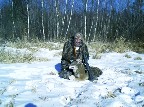
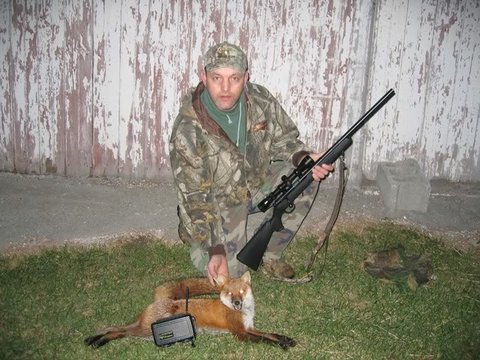
I have seen two different black coyotes the one I killed here in SC and another in WV. I do think that the coyote I killed in WV has some dog in him though. Look at the differences of these two coyotes.

Here is the black one I killed in SC
fa6029da.jpg

And here is the coyote I killed in WV
coyote.jpg

Where I can tell the difference the most is in the long nose on the black one. Would you consider these two different types?

Ronnie
 
Originally posted by Prime Time:
[qb]Randy,
You told me that Coyotes in Minnesota are not as vocal as coyotes you hunt farther west, but does that mean they will not come in to coyote sounds? A lot of things I've been reading say that coyotes will come, but they won't answer back.
/ubbthreads/images/graemlins/smile.gif [/qb]
I won't say that coyotes WON'T come to coyote sounds, but they won't come as well as they do in some other parts of the country. In fact, for the most part, coyotes won't come to those sounds so I don't even use them. When they do come, they come quietly. Another reason that I don't use them is that anywhere in Minnesota where there are coyotes, there is also a STRONG possibility of there being red foxes. Start with a howl and you'll never see those foxes.

Randy

PS. Centerfire_223, that black coyote in the top picture is sure a pretty one. He'd be mounted in my living room right now if I had killed him.
 
Centerfire-223, I'm not so sure both of those dogs are coydogs, are you sure? and how can you be sure. Go to this web site www.indiandogs.com and see what you think. You may also want to try this one www.carolinadogs.org Could you guys be shooting Indian dogs? Like Byron, I have seen alot of coyotes dead and alive, but have never seen a coydog that I knew was a coydog. This is an interesting thread, I hope we can all learn something from it, but I doubt it lol. /ubbthreads/images/graemlins/laugh.gif
 
Beats me, I havent' killed enough coyotes to know the difference. The black one could be a indian dog but not the carolina dogs.

All I know is it looked like, walked like, and responded like a coyote. Either way I am proud of it. I do know it was running with regular coyotes or there are regular coyotes in that area. The land owner had never seen this particular dog before.

I do think the red looking dog has some kind of mix to it though and it was running with a black dog too. We seen it again this year on the same farm. First time I saw it was 4 years ago.

Ronnie
 
Great responses so far... I'd like to hear from more traveling hunters. Guys that hunt both areas. It seems that the east-west thing doesn't exist, but what we have is coyotes in heavily populated areas vs. coyotes in not so heavily populated areas. And also coyotes in open country vs. coyotes in wooded areas. Guys that travel around and hunt different places what do you do differently in different areas? Soon I'll be able to answer my own question, because I'll be traveling to South Dakota to hunt some coyotes!
 
Sorry YellowHammer my bad /ubbthreads/images/graemlins/frown.gif . Black yotes do occur all acroos their range but percentage wise it is waaaayyy more common to see them in PA than everywhere eles combined. And I have at least a dozen pictures of uniques yotes, but I don't know how to post 'em. If someone would for me, I think it would be educational for all of us here at PM /ubbthreads/images/graemlins/wink.gif . Really interesting too /ubbthreads/images/graemlins/laugh.gif .

And lets keep this message going, it's really interesting.
 
I'll throw in my two cents. I believe a coyte is a coyote where ever he lives. Where he lives and factors making up his habitat are what determine his behavior. I have trapped and called a fair number in Ia., and called a few in Texas and Wyoming. Calling in Ia. is considerably tuffer than my "out west" experiences. In southeastern Ia. coyotes have more cover than they deserve and use it wisely, they also have a nearly unlimited food supply, which means fat coyotes. They have many more close encounters with humans and most are unpleasant. Our seemingly never ending deer season with umpteen hunters per sqare inch makes em' down right paranoid. Until deer seasons are over and we get some really cold nasty weather to limit there food supply they are tough customers.
The western coyotes I have called are typically hungry, less pressured and less protected by available cover. They really are a callers dream. Any changes in my tactics are based on terrain and habitat more so than the "type " of coyote. I believe we could transplant a south Texas yote to SE Iowa and if he lived here 30 days he would be a nervous wreck!, and most likely as tough to call as our resident population.
The black and dark faze canines I have encountered here I would guess were carrying some domestic blood. I have a picture of a buddies black lab courting a coyote bitch taken from his living room. He took the picture then after the fun was over he snuck out the back door and shot the coyote. He didn't like the idea of coydogs looking after his calves.
I think the real difference is that a hungry brave coyote is just easier to call than a fat paranoid coyote. One thing is for sure, you will get more shot opportunities out west than you will here. Now if I could just shoot!
 
I'll throw in my two cents. I believe a coyte is a coyote where ever he lives. Where he lives and factors making up his habitat are what determine his behavior. I have trapped and called a fair number in Ia., and called a few in Texas and Wyoming. Calling in Ia. is considerably tuffer than my "out west" experiences. In southeastern Ia. coyotes have more cover than they deserve and use it wisely, they also have a nearly unlimited food supply, which means fat coyotes. They have many more close encounters with humans and most are unpleasant. Our seemingly never ending deer season with umpteen hunters per sqare inch makes em' down right paranoid. Until deer seasons are over and we get some really cold nasty weather to limit there food supply they are tough customers.
The western coyotes I have called are typically hungry, less pressured and less protected by available cover. They really are a callers dream. Any changes in my tactics are based on terrain and habitat more so than the "type " of coyote. I believe we could transplant a south Texas yote to SE Iowa and if he lived here 30 days he would be a nervous wreck!, and most likely as tough to call as our resident population.
The black and dark faze canines I have encountered here I would guess were carrying some domestic blood. I have a picture of a buddies black lab courting a coyote bitch taken from his living room. He took the picture then after the fun was over he snuck out the back door and shot the coyote. He didn't like the idea of coydogs looking after his calves.
I think the real difference is that a hungry brave coyote is just easier to call than a fat paranoid coyote. One thing is for sure, you will get more shot opportunities out west than you will here. Now if I could just shoot!
 
I hunt the East most of the time KY,OH,WV. But I go south every year at least once. Alabama, SC, or TN, GA. I have taken coyotes in all these states and the only thing realy diffrent seems to be the way they respond. The areas that they live in are diffrent to. As for them looking diffrent the only thing I see diffrent is body size and the noise looks longer on them in the south. The parts of the south that I have hunted the coyotes are alot smaller in body size than the ones killed up North. But they respond to the call just about the same as the ones here.

A good example in the LBL hunt last year. The coyotes were the same in western KY as the are In Eastern KY. But the area hunted, wind changes and terain made all the diffrence in the world. I only called in two yotes down there but as far as I could tell they looked the same. But they sure dont act the same! Hard hunting in that area.

I hunted texas for turkeys a few years ago and had a few coyotes respond to the call. I seen alot of coyotes while I was there. They looked the same but when they desided to come to the call, look out here they came. We very seldom get that here in the east. Very seldom. And man was it flat! Was a diffrent world hunting down there than here.
 
cee atch--What you said was worth saying twice. You said a mouth full.

I would love to see a transplanted western coyote in an eastern environment. That image of a Nervous wreck was funny as h*ll.
 
Pruson your right, cee-atch pretty well sumed it up. I live in East Texas and hunt quite a bit out in West Texas. I can tell a huge difference in them in just a 4 hour drive from my home. Habitat and their environment make them adapt. We have just as many coyotes here as the places I hunt in West Texas, but my success rate per stand in much better in West Texas. In the East you have to pay more attention to every detail to be consistantly successful.

Good Hunting

Byron /ubbthreads/images/graemlins/laugh.gif
 
There is a difference in coyotes in the east and west. The reason is that long before the whiteman set foot on North America, the coyotes living in the east cross bred with the timber wolf creating a new sub species. For those who want to know a lot more about it, there is a book titled:
"Eastern Coyote: The Story of Its Success by Gerry Parker"

I also believe coyotes of the east seem to act more like a timber wolf or pack of timber wolves.
 
Sorry about the double post guys, I run a keyboard about like I shoot, when in doubt fire another round. Titanim mentioned the timber wolf/coyote cross, the old timers here tell me that IA used to have red wolves or brush wolves as they called em'. the majority of our coyotes seem to have a redish cast on lower fringes. Size wise, 30 pounds will be a big one, the heaviest one I got when I was doin' alot of trappin' was 37 pounds. The local hound hunters got one a few years back that was extra heavy and had a blockier head and shorter muzzle. The argument still goes on as to wether it was a red wolf or coydog. It is my guess that as generations go by the blood from those crosses diminishes, making todays critters more coyote than anything else. One thing for sure, what ever they are, we'll take the easy ones and learn from the tough ones!
 
Sorry about the double post guys, I run a keyboard about like I shoot, when in doubt fire another round. Titanim mentioned the timber wolf/coyote cross, the old timers here tell me that IA used to have red wolves or brush wolves as they called em'. the majority of our coyotes seem to have a redish cast on lower fringes. Size wise, 30 pounds will be a big one, the heaviest one I got when I was doin' alot of trappin' was 37 pounds. The local hound hunters got one a few years back that was extra heavy and had a blockier head and shorter muzzle. The argument still goes on as to wether it was a red wolf or coydog. It is my guess that as generations go by the blood from those crosses diminishes, making todays critters more coyote than anything else. One thing for sure, what ever they are, we'll take the easy ones and learn from the tough ones!
 
cee atch,
You're right about the red coyotes. I found this page from Boston College called the "Eastern Coyote Homepage". The link to it is here: http://www2.bc.edu/~wayjo/mainpage.html

If you go to this page, click the link there that says "Cape Cod Coyotes". There is a nearly "red" coyote at the bottom of the page. It is incredible that these college students are able to box trap these coyotes and do radio collar research on them.

This is for anybody interested in the subject.

titanium
 
I am by no means an expert, but I believe I read somewhere that the Eastern Coyote is actually a Coyote - Wolf mix. It may be useful to do a search on here. I know I heard that the Eastern Coyote has Wolf DNA, but like I said, I am know expert and haven't done the reasearch myself.
 
Here in Kentucky, I have seen several black coyotes/coydogs. The first coyote I shot was traveling in a pack of 5. The lead dog was solid black. I shot the #2 dog. When the gun went off, The lead dog, black, ran toward me and stopped approx. 15 yards away and looked back at his buddy. This dog had all the coyote features, nose, tail, etc., but was all black. Possibly a coydog. He was average weight. 35-40lb. I think we have seen quite a few coydogs here over the years. Most of the coyotes here are in the 35 to 40 lb. range. I had shot one that went approx. 55lb., I think it had a lot of domestic dog in it. The property owner had recently lost 2 calves and had 4 or 5 others that had been attacked. All this stopped after the big dog was killed. Domestic dogs and coyotes do breed occaisionally. My partner shot a dog and a coyote knotted up sereral years back.
 
To Danny B

Eastern and Western coyotes are very different in their habits. I have lived and hunted in both places. When I lived out west I didn't understand why there would be any difference...now that I live back here it is easy to see the difference.
 
The two pictures look to be coydogs.About 25 years ago when coyotes came to my state I saw a few coydogs that looked like the above pictures above.Now with the increased populations I never see coydogs.
 
Back
Top