

You are using an out of date browser. It may not display this or other websites correctly.
You should upgrade or use an alternative browser.
You should upgrade or use an alternative browser.
For HM
- Thread starter crapshoot
- Start date


Yes.....to some degree, at least. A number of years ago, the feds went in w/helicopters and killed all the nilgai found on the "Blue goose farms" (local vernacular for federal wildlife preserves) located near the mouth of the Rio Grande, claiming they were importing ticks as they crossed freely back and forth across the Rio. This, of course raised quite a stink among local hunters, especially. I asked one of the "tick riders" that I knew if any ticks were found and he said he had not heard of any.
Fast forward.......I have not hunted for the last couple of years and moved out of the area a year ago, so not in the loop personally, but do know they have reinstated the tick quarantine selectively based on any suspected outbreak. I was surprised to learn about the extent of the problem. This apparently covers certain areas as well as specific ranches according to AI.
When the anti hunters successfully intervened in harvest of Scimitar Horned Oryx hunting a few years ago, the feds required a cites permit but this was less invasive than what seems to be in play currently, as there was no physical inspection required, only certification that the animals were harvested on licensed premises under regulated conditions.
Will bounce this off of some old hunting buddies and see how it is being handled currently. I would imagine that all game harvested on the ranches I hunted for last 25 years would have to be left in the cooler and that they would have weekly (or so) inspections of the cooler resulting in some sort of tag required before removal?????
Can't imagine the red tape (on smaller ranches that I used to hunt which had no cooler) having to call for an individual inspection before getting a deer to the processor.
Fast forward.......I have not hunted for the last couple of years and moved out of the area a year ago, so not in the loop personally, but do know they have reinstated the tick quarantine selectively based on any suspected outbreak. I was surprised to learn about the extent of the problem. This apparently covers certain areas as well as specific ranches according to AI.
These requirements would really throw a kink in nilgai, and obviously even deer hunting on all the ranches I frequented over the past 50 years.Fever Tick Quarantine Status in South Texas
Yes — fever tick quarantine zones are currently in effect in multiple South Texas counties, including parts of Cameron, Starr, Webb, Willacy, Zapata, Brooks, and Val Verde, with additional premises quarantines in other countiesTexas Farm Bureau+2.
Current quarantine areas
According to the Texas Animal Health Commission (TAHC) and USDA, fever tick quarantine zones are established in:
These zones are in place to prevent the spread of cattle fever ticks to unaffected areas by controlling the movement of infected animals and animal parts.
- Brooks, Cameron, Starr, Val Verde, Webb, Willacy, and Zapata counties
- Additional premises quarantines exist in other counties such as Hidalgo, Jim Wells, Kinney, Kleberg, Live Oak, Maverick, and parts of Cameron and Jim Hogg
Texas and Southwestern Cattle Raisers Association+1.
What the quarantine requires
If you harvest, relocate, or capture white-tailed deer, nilgai, antelope, black buck, axis deer, or other exotic cervids on quarantined premises, you must:
These requirements apply to landowners, lessees, hunters, and anyone handling such animals in quarantine zones.
- Arrange for inspection and treatment by a TAHC or USDA representative before moving the animal, carcass, hide, cape, or other parts
- Obtain a movement permit after inspection; this permit must accompany the animal or parts at all times
- Contact your county TAHC or USDA office to schedule the inspection and permit process
How to confirm local status
Because quarantine boundaries and premises can change, verify with TAHC or USDA before moving animals:
Bottom line: Fever tick quarantines are active in several South Texas counties, and moving game from quarantined premises requires inspection, treatment, and a movement permit. Always confirm the latest status with TAHC or USDA before you act.
- TAHC Region 8 (Cameron, Starr, Webb, Willacy, Zapata): 956‑568‑5741
- TAHC Region 5 (Live Oak, Jim Wells, Kleberg): 361‑358‑3234
- USDA CFTEP county office locator: USDA Office Finder
When the anti hunters successfully intervened in harvest of Scimitar Horned Oryx hunting a few years ago, the feds required a cites permit but this was less invasive than what seems to be in play currently, as there was no physical inspection required, only certification that the animals were harvested on licensed premises under regulated conditions.
Will bounce this off of some old hunting buddies and see how it is being handled currently. I would imagine that all game harvested on the ranches I hunted for last 25 years would have to be left in the cooler and that they would have weekly (or so) inspections of the cooler resulting in some sort of tag required before removal?????
Can't imagine the red tape (on smaller ranches that I used to hunt which had no cooler) having to call for an individual inspection before getting a deer to the processor.
By the way, those nilgai on the game refuge were about 60 miles from the ranch country surrounding King Ranch where the nilgai were first released. The King Ranch then runs another 50 miles or so farther north.
To get to the Rio Grande, the critters would have to cross the Arroyo Colorado (which has been dredged to handle offshore barges) and the Brownsville ship channel, in the process.
I laughed at the statement in the video about ranch fences being only a suggestion to the nilgai. That's an understatement! Some of the nilgai crossings have been worn to the point a midget could walk under the fence standing up.
To get to the Rio Grande, the critters would have to cross the Arroyo Colorado (which has been dredged to handle offshore barges) and the Brownsville ship channel, in the process.
I laughed at the statement in the video about ranch fences being only a suggestion to the nilgai. That's an understatement!
Some of the nilgai crossings have been worn to the point a midget could walk under the fence standing up.
Based on the virility of nilgai, the numbers of nilgai currently estimated is believable.
The owners of the ranches I hunted were very serious about game management. Did at least two helicopter surveys of their properties annually before issuing game quota for the lease hunters. There were 39 members on three ranches (nilgai inhabited only two ranches of approximately 17,000 acres). The ranchers used the lease members to cull nilgai cows as indicated by the game count. Of the 39 hunters on the three ranches, only 25 or so hunted nilgai regularly and the annual quota was usually 4-5 nilgai cows per member. One particular year the quota was 10! Of course, not all hunters took their quota, but some did just to give you an idea of the propagation among the native nilgai.
The cows often gather for group pictures around the water holes in the summer. (Water holes are off limits during hunting "season" )
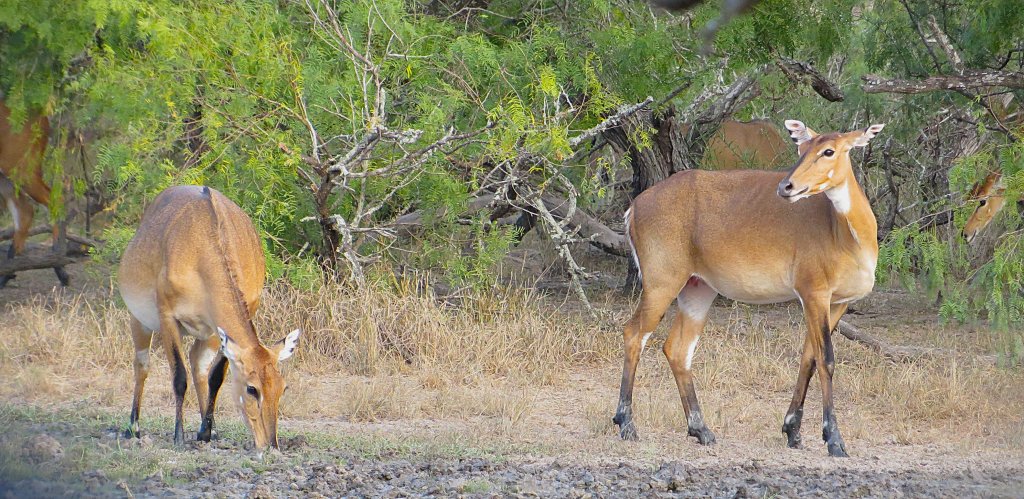
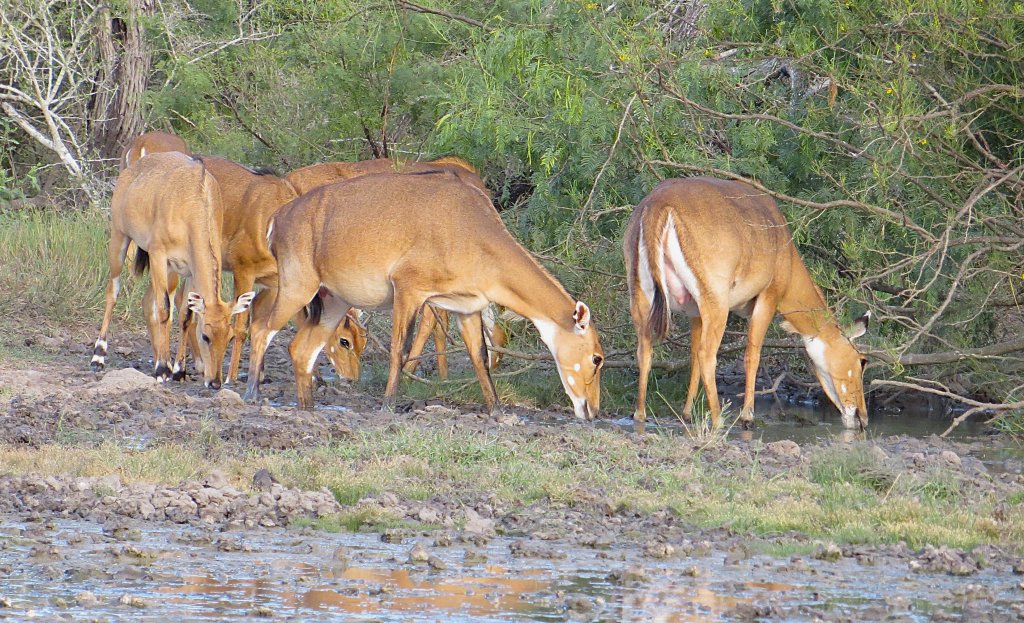
They start young
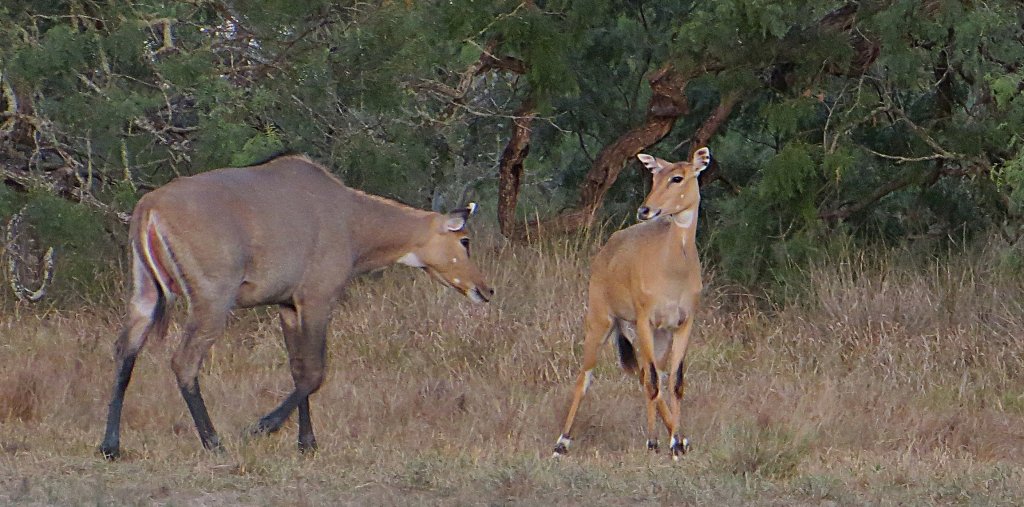
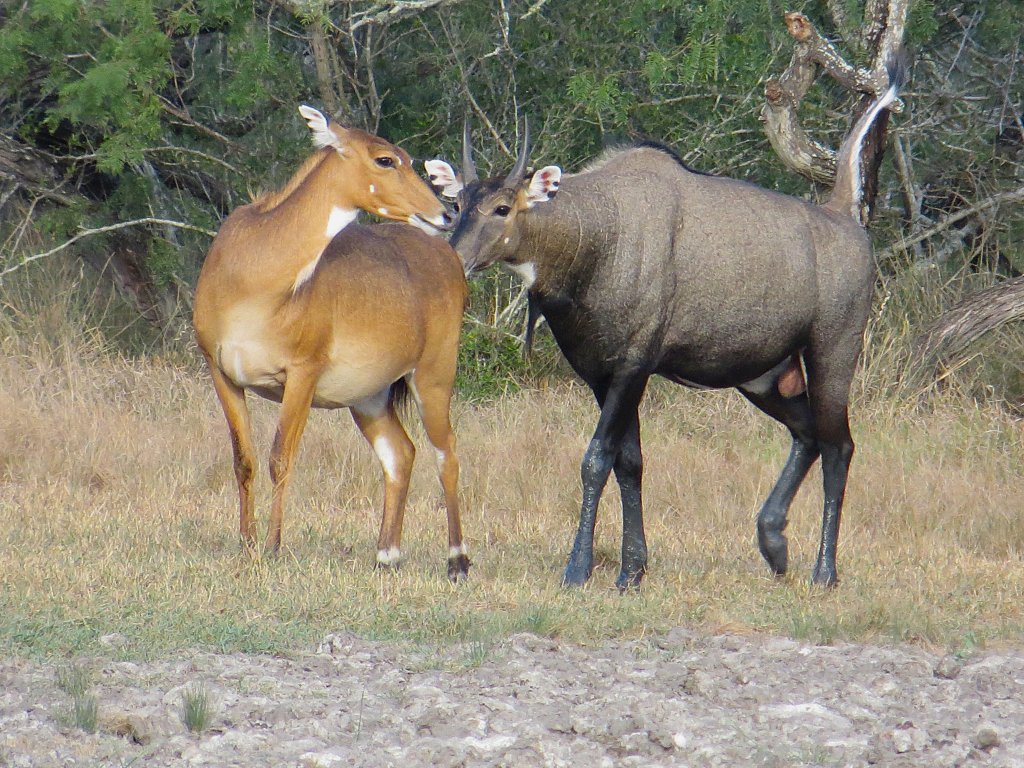
Usually found in smaller groups once hunting starts and their senses are as keen as a coyote, multiplied by the number in the group
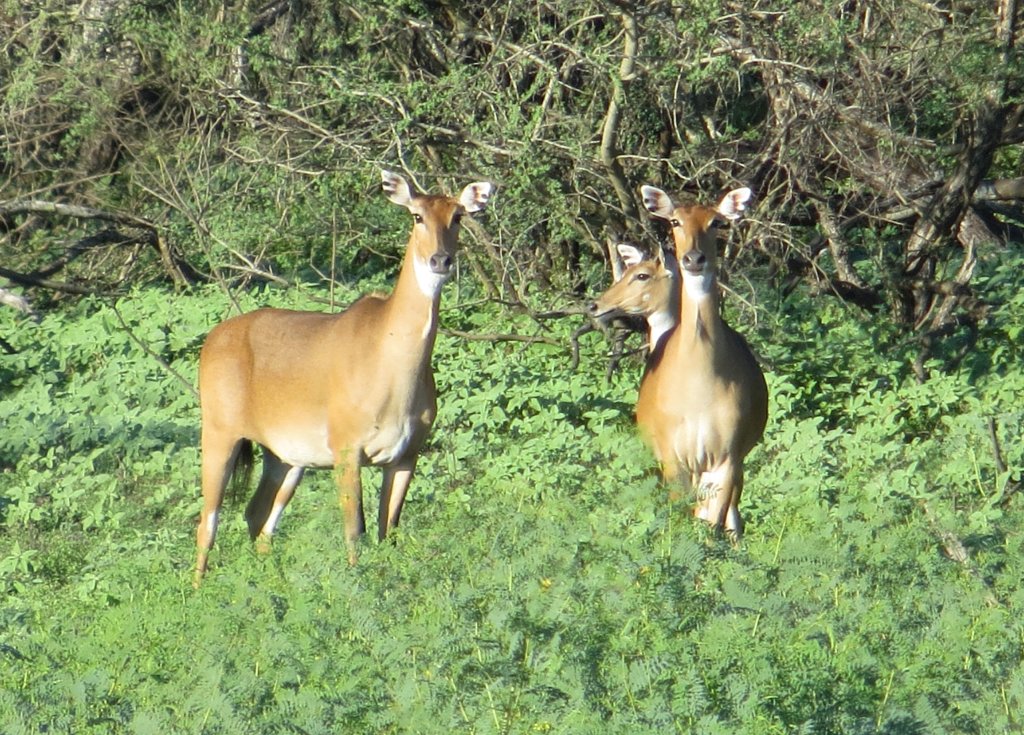
The owners of the ranches I hunted were very serious about game management. Did at least two helicopter surveys of their properties annually before issuing game quota for the lease hunters. There were 39 members on three ranches (nilgai inhabited only two ranches of approximately 17,000 acres). The ranchers used the lease members to cull nilgai cows as indicated by the game count. Of the 39 hunters on the three ranches, only 25 or so hunted nilgai regularly and the annual quota was usually 4-5 nilgai cows per member. One particular year the quota was 10! Of course, not all hunters took their quota, but some did just to give you an idea of the propagation among the native nilgai.
The cows often gather for group pictures around the water holes in the summer. (Water holes are off limits during hunting "season"
)They start young
Usually found in smaller groups once hunting starts and their senses are as keen as a coyote, multiplied by the number in the group