What shot size do you die hard fox guys use? I used NO.4 buck last year but was only good out to about 30 yards. I couldnt find a good choke option for any farther. Im thinking about use 4 shot turkey loads this year because it pattern better farther out of my gun. However I dont know if the smaller size shot will have enough energy out pass 40 to 50 yards to cleanly take fox. Anybody that has a experince with this please chime in. Thanks


You are using an out of date browser. It may not display this or other websites correctly.
You should upgrade or use an alternative browser.
You should upgrade or use an alternative browser.
Grey Fox shot size
- Thread starter BrockPA
- Start date


azcoyotehunter
New member
#4 buck shot, with a full turkey choke was good out to 50yrds for me last year.

GC
Well-known member
Quote:
However I dont know if the smaller size shot will have enough energy out pass 40 to 50 yards to cleanly take fox.
Past 40 yards things begin to happen to patterns, usually bad things. And it can happen very quickly, five yards can make a big difference in effectiveness at the mid-field line. Personally, I like bigger shot than a turkey load. I've shot about a dozen coyotes with 3" .12 gauge turkey loads of no. 4's and experienced only fair, to downright poor results. I know gray fox aren't half the size or as hardy as coyotes, however, there really isn't a whole bunch of energy left in a no. 4 pellet at fifty yards. I've skinned squirrels that had copper plated lead pellets stuck under their hide. Someone tried a long shot and the pellets did no more than barely made it through the tough elastic skin of a gray squirrel. I can't get too excited about long range shotgunning with turkey loads for predators. I know at least one guy here that disagrees with me, our experiences seem to be quite the opposite with turkey loads. He seems to have good luck with them, I certainly did not. With that said, were I to go looking for a fox specific load, it would be something like a "denser than lead" load of fast no. 2's or even a load of B size shot. Look for these in the waterfowl catalogs. A good compromise in case the odd coyote or two showed up rudely would be my new go to load of Remington HD-BB's. Plenty of pellets of large enough size, heavy, hard, fast, penetrates like gangbusters, and fairly easy to find good patterns with. Pretty tough load to beat on every corner except price - and they are a little pricey. And there is nothing wrong with good old No. Four Buckshot either. Have you read the sticky post in the Firearms section about shotguns at the top of the page? If not, that could be useful to you.
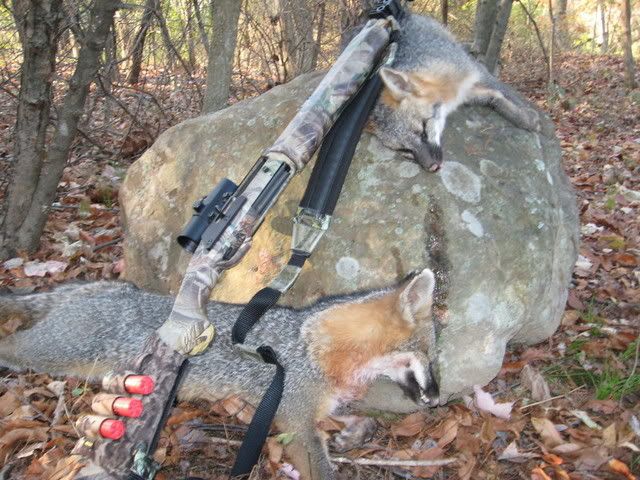
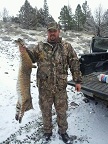
This pair of fox didn't like the HD-BB's...

This one couldn't hack the No. Four Buck...

However I dont know if the smaller size shot will have enough energy out pass 40 to 50 yards to cleanly take fox.
Past 40 yards things begin to happen to patterns, usually bad things. And it can happen very quickly, five yards can make a big difference in effectiveness at the mid-field line. Personally, I like bigger shot than a turkey load. I've shot about a dozen coyotes with 3" .12 gauge turkey loads of no. 4's and experienced only fair, to downright poor results. I know gray fox aren't half the size or as hardy as coyotes, however, there really isn't a whole bunch of energy left in a no. 4 pellet at fifty yards. I've skinned squirrels that had copper plated lead pellets stuck under their hide. Someone tried a long shot and the pellets did no more than barely made it through the tough elastic skin of a gray squirrel. I can't get too excited about long range shotgunning with turkey loads for predators. I know at least one guy here that disagrees with me, our experiences seem to be quite the opposite with turkey loads. He seems to have good luck with them, I certainly did not. With that said, were I to go looking for a fox specific load, it would be something like a "denser than lead" load of fast no. 2's or even a load of B size shot. Look for these in the waterfowl catalogs. A good compromise in case the odd coyote or two showed up rudely would be my new go to load of Remington HD-BB's. Plenty of pellets of large enough size, heavy, hard, fast, penetrates like gangbusters, and fairly easy to find good patterns with. Pretty tough load to beat on every corner except price - and they are a little pricey. And there is nothing wrong with good old No. Four Buckshot either. Have you read the sticky post in the Firearms section about shotguns at the top of the page? If not, that could be useful to you.
This pair of fox didn't like the HD-BB's...
This one couldn't hack the No. Four Buck...
berettaman
New member
I agree with you GC, just based on squirrel hunting with #4 shot you won't kill many squirrels past 40 yds. Personally I wouldn't use it for fox, just my opinion.
Wackmaster
New member
+1 for #4 buck and an extra full turkey choke. It patterned better out of my gun than the Dead Coyote even with the Carlson choke.


dogcaller55
New member
Dead coyote works for me!

Lungbuster
New member
+1 #4 buckshot.......
SteveB22250
New member
In thick stuff I shoot high base #6 shot never had one get up after that, for more open stuff dead coyote works good. I prefer the #6 over the dead coyote it is cheaper and doesnt kick so bad.