
Help me explain this ???

So I bought a Athlon Rangcraft Chronograph
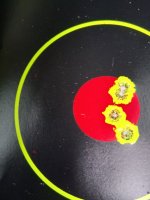
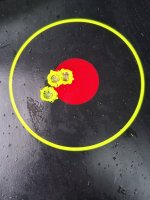
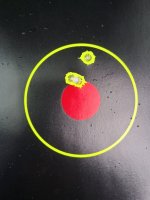
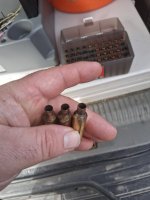
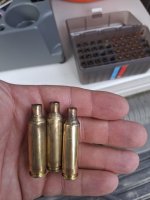
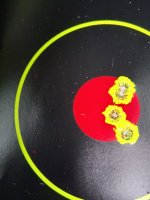
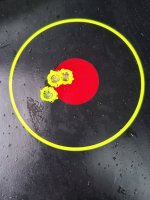
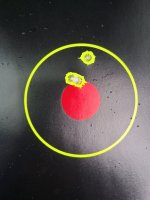
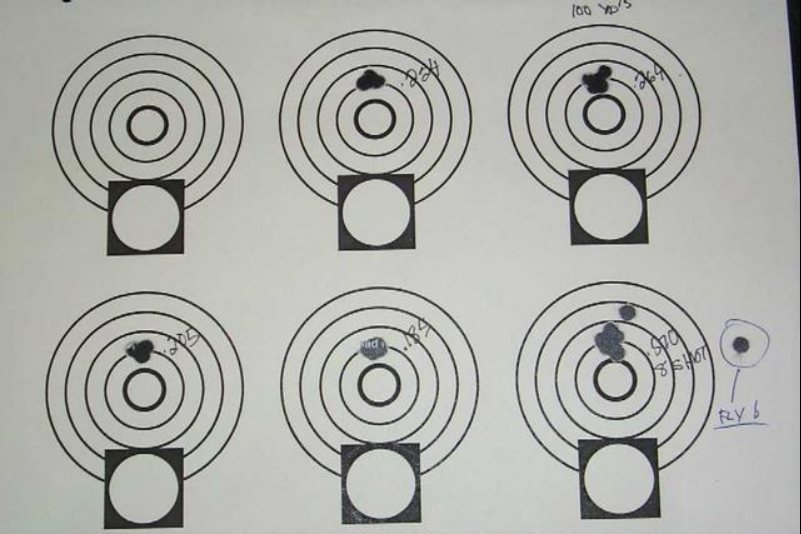
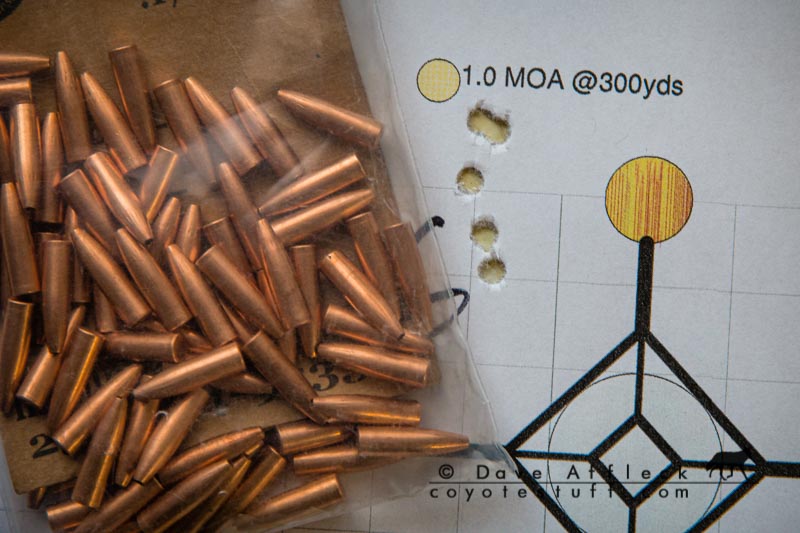
And for the first time I got to see what my standard deviations were on my Handloads. Im lost at what my findings were today , they varied all over the place with the largest being 120 feet . My accuracy was good though at 100 yards attached are my targets. Im reloading a 6mm Creedmoor 55 grain nosler btip with 44.5 grains of CFE223 . Also attached is a picture of some brass . Im concerned there might be to much blow back . While im writing this i think the only thing I think i could be doing wrong is loading a bullet that is to light for the what the cartridge was designed for . My chamber might be to long for the seating depth that I have them at . The nosler book said 2.480 for coal. The nosler book also said 3800 fps and I only iam getting 3400 at max. Any input would appreciated as im always learning
 

Attachments

  • 20260313_114902.jpg
    20260313_114902.jpg
    65 KB · Views: 18
  • 20260313_114854.jpg
    20260313_114854.jpg
    92.5 KB · Views: 17
  • 20260313_114850.jpg
    20260313_114850.jpg
    82.5 KB · Views: 24
  • 20260315_150648.jpg
    20260315_150648.jpg
    57.7 KB · Views: 26
  • 20260315_150637.jpg
    20260315_150637.jpg
    59.5 KB · Views: 26
  • 20260313_114902.jpg
    20260313_114902.jpg
    65 KB · Views: 25
  • 20260313_114854.jpg
    20260313_114854.jpg
    92.5 KB · Views: 15
  • 20260313_114850.jpg
    20260313_114850.jpg
    82.5 KB · Views: 15
ES & SD may not show much difference @100 yrds but will at much longer distances. Barrel length, twist, and gas gun vs bolt can all affect velocity, along with other factors.
Published oal lengths usually are within SAMI specs so that they can be run in all types of firearm chambers.
 
At 100 yds, ES and SD are almost meaningless. With only 3-4 shots, even less meaningful. I've shot many a one hole group at 100 with big ES and SD. I doubt you are looking at extended range with 55's. So, if it was me, I'd give zero craps about the ES and SD. But I wouldn't be happy with those groups either. Well... Gas gun, eh, I guess maybe I would be okay with them. Wouldn't do for a proper bolt gun though. Not just that they are big groups, for the cartridge, but they are mostly vertical. I would not be satisfied with them. Ignoring ES and SD, which, I would. If it's not you, that load isn't optimal.

- DAA
 
If you have access to another chronograph I would try it. 3400 is real slow for that much CFE223 out of a 22 inch barrel with a 55 grain bullet. If your brass has been fired before annealing it should tighten up your ES. Light bullets at short range shouldn't really matter.
 
just because that was noslers best tested load with the cfe223... just means *their* test barrel liked it.

you're not shooting their barrel. you're shooting *YOUR* barrel.

go back to the drawing board, start at max and work your way down by 0.5gr and setup your ladder

i'd be testing the following the following 3 shot groups low to high to start and see if anything stands out - both es/sd and accuracy. and then if some do, go back with a few 5 round groups to try the promising data out and shoot 3x 5 round groups of anything that seemed good at 3 shots.

46.5
46.0
45.5
45.0
44.5
44.0
43.5
43.0
42.5

let your barrel tell you what *it* likes, not what some piece of paper someone else's barrel says it likes and therefore your barrel should be forced to like it as well.

hth
 
Since you are loading at starting load levels and powder density is under 90%, those dirty necks with no sine wave could indicate necks are not sealing properly. Load up incremental charge weights 3 each (0.3 gr each). Shoot and check necks and chronograph numbers, with gas guns I usually stay under max .3-.5 grs. Bolt guns I check to max suggested charge. Don't bump the shoulders more than necessary. Small adjustments could be primer change or tighter neck tension. Poor ignition/powder burn rate will show low velocity and dirty bores.
 
Last edited:
At 100 yds, ES and SD are almost meaningless. With only 3-4 shots, even less meaningful. I've shot many a one hole group at 100 with big ES and SD. I doubt you are looking at extended range with 55's. So, if it was me, I'd give zero craps about the ES and SD. But I wouldn't be happy with those groups either. Well... Gas gun, eh, I guess maybe I would be okay with them. Wouldn't do for a proper bolt gun though. Not just that they are big groups, for the cartridge, but they are mostly vertical. I would not be satisfied with them. Ignoring ES and SD, which, I would. If it's not you, that load isn't optimal.
Okay well I guess its not a bug deal on the spread as I thought , but the velocity vs the book shouldn't be that huge over 400 feet. The groups I wouldn't classify as bad for a ruger american . They are not awesome groups but there not bad. 538 on one of them . Good starting point . I might buy a new scale and compare the charges


At 100 yds, ES and SD are almost meaningless. With only 3-4 shots, even less meaningful.
Bingo!!!! no truer words spoken ... to actually get something a Minimum of 30 shots is required for ES and SD to almost be a indicator, more shots are better.

Im reloading a 6mm Creedmoor 55 grain nosler btip
My chamber might be to long for the seating depth that I have them at

Most likely is the case. Find your "jam" length (jam is where the bullet make contact with the throat/ land and grooves. Set your bullet depth 5 to 10 thousands (shorter) from that measured "JAM" length.
Ask how find "JAM" length on here you will get differing answers, yet they all will pretty much get you there.

IF using a three shot group method to be accurate it must repeat itself three times. Same for my preferred 5 shot groups. I've seen loads using the 3 shot group method shoot tight and then the 4th or 5th throw a flier.

ES and SD does become a factor at longer range such as 600 yds plus.
 
but the velocity vs the book shouldn't be that huge over 400 feet.
yes it can be ... I ignore what they claim for velocity only use it as a guide their barrel maybe tighter in the lands and grooves or longer than yours.
Twist will or rather can be a factor for the same load a Slow twist will usually shoot faster than a fast twist ( that can be from 10 to 100 FPS depending on barrels)

Altitude and other weather condition Humidity , etc etc will also play a difference ... Panhandle in the name I'm guessing Fla Right? well if so you are close to sea level vs say Nosler ballistic lab (3600 feet above sea level) which is a higher elevation which means the air is thinner..
 
Last edited:
just because that was noslers best tested load with the cfe223... just means *their* test barrel liked it.

you're not shooting their barrel. you're shooting *YOUR* barrel.

go back to the drawing board, start at max and work your way down by 0.5gr and setup your ladder

i'd be testing the following the following 3 shot groups low to high to start and see if anything stands out - both es/sd and accuracy. and then if some do, go back with a few 5 round groups to try the promising data out and shoot 3x 5 round groups of anything that seemed good at 3 shots.

46.5
46.0
45.5
45.0
44.5
44.0
43.5
43.0
42.5

let your barrel tell you what *it* likes, not what some piece of paper someone else's barrel says it likes and therefore your barrel should be forced to like it as well.

hth
Yeah I started with what the books test gun liked and was working my way up to max, I tried 45.0 grains and it opened up alot . Im going to continue to work my way up , i just was alarmed but what i was seeing with es and SD .
 
When I see vertical string groups at low charge weights, I always bump up the charge weight. I like a 0.3-0.5 gr charge weight range that is one bullet diameter or less vertical at 100 yards on the target. And I allow barrel to cool between test groups.
 
Bingo!!!! no truer words spoken ... to actually get something a Minimum of 30 shots is required for ES and SD to almost be a indicator, more shots are better.


Most likely is the case. Find your "jam" length (jam is where the bullet make contact with the throat/ land and grooves. Set your bullet depth 5 to 10 thousands (shorter) from that measured "JAM" length.
Ask how find "JAM" length on here you will get differing answers, yet they all will pretty much get you there.

IF using a three shot group method to be accurate it must repeat itself three times. Same for my preferred 5 shot groups. I've seen loads using the 3 shot group method shoot tight and then the 4th or 5th throw a flier.

ES and SD does become a factor at longer range such as 600 yds plus.
Okay I will do this. Back to the the drawing board .
 
yes it can be ... I ignore what they claim for velocity only use it as a guide their barrel maybe tighter in the lands and grooves or longer than yours.
Twist will or rather can be a factor for the same load a Slow twist will usually shoot faster than a fast twist ( that can be from 10 to 100 FPS depending on barrels)
My twist is the same as the book , I must have not as tight in the lands and grooves
 
what about barrel length and elevation??? 3600 feet above sea level vs what 12 feet in Fla yeah the air is denser. Hence is why I say the listed velocity is a guide.
Seating depth will also play a role in velocity.
 
what about barrel length and elevation??? 3600 feet above sea level vs what 12 feet in Fla yeah the air is denser. Hence is why I say the listed velocity is a guide.
Seating depth will also play a role in velocity.
Seating depth was the book starting point, i live and shoot at 1300 feet . Im going play with seating depth and fine the jam length . I don't think the bullet is even big enough to reach the lands. But I will see , and work from there on some other charges
 
Back
Top