
How much Land is Enough Land?

TexasTexas95

New member
Barry made a comment in another post and it sparked a question I was wondering about...How much land is enough land to hunt coyotes?

I always have my buddies out in East Texas tellin me they have more than plenty of land to hunt coyotes on. I say 1000 acres is good for about three stands in my book, maybe four if the terrain is right and thats pushin it.(all this is before we even get into an issue of "overcalling" an area) Then, they get mad at me when I tell them 1000 acres isn't that much land. I guess were spoiled out here in the west. As a rule, I drive 1.2 miles before I stop and do another sit. 1000 acres is awesome for things like deer and hog hunting and everything else in between. Coyote huntin is a different story though, one that alot of my buddies just dont get. One of the first things learned about coyote huntin is that they can hear your call from at least that distance, maybe more depending on wind conditions. So, just how big is 1000 acres? Well, lets do the math....

1000 acres is the equivalent to 1.5625 square miles. In other words, doesnt that mean that a 1000 acre tract of land is truly only about 8,236 feet by 8,236 feet? Come to think of it, it dont make much sense at all to make three stands out of a single 1000 acre plot of land. The only true way to squeeze that amount of sits out of such a small plot would be to call from your given plot onto someone elses land.

How much land do you hunt in a day? Given the amount of land publicly available in places like New Mexico, I would say I drive upwards of 30 or more miles any given hunting day. Thats just an estimate too because I dont really keep stats on anything besides my rule of: Start lookin for a decent spot after 1.2 miles...Any thoughts? Please correct my math too if it's wrong

 
In my opinion, it varies according to where you live & terrain.

Out here I'll make the stands a mile apart at least, and then you need a good spot, so you can cover lots of country in a days time, which adds up to lots of land.

In areas where the properties are smaller, are often divided along section lines with trees & brush and arn't as open, the terrain dictacts that you can make your stands closer, because the sound doesn't travel as far because of the trees & brush.

In way open areas, coyotes tend to like brushy draws, creeks & such, and THAT type of structure is way farther apart as well. Not to mention the number of landowners. Out here, it's public land, or one owner for several sections of land. Further East, it's just smaller tracts & more owners to get permission from.

You are right about calling the borders of the land as well...That's the good thing about calling. The coyotes can come from another tract to where you are calling and you can expand your calling area by doing that.
wink.gif
 
1000 acres isn't much?, unless all the coyotes are crammed onto it
wink.gif


In central Iowa. All of the land is broken up into 1x1, or 1x2 mile sections mostly. Et each section is surrounded by gravel roads. On those "sections" there might be 4-6 farms/acreges all different owners.

I prefer to have as much adjoining land as I can obtain permission on. Around here the local pr's of coyotes tend to have a territory of 3x5 square miles. Shaped irregular & generally oblong. These territorys over-lap onto other local coyotes territorys. They all tend to use the over-lap buffer area in between.

I don't call a section unless it has cover on it. Because 90% of the time daytimes hrs. That is where the coyotes are. Say on a 1x1 mile section of open rolling crop hills with a patch or strip of cover on it. I expect only 1-stand.

These small sections, the coyote will hang near the center portions. That have cover or not. Obviously, that is their so called comfort area.

I like a stout wind, as I walk into my stand either in a crosswind or angled up-wind towards the cover area. Doing so, in that scenario. Assists, in carrying some of my walk-in noise, parrallel & down-wind past the cover area.

Bedded coyotes 99% of the time, will have the wind at their backside. Often bedding on the down-wind side of a "wind-brake/structure". When they are up against a structure, they are in what I refer to as a "dead-air space". They can hear very well as their hearing is not obstructed by wind interference. As compared to laying out in the open wind.
 
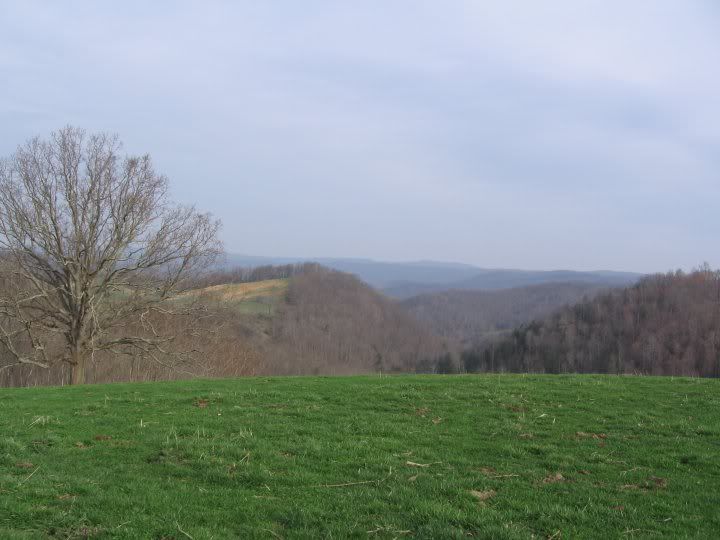
1,000 acres varies greatly according to the topography. Sure, out west where its nothing but flat grasslands as far as you can see it may not be that much and 1 stand may be plenty for that. Out east my friend it's a whole different ballgame. Steep mountains, ridges, hollows and BIG timber make it A LOT different than the prairies and flat lands of the west. I'm right in the middle of the Appalachain Mtn range with lots of woodland and small fields usually located at the foot of the mountains. Actually, a 1,000 acres is a decent size tract out here. I could probably make 3 to 4 or more sets depending on terrain on a property that size and have good luck just depending on numbers. Most of the farms are 200-300 acres on average and I usually make about 1-2 sets per farm just depending on if I'm going after cats or yotes. To your question though, "How much land is enough?", I'd have to say you can never have too much! But, if you've only got a 1,000 acres don't rule yourself out, you can still have successful hunts just not quite as often...Here's an example of the terrain I hunt in Virginia.
23571_111215592235371_1000004079160.jpg

197.jpg
 
I've been calling at very low, to high volume (low volume for a long time in the super-thick stuff), walking 500-2000 yards or so hiking on foot. One mountain I call takes me all day to get to the top calling my way alongside twisted, windy roads and the various game trails and log skids that shoot off of them the whole zig-zag way up.
I won't say for sure that's the way it should be done....only that it's what I've been doing. In the 4 or so times I have called one single 5-6 square mile property, I have called in a coyote, a big bobcat, several deer, possibly a cougar (saw but couldn't certainly identify), and what had to be a bear from the sound of it crashing thru the woods over the ridge (didn't see that one).
Last time I called that mountain there a coyote yapped-up a storm at me from the other side of the mountain right as I got to the top: it was about 35 yards away but I couldn't see it due to the brush being so thick. I had just been calling for 10-15 minutes or so then a couple of cross-country joggers blew my stand.

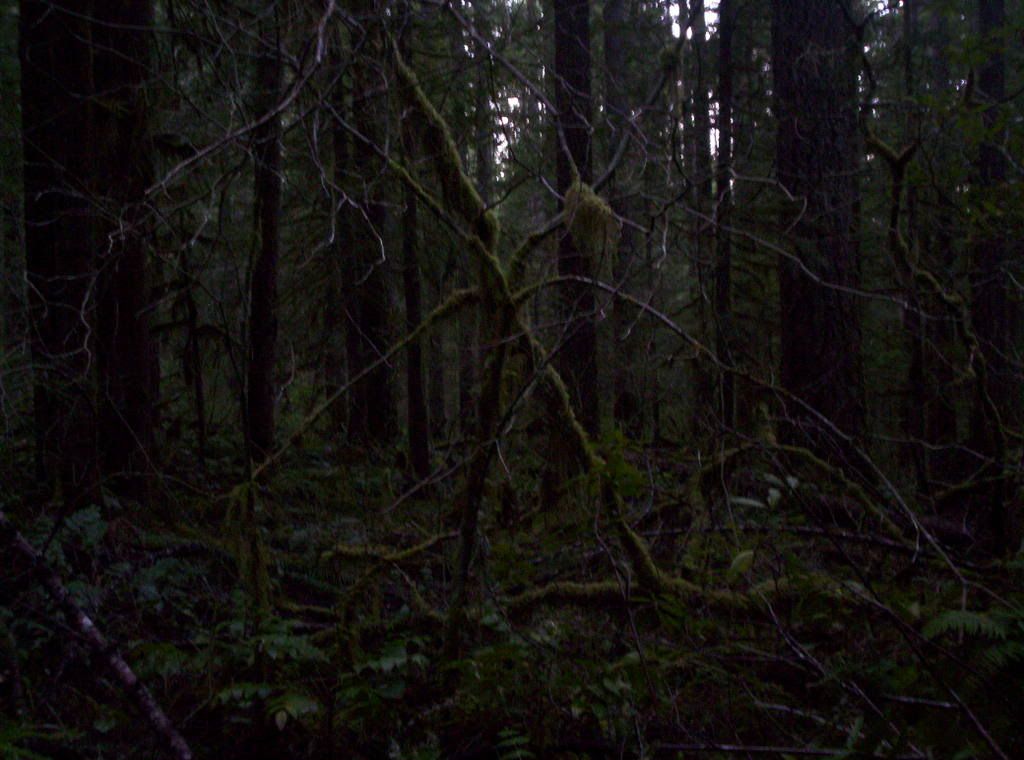
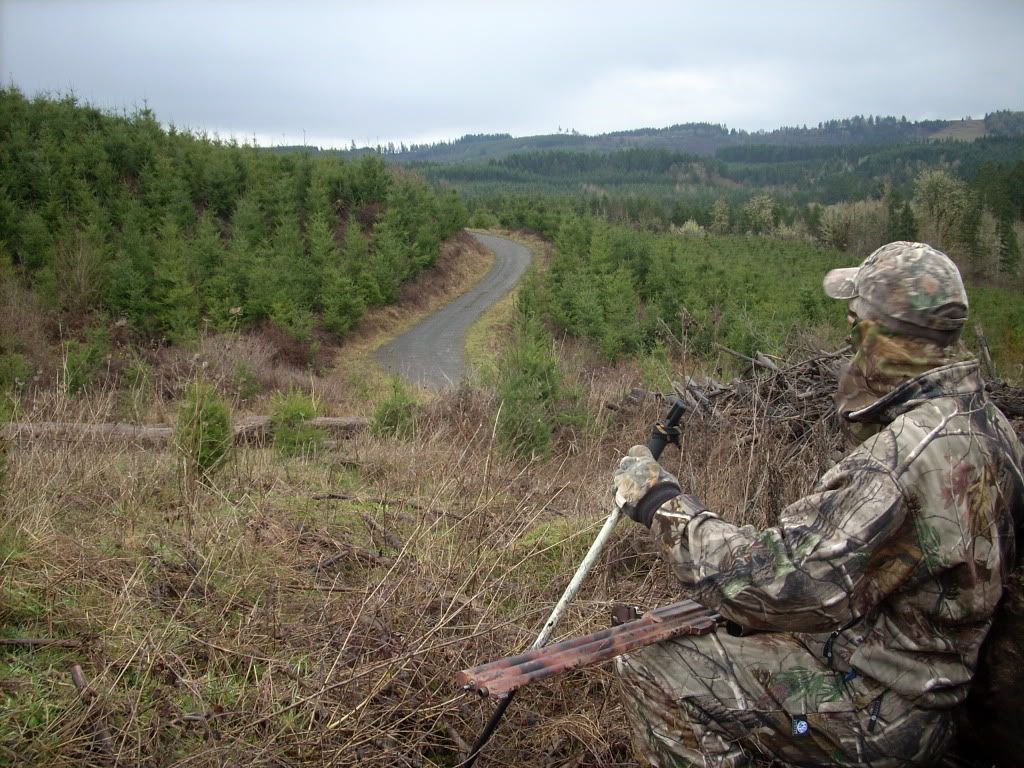
I restrict myself to short range, so I don't take shots any farther than about 60 yards. For bobcats I'll get into as thick of stuff as reasonably possible like the first picture.
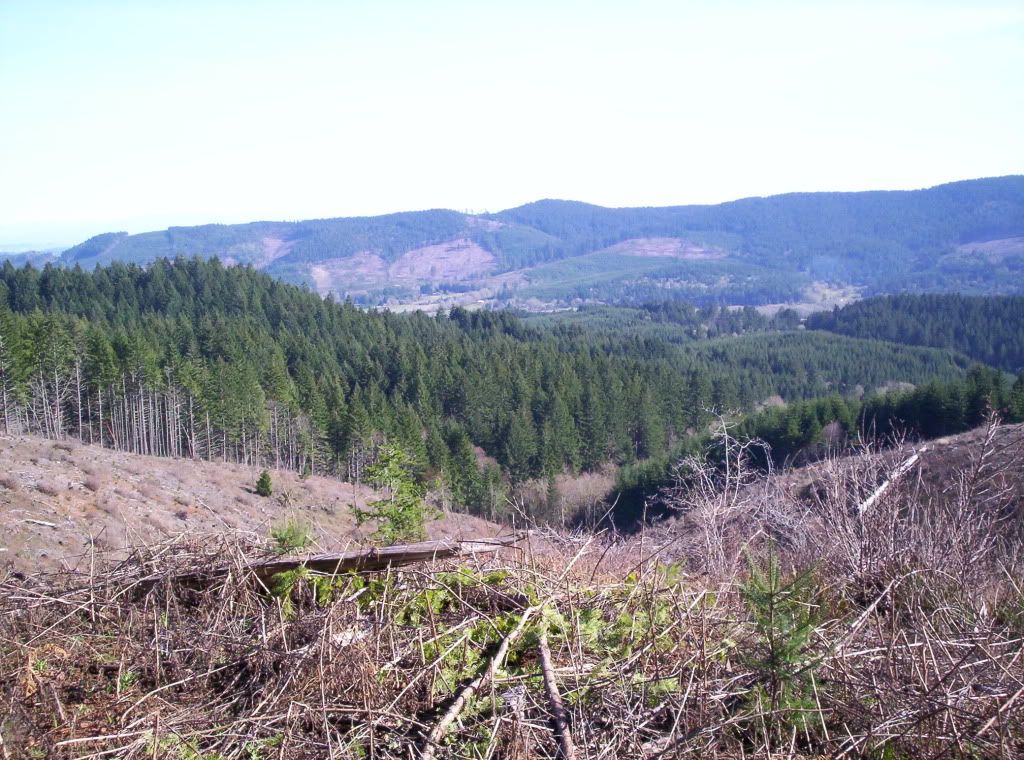
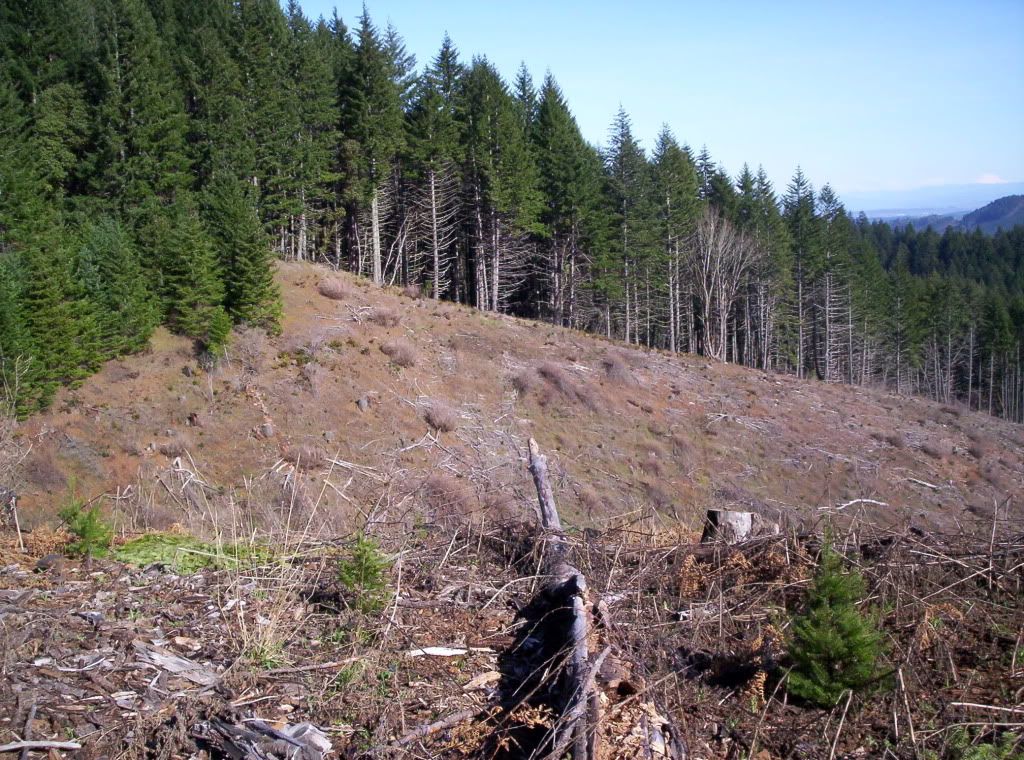
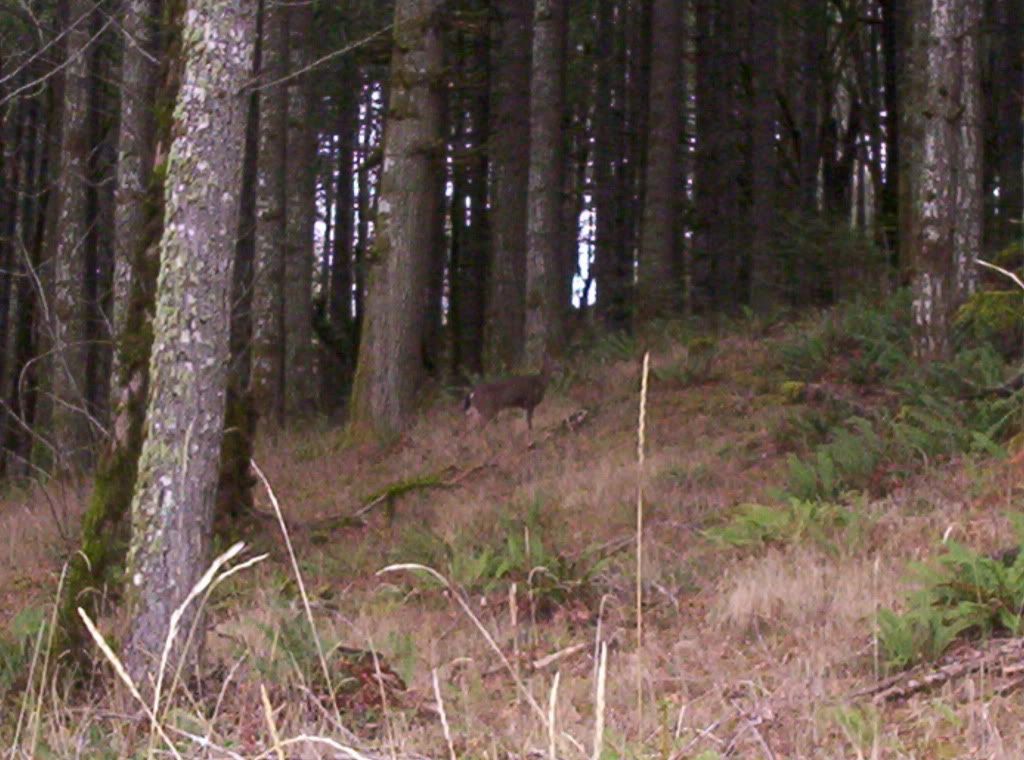
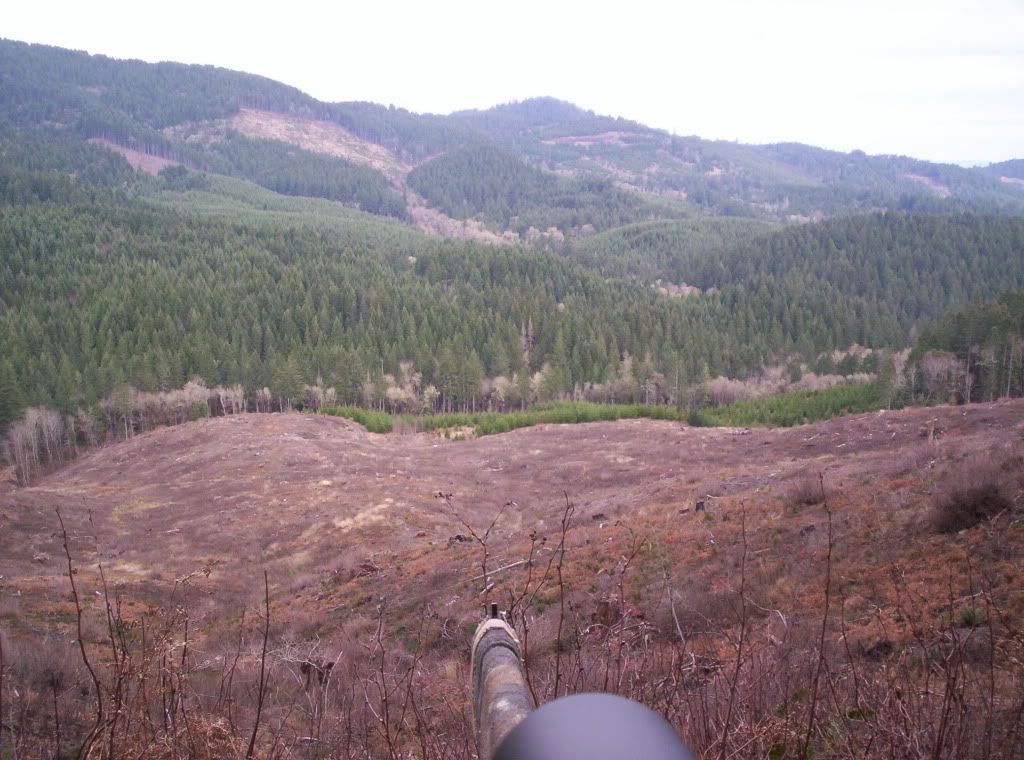
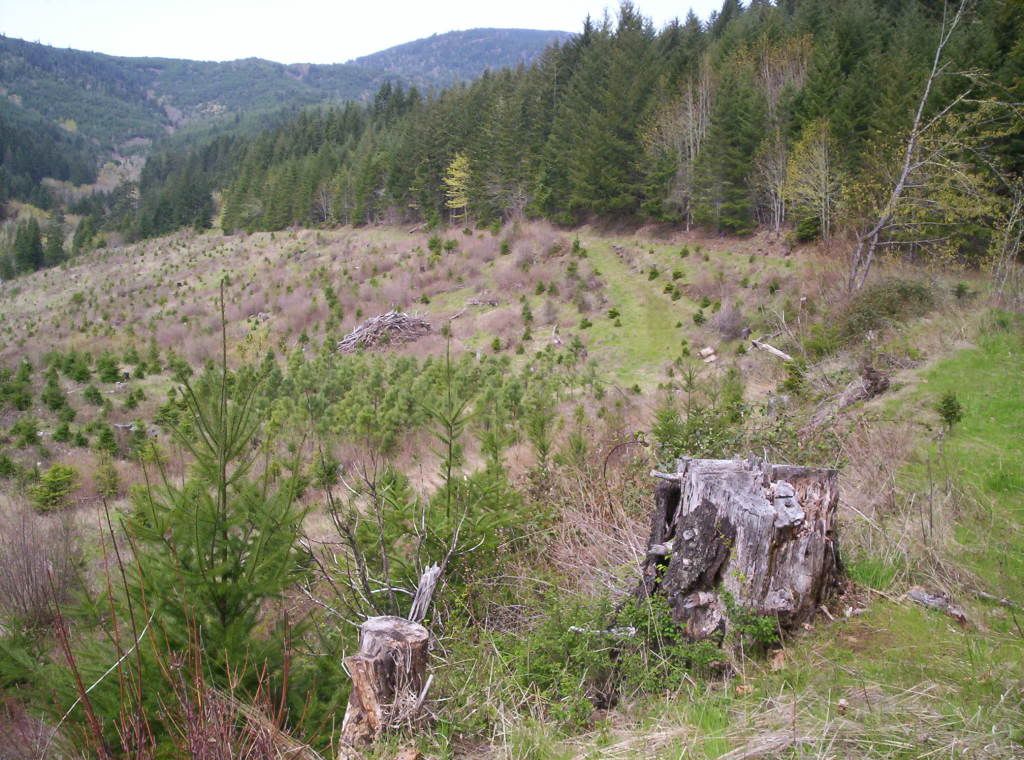
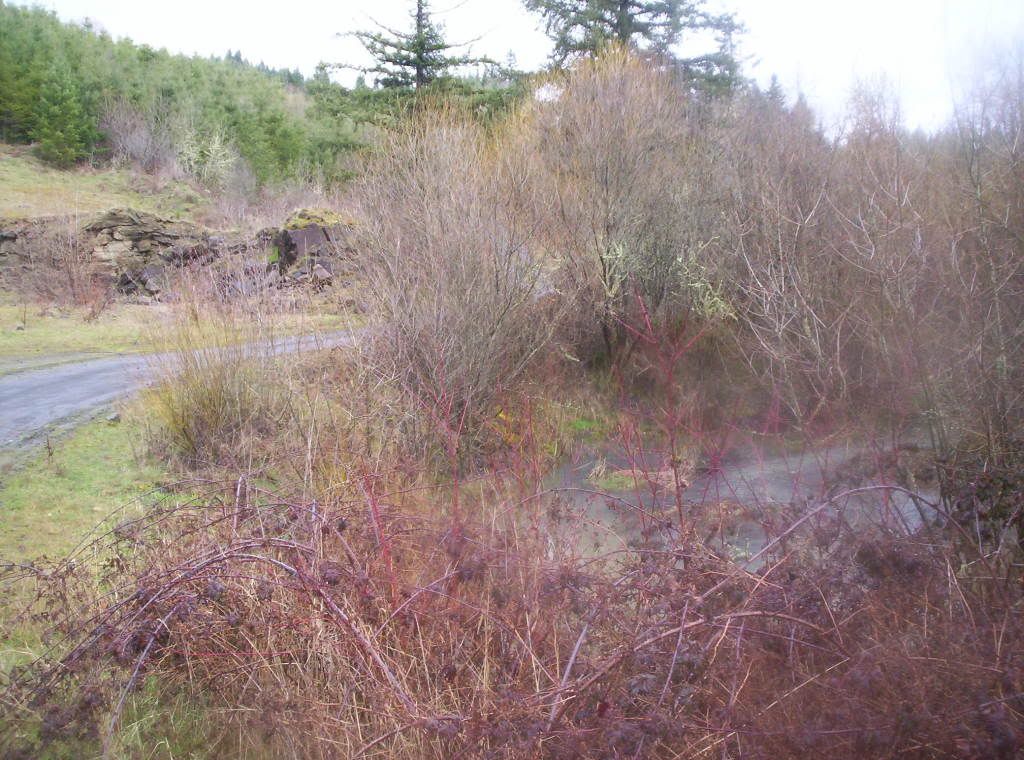
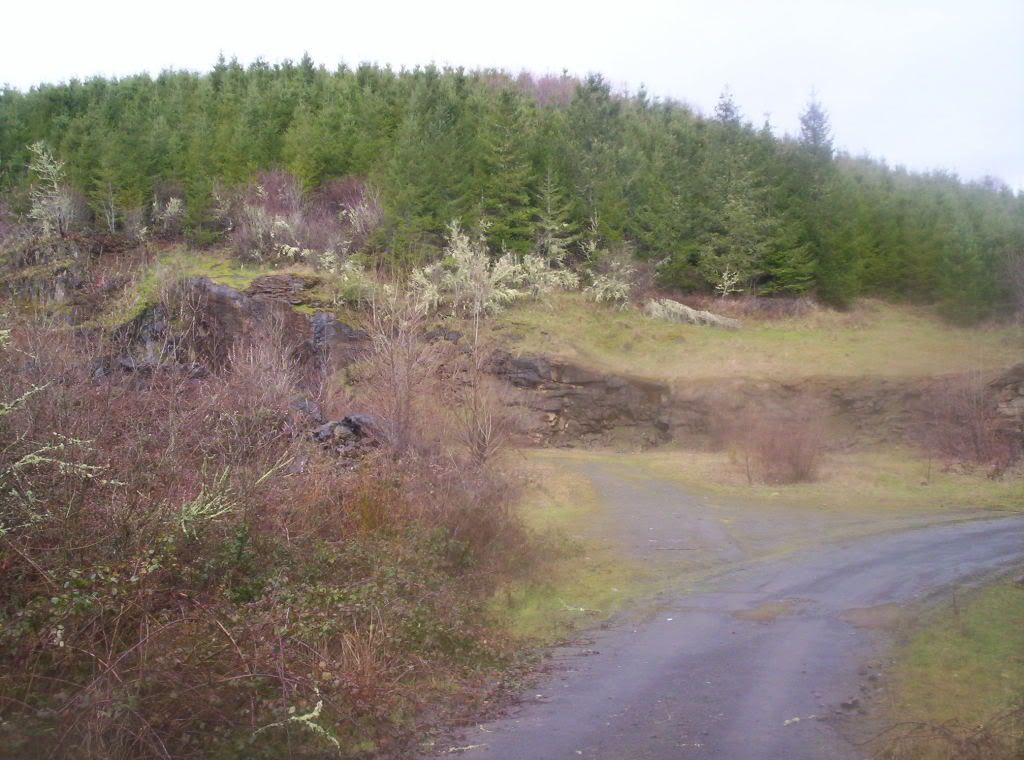
Here are a few different spots that are typical of the terrain I hunt here on the wet side of Oregon in the valley. Most of the spots are anywhere from about 5 square miles at the smallest to 25+square miles, that are often bordered by big National Forests.

Thickwoods005.jpg


SCTreeFarm003-1.jpg


SCTreeFarm004.jpg


CoyoteSpot007.jpg


CoyoteSpot001.jpg


CougarAreaView.jpg


FirstCoyote012.jpg


morehuntingpics002.jpg


morehuntingpics001.jpg
 
I've the experience that if the wind is really howling that I'll sometimes make a couple of stands on that square mile section here in Ks. Like it has been stated alot depends on the terrain, such as deep brushy draws,heavy wooded creek bottoms and such. I'll definetly call 2 maybe even 3 stands in a howlin snow storm. As far as having too much acerage to hunt, in my book, one can never have too much.
 
Butcher 45 How about doing a little elk hunting together on that land. Looks good for elk. I usually hunt around John Day or Diamond Lake.
 
Yea I've seen elk at a couple of these places (didn't call them in, though), and Elk sign in most every area I hunt. Know some real good looking hillsides and choke points for Elk and Black Bear (lots of big bear scats). I've called one or two bear in to where I could hear them.

Come on up ReelLost...LOTS of different areas to hunt! Gray Squirrel season is coming up in just a few weeks.

My buddy just sent me several new trail-cam pics of a really nice 6X6 Roosevelt in velvet
smile.gif
 
1,000 acres could be 2 stands, it could be 10...

Depends entirely upon terrain, topography, and caller volume...
 
You guys are making me feel really bad...

The two private areas I have free access to hunt would each fit into a 1/4 mile square....The only nice part is that I have wide open crop land on two sides of the wooded areas....The public land along the river is 1/4 mile by 2 miles with lots of sporadic wooded areas in it...and really heavy brush along the river side..
 
I hear ya OldTurtle, same here. Small tracks of farmers land, and wooded public lands are what is available here. I see plenty of sign, scat and tracks, just never tried. This year will be my first attempt at calling coyotes in.
 
Very few of the farms I hunt in Kentucky are over 300 acres, and they are usually broken up by fences. From one to three stands is about all you can make on most of these farms, and then using low volume. I have to get permission on a lot of different farms to hunt the way I prefer, never overcalling a particular piece of land. In the coldest part of winter, with no foliage, a coyote can hear low volume a long way, especially quartering with the wind. I don't think you could have too much land to hunt as long as you have time to hunt it. Farmers want to see some results, so that is important to be able to do justice to the land you hunt. If they are losing livestock to coyotes, that is why I am usually there.
 
Quote:I don't think you could have too much land to hunt as long as you have time to hunt it. Farmers want to see some results, so that is important to be able to do justice to the land you hunt. If they are losing livestock to coyotes, that is why I am usually there.

Very well said Al. Took the words right out of my mouth. How often one goes calling plays a huge role in amount of land required.

Tony
 
Back
Top