

How Old Should a Decoy Dog Be?

sandgapsniper

New member
Hey everyone, been a while since I've posted, been busy lately. My decoy dog will be a year old July 17th. He's really interested in coyotes and has been on several hunting trips with me, tied by my side of course. I'm wondering if he is old enough to start turning loose on the hunts yet. He weighs about 85 pounds now, so I know he's big enough, but is he old enough?

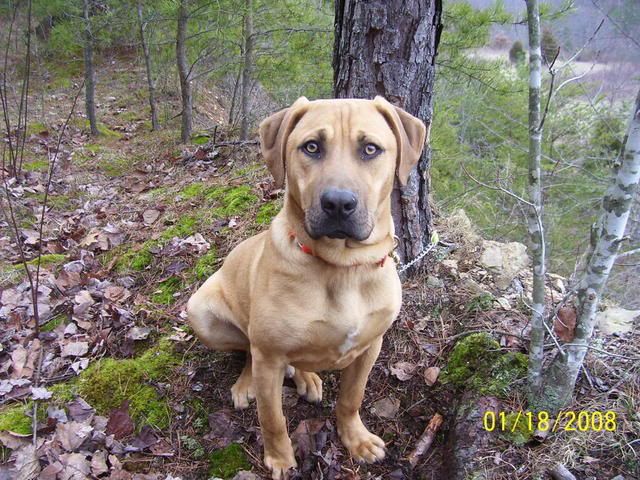
Here's a picture of him back in January. I've posted this pic of him before, but I didn't have any new pics handy.
100_1508.jpg


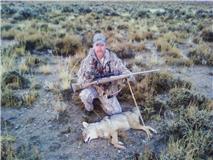
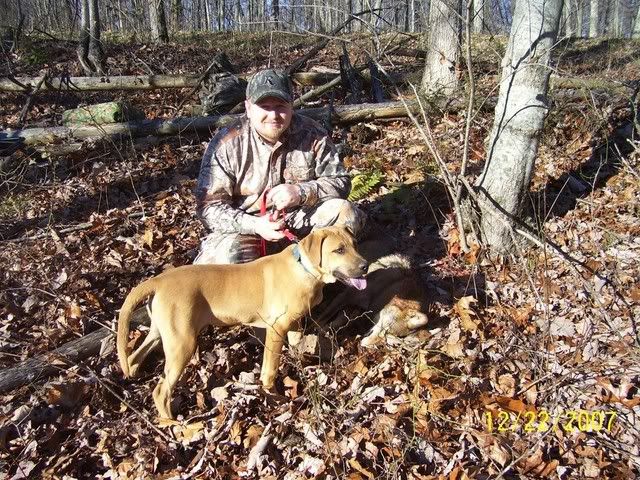
One more from a hunt that me and Weedwalker went on in December.
COY3.jpg
 
Mine was already ready to go before now, but I'm just starting him...
He just turned 2.

I think it depends on the dog.
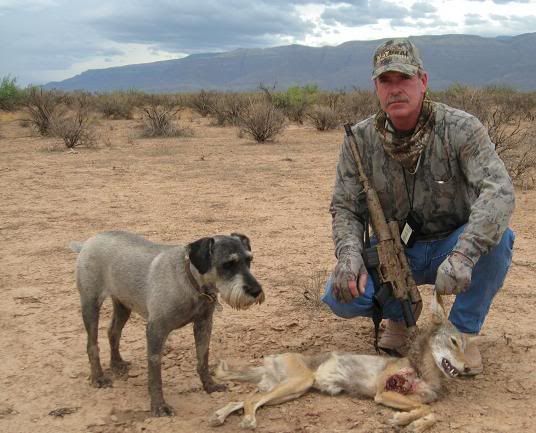
I've been hunting with Buster since he was a pup, but he's just now figured out that when that M-4 goes off it means the fun starts.

Any sooner than that & I think I would have made him gunshy.

bbmangy.jpg
 
I've been hunting with him since he was about 5 months old, the gun shot doesn't bother him at all. Like I said above, he is REALLY interested in the coyotes, I just don't know if he is gritty enough to turn loose yet.

I know there are some other guys on here using dogs, how old were yours when you turned them loose?
 
How old is not as important as following your comands. Hunting with a dog is not magic. Most coyotes will not see your dog and come running in. Often times they will see the dog and sit and watch. Sometimes this happens and it is a long shot sometimes it is closer. The dog has to interact and pursue the coyote then return when called/signaled. When the decoy dog returns after confronting the coyote the coyote feels that it is winning the fight and will pursue the dog hopefully back to you. If the decoy dog does not come back to you then you run the coyote out of the country or worse it follows the coyote to an ambush and might be killed. Your dog has to be trained to forsake its instinct to fight the other K9 and return when called. Get your dog trained to return to you and he should be ready.
 
Mine's a Standard Schnauzer.

His name's Buster....He loves getting after coyotes.
He tips the scales at over 45 lbs, but is built like a tank.

I don't really worry about him tangling with a coyote. I just watch him when multiple yotes come in. Even then, the only worry I'd have would be if multiple DOMINATE coyotes were after him.
The submissive ones just run from him, & he comes back to me with them following...(I hope)

I don't think I'd want a much bigger dog than Buster...
If you feed them too much dog at the stand, they may be reluctant to show themselves.
 
I started taking my dog when she was about 6 months old. She is a mountain cur. 4 years old now, and afraid of nothing which at times is not all that good. She runs afew off which is most likely my fault in the training. One good thing about having a dog along is you will not lose a wounded coyote. Your dog will get so good at spotting coyotes that they will often see them before you do. Watch your dog while walking into your stand. They will often smell a coyote on the way in. My dogs hair will get standing up on her back. Young of the year pups will not come in if they see your dog, they have most likely had there butt kicked a few times.
 
Quote:
What kind of dogs are those both?


Mine is a Black Mouth Curr. I've not weighed him lately, but he weighed 77.6 pounds when he was about 9 months old. He's really quick though for a dog his size.
 
A mountain cur is a lot like a black mouth just does not have a black snout. My cur is the same color as your dog. One other thing is the long tail on your dog can sometimes get them in trouble( it is easy for a coyote to grab on to).
 
I start all my dogs when they show they are obiedient and ready. I use a Tritronics w/ a tone and train them to turn tail as soon as the tone goes off. My dogs all start out riding along on the coyote trapline from the time they are pups. They learn about all the things and smells they will encounter under somewhat controlled conditions. They also learn that sometimes they will get left behind in the truck. This is important because you probably won't be hunting your dog on every stand all season long but he'd be nice to have to follow a cripple ect... I generally will let them see coyotes from the start, tangle with a coon at about 6 months, and start messing with coyotes that are trapped and staked, not on a drag, by a year. Once they show me they can be obiedient without hesitation I will let them decoy or follow dragged coyotes with an older dog who can protect the younger. Some of my older dogs are very protective of the younger dogs and some could care less. Once they get the idea of what I want of them I will hunt them with an older dog about every 3-4 times out and alone the rest to develope their confidence and bond between me, the hunter, and them. When working them if a coyote shows that he's willing to play the yo-yo game and not be too aggressive I won't shoot it and let it train the dog for me. They learn more from their instincts kicking in and the coyote then I will ever be able to teach them. I like working mid- to late summer YOY pups with a young dog because the dog learns he can't push the coyotes too far or they will take off and the coyotes are more likely to work you and the dog then in fur season. It also gives you time to correct any problems before fur season. Theres a lot more to it but it's one of those jump in and learn type things. Let the dog teach you. Protect the dog and don't let him get beat too much too soon. Shooting is secondary to safety. Its a fast fluid thing to deal with with your dog and a coyote wrestling around and fighting right in front of you and things happen fast. I teach all my dogs to get behind me and sit when I lip squeak to clear my shooting lanes. Only hunt with people who you trust can hold off shooting near, above or worst, at your dog. Experience is key but remeber to keep it fun.

It's a fun game and if this is your first decoy dog you are in for a ride.

Tim
 
Dtom Great post and info,I start my dogs about the same,I am blessed with always having older finished dogs for the pups to go with,I just rotate thru older dogs and pups.Some work better together than others,but the pups are always safe.I don't have a certain age to start pups,I start them on a drag as soon as they want to trail it,then hunt them for real as soon as they will consistently come back,and generally mind regardless of what is going on.The 3 leopards I'm starting now are alittle behind due to my work latelly I have had very little time to train.I train all my dogs to come back to a bark,and also get "behind".For insurance I run Tritronics.It seems the best dogs want to run any thing that moves when they are younger,and take awhile to get the idea that its yotes only when calling.Its also nice to have two dogs,with one far ranging ,and one that stays close.My two Catahoullas are that way .The black dog with range a mile or so ,and the spotted dog always stays within a few hundred yards. Duane
 
Some food for thought.

We used sighthounds/greyhounds on coyote. Rarely released a lone dog on a coyote. Regardless of the size of a coyote. As they are a blur in a fight. Faster than any dog I've ever seen fight.

A lone dog, even an experienced tough dog, will have it's share of kick butt coming from any adult coyote. If they happen to mix it up one on one.

Yrs ago, My friend Larry, turned loose his dog Jack, a large male greyhound, on a 47lb female coyote. This happened way out into a mile section. Jack was a tough predator dog, weighed 80-85lbs, plenty of grit.

Anyway Jack caught that coyote quite aways away from Larry[who was toting a pistol]. Shortly afterwards, that coyote was all over Jack. Ripping him a new rump. Jack broke free, et that coyote, now mighty ticked. Ran him down a couple of times, before Jack could make it back by Larry's truck.

Point being, although 47lbs is a very large female coyote. All it takes is 1-coyote. To put a severe butt whooping[or a mortal/throat wound] on a lone dog.

Worst case scenario, is a pr of coyotes. On your dog & you can't get there in time. Best to keep a lone dog close by, when messing with coyotes.
 
Last edited:
All this is great info guys. Keep it coming, I love reading about the dogs from you guys with some experience with them. I just wish there was someone around here with a good dog that was working coyotes already that I could start mine with. No one around here has ever heard of a decoy dog and they all think I'm crazy for mentioning it. They all ask me how many squirrels he has treed.
 
Back
Top