

I Have a Question

hm1996

Moderator
Staff member
I started calling coyotes seriously in 2003 and I have a question. I've had coyotes come in hot and I've had them come in cautiously, of course; heck I've even had them ignore me completely, if you can believe that. ;) :ROFLMAO:
My question is, I've never had one attack my call like they seem to do out west, in fact the only ones that got within feet of the call turned inside out and headed for the next zip code. I understand the scent thing and all......my question is, why do the coyotes out west (that's where all the great pictures come from;)) seem to have no fear of the call? Wondering if it may be related to the volume of the call? I usually use high volume, maybe that's what spooks them when they get close, rather than they picked up human smell?? I've had a few spook as far as 20' from the call. I might add, I seldom use vole squeaks but do use bird distress such as Nutty Nuthatch. I'm wondering if they are just getting close enough to catch some speaker noise?
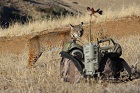
ETA: Dave and Bob get pictures like this all the time:
1762362446368.jpeg
 
Last edited:
I've had them within several feet of the call, but never had one attack it. Like your experience, I've had more of them flare off because of the call. And yes, I've scared off more than one coyote by playing a sound way too loud. Did it this year with redheaded woodpecker.
I've assumed it was because the looks of the call didn't match the sound coming from it, but heck, I don't know :unsure:.
 
You killed them before giving them the opportunity.
Guilty as charged, every chance I got. That is definitely why I don't have any pictures of live coyotes. :ROFLMAO:


I've had them within several feet of the call, but never had one attack it. Like your experience, I've had more of them flare off because of the call. And yes, I've scared off more than one coyote by playing a sound way too loud. Did it this year with redheaded woodpecker.
I've assumed it was because the looks of the call didn't match the sound coming from it, but heck, I don't know :unsure:.
I always assumed it was the nose that spooked them, but got to thinking (I know, that'll get ya in trouble) about the volume. The terrain I hunted was heavy brush, cut with pipelines, two tracks, and some roller chop, so I've always used loud to max volume and normally just let it play with a few breaks when changing sounds, so thinking maybe the high volume changes their mind when they get close. On the other hand, I've had them come blowing in within a minute or so after first turning call on at high volume.
One such coyote got away before I could get on him because he was so close to me he was hidden behind my rifle scope (sitting w/rifle on sticks sighted down a sendero where I expected them to come from a cross trail about 150 yards away. He popped out between me and the call about 30 feet away, completely blocked behind my own scope.
 
A few years ago I called in a semi triple. Saw 3 coming from way out and 2 came to the call while #3 was MIA. Anyways, I shot 1 of the 2 and it ran to the right, I got on #2 and shot. It ran left. I hit Pup 3 very loud and started scanning. I caught a flash towards the right that turned out to to be the 1st one I had shot floping around in the hedge. I scanned back towards the left to see the MIA coyote stick its nose right into the horn of my X2s caller. It bolted but turned back towards the caller after about 20 yards. I shot that one too.

Had another 2 years ago that materialized out of nowhere. That was to a rabbit distress that wasn’t all that loud. It too came unglued due to its sniffer if I had to guess? Didn’t get that one.

The coolest though was finishing up a day stand in the woods I cranked pup distress to end things. A red fox came screaming in and knocked my caller off a fallen tree I had it on. The caller rolled under The lowest limb. That fox wouldn’t leave. Circled the tree lunging for the call. Made a big loop and went back after it again. This was late in the season after fox had closed. Late February so I’m guessing it was a bred vixen protecting or defending its territory? Cool encounter.
 
I have to think it's due to the sheer numbers of yotes out west. The competition for food is higher than in the east and they are more aggressive in turn. I have a friend that lived in Alberta for years and now back here. He said out there a morning of calling could bring out as many as a dozen in a few hours. Any they were very bold.
 
The coolest though was finishing up a day stand in the woods I cranked pup distress to end things. A red fox came screaming in and knocked my caller off a fallen tree I had it on. The caller rolled under The lowest limb. That fox wouldn’t leave. Circled the tree lunging for the call. Made a big loop and went back after it again. This was late in the season after fox had closed. Late February so I’m guessing it was a bred vixen protecting or defending its territory? Cool encounter.
I did have a javelina try to steal the topper off my decoy, which was on the ground adjacent to my call, one day. Talk about a drive-by, he grabbed the topper and was running off with it in his mouth, but fortunately for him, he spit it out as I was trying to get on him w/the AR. Well, to be honest, as close as he was, and at full throttle I doubt very seriously if I would have hit him, but I was seriously trying, and I don't shoot javelina.

The only other time anything attacked my decoy was the day that three different owls and a hawk, on four different stands either stole the topper or at least made contact with the topper on my decoy. The first one actually got away with the topper, flew 20 yards away and landed on the ground. He attempted to eat the topper, found it to be inedible, walked back to the decoy base to check it out before flying off in disgust. I think the reason he came back is the call had very soft bird audible going, but he did pose for a few pictures.
1762379811717.jpeg

1762379903509.jpeg

The very next stand, 2 miles away, another owl grabbed the topper and flew off around a corner of brush, out of sight. My partner went to see if he could locate the owl and sure enough it had landed in a dead tree and flew off when Don came into his view, leaving the topper on the large limb! Fortunately, Don found a dead limb long enough to rake the topper off and we left for a third stand where an owl swooped the decoy, but missed. On the fourth stand a Harris Hawk hit the topper and knocked it off base but couldn't hang on to it.
Don't know what there was about that day, but other than that day, in over 20 years of calling w/decoy, have only had one kestrel grab the decoy but was unable to dislodge it.

ETA: Stumbled across this picture of modification I made to decoy, hoping another owl/hawk would attempt to steal the topper again. Tied a washer to a 3' nylon string and attached to the topper. Every time I set up the decoy, I run the spike through the washer and am rather disappointed that we have never had another bird attack the topper.:cry:
1762382816676.jpeg
 
Last edited:
Owls are the worst when it comes to decoys. Although my Mojo Critter decoy was once tackled by a large Fisher. Once it realized synthetic fur wasn’t exactly gourmet munchies it made a beeline for the nearest tree. Now take a guess at what was sitting at the base of that tree?! Things got a little tense for a few seconds but apparently my less than manly flailing about and yelling was enough to make it change course.
 
I've had a couple e-callers pulled down out of bushes, I usually set up like this if I can.

aVJnH8.jpg


I've had a couple make a running leap and grab a decoy as they are flying past, one carried the plastic bird 40 yards.

I've had more than a couple either sit on the ground and stare at the call/decoy or walk circles around the bush staring up. I even had one stand in front of the caller/decoy while I cleared a misfire, stove piped a round cleared it, another misfire and finally got the right ammo in the rifle and killed him all at 28 paces. I wrote it up here.

I've had one run over my feet, one run over my partners feet and a couple of times have coyotes run up behind partner close.enough they could here them pant.

And one jump up on the log I was sitting on and sit and stare out in the little clearing I was watching, he was about four feet from me. My rifle was on my lap facing the wrong way.

And there is the one that ran up to the caller and I missed and it ran off a ways, returned and I missed again and ran off a ways and returned and I killed it all with a single shot break open rifle. He needed to be removed.from the gene pool.

These are spread across WA, NV, AZ, CO and NM
 
Last edited:
Wish I had gone that route. I started out with a Loudmouth call. It was OK, but used a special battery and the sounds were recorded on removeable magazines that held 8-10 calls IIRC (best description I can think of). Still have it somewhere in a closet.
 
Never had one attack the call. I found for me personally, I don't use the decoy. When I did use the decoy, what I had was coyotes running in too fast and doing what I call a drive by. They run into the decoy and never stop. Like they run right to it and see it's not real and keep on running. Maybe I am just not a good enough shot but when I got rid of the decoy, started out loud, reduced the volume on subsequent calls, and paused the call when I see them coming in, I got more coyotes. I also got better shot placement because I am hunting for the hides. It makes them slow down and search for the source of the sound. Now what I have had out here is multiple coyotes coming in and then they get aggressive with each other. One time I had three come in and they got nasty with each other and forgot about the call. They just kept chasing each other. Now that I have completely not answered the question, I will stop rambling.
 
From what I have seen over the years is, for the coyote to run right up to my Foxpro they have to be running with the wind so they can't smell the caller. If the get on the down wind side of the caller they will smell the caller and turn and run off.

Some coyotes will stop as soon as they see the caller or decoy. If you give them something to look at, quite often they will stop to look at it.

The second year that I was calling with a cassette caller I had many coyotes stopping and looking at my caller. I thought I was playing the sound to loud. It didn't take long to realize that we were in drought conditions with no grass or weeds on the ground. The coyotes were seeing my caller because there was no ground cover and they were stopping to look at my caller that was in plain sight. When I started setting my caller in bushes or rocks so the caller was harder to see the coyotes ran right up to my caller much more often than when it was in plane sight.

IMG_2580 copy by https://www.flickr.com/photos/156463377@N08/, on Flickr
IMG_2588 by https://www.flickr.com/photos/156463377@N08/, on Flickr

The two above pictures were taken on back to back calling stands. I was calling down some steep mountains with the breeze blowing up the mountain straight into my face. Both of these coyotes ran right up to my Foxpro with the volume on full blast. They got within 4 feet of my caller without smelling anything to spook them.
 
I had an odd coyote/caller interaction one night. I had the ecaller sitting on a chunk of snow. Had been running fawn distress about 45 minutes BEFORE the pair showed up. The call was on mute. I was sitting inside a machine shed. The coyote appeared from behind a grain truck and walked straight to the call, smelled it and walked around the pile of snow. Not sure how they even knew it was there, let alone that the sound had been coming from it. Unless muted there is sound that I can't hear? The green power light would have been on the side they approached from?
 
From what I have seen over the years is, for the coyote to run right up to my Foxpro they have to be running with the wind so they can't smell the caller. If the get on the down wind side of the caller they will smell the caller and turn and run off.

Some coyotes will stop as soon as they see the caller or decoy. If you give them something to look at, quite often they will stop to look at it.

When I started setting my caller in bushes or rocks so the caller was harder to see the coyotes ran right up to my caller much more often than when it was in plane sight.
Makes sense, Bob. I usually hunt brush lines around roller chop or the various senderos, pipelines, etc. and place the decoy in the edge of the brush. Maybe it is a bit too visible for them to get close, but, as you stated they often stop and look at the decoy from a distance on the way in. I usually try to stop them around 100 yards if they cooperate.
Great to see some more of your great pictures! Any time you have some time would love to see some more @ Picture of the Day (hint, hint) ;)
 
Back
Top