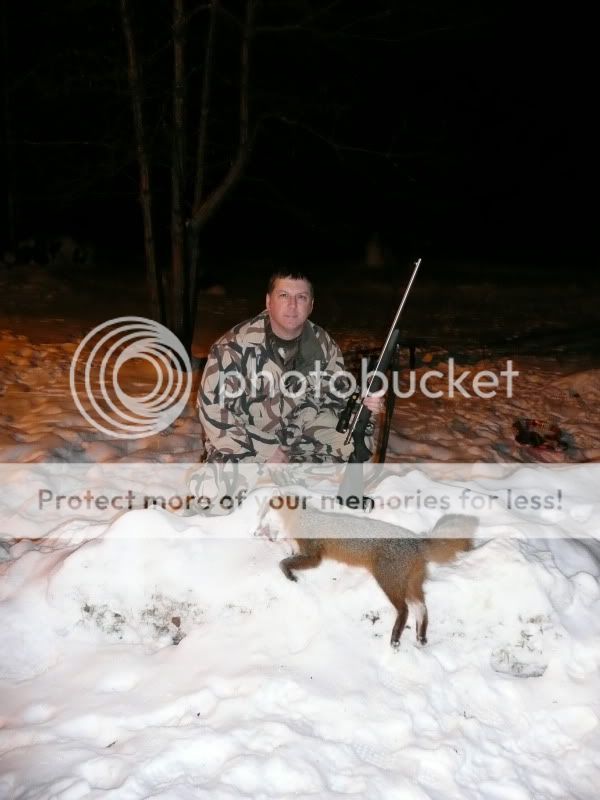
red lens or no?

LOL!!! Didnt want to get you all upset catman2. I know what works and to tell a new hunter he has to use a red lense is bad advise. I feel bad for new hunters that get poor advise when they dont know any better. I never said red lights wouldnt work but when I use a white light night after night on very pressured and educated coyotes and they come right to the truck and have cats come in feet from the truck while being burned down by a white then I think I will stick with it. All it really boils down to is whatever works for you then stick with it.
 
Originally Posted By: rgabbardit depends on the type of bulb,led bulbs dont bother them,incandescent style you need a filter, Could somebody please explain and verify this to me. I've heard it before but what is the difference to the critter?
 
It is a proven fact that animals with nocturnal vision can not see light on the red end of the spectrum, remember how it goes

Red
Orange
Yellow

Green

Blue
Indigo
Violet

A 100,000 Candler power light with a red lens will light up an animals eyes like a Christmas Tree at 200 yards, when you get on the animal with the scope, verify target.

You would not catch me hunting with a 2 Million CP spot light unless I was reaching out over the vast expanse of a Nevada Dessert.

I used a 35,000 CP with a red lens on it hunting in tight spots were visability was 75 yards and less...they don't spook with the light intensity.

Most guys today are using way too much light.
 
Nope, wrong. Nowhere did I say you 'have to use' a red light
to go night hunting as I've killed most all coons' and some bonus fox headlighting as a kid with a head mounted white light. Even the Burhnam Bros., one of the the first, if not THE first, to introduce varmint calls, used a white light BEFORE the advent of red lenses with the advise to use the peripheral lower edge of the beam to pick up eyes and not shine directly at the animal because a(white)light can spook a predator. Before that hunters used a kerosene lantern, before that a torch. However, I wouldn't tell a new hunter to use any of those old tactics when calling coyotes or cats at night anymore than tell them to go out with a rubber band, harmonica type call. I said for 'serious' predator hunting, hunting predators that have evolved with the tricks and equipment of those hunting them, should use a red light, just as I would advise wearing camo in the daylight intstead of Levi's even though I called and killed greys as a kid wearing those too.
 
Last edited:
We can go back and forth on this for months. I have confidence in both red and white lights but when i know it works and know how to make it work im going with white! For you guys that havnt ever used a white light i would recommend trying it. You might decide it dont work for you but dont count it out! In my experinces it is much easier to shoot at night with a white light and makes for a lot less uneducated animals after a missed shot...Ronnie
 
Last edited:
oh yeah!!! Catman2
We need to get together and hunt sometime!!! We can both leave our lights at home and just hunt by the moon light. Just kidding with you man. Good luck hunting this year!!!
 
Last edited:
Red lights will work! White lights will work! This could go on forever, lol! My only two questions to the theory that predators can't see the red end of the spectrum is this. If this theory were true, why would a coyote ever spook with a red light? Number 2. If they cant see a "color" , they must see something if one will spook from a red light. Inother words, they may not neccisarily be able to distinguish what color tone they are actually looking at, but they sure as heck can see "a" light. That red may appear blue or yellow, but they still see a light. We hunted with red filters on our lights for years and killed numerous coyotes. Over that same period we also had several dogs stop dead in their tracks the second we hit them with a red spotlight. They saw something! This is the reason I have a hard time buying into the idea that they cant see a red light, it's due to personal experiences. When we took a step and decided deminish our light output when we initially hit a predator, or response to kill ratio went up immediatley. We first did it with the red and then gratuated to no filter at all and it worked far better both ways. We have seen absoultely no difference with the red vs. white at all. If anything, using the unfiltered lights with a dimmer control has probably increased the number of animals we have been able to kill in the past 3 years. This is not hypothetical, these are proven facts. I am open for imput on this issue, but not interested in being part of any arguing. Thanks chris
 
I can step out on the deck right now with a white Mag-light and shine coons feeding below the deer feeder in the yard
and they will all freeze and stare at me. I can do the same with a red lens and they don't even stop eating, they'll look at me because they hear the screen door open but then go back to eating, unaware there's a light on them.
 
Last edited:
LOL!!!!!Them coons will get me everytime! Ok guys no more questions about lights. It has been proven tonight by coons under a deer feeder in the yard! Finally everyone has their answers! Keep them red lights shinning. Im going to stick with my white light though. Good luck guys. Its all personal opinion anyway!!!Ronnie
 
I will post a trailor clip of our up coming video in the next few days that will probably cause a few guys to start to question a few things, namely if those guys can do it, then why cant I give it a try. If you have questions about how you can use a light without a filter now the you will really be scratching your head trying to figure some of the madness we have managed to get for you guys this year. I would not reccomend attempting to "ever" put as much light as you will see us using on a predator, lol. Every animal you will see was killed with more light that has ever been seen on a predator hunting dvd and it was strictly for the benifit of the veiwers and the video. Hunters can use the methods we use on our videos in a downscaled mannor and it will blow their mind. These arent stunt predators, lol they are the real deal! I am a very openminded person and have learned that the second I think I have seen it all, someone always comes along and shows me something new.
 
Originally Posted By: Ultimate PredatorI will post a trailor clip of our up coming video in the next few days that will probably cause a few guys to start to question a few things, namely if those guys can do it, then why cant I give it a try. If you have questions about how you can use a light without a filter now the you will really be scratching your head trying to figure some of the madness we have managed to get for you guys this year. I would not reccomend attempting to "ever" put as much light as you will see us using on a predator, lol. Every animal you will see was killed with more light that has ever been seen on a predator hunting dvd and it was strictly for the benifit of the veiwers and the video. Hunters can use the methods we use on our videos in a downscaled mannor and it will blow their mind. These arent stunt predators, lol they are the real deal! I am a very openminded person and have learned that the second I think I have seen it all, someone always comes along and shows me something new.

I'm always up for new tricks. I know you can 'freeze a deer in the headlights' and
overwhelm most fox with a strong light as they don't know whether to [beeep] or go blind but I gave up hunting yotes at night using a white, seal beam because they would hang up two, three hundred yards out and sit down. I had a pack of yotes' in the cedars below the deck screeching and howling one night awhile back killing a litter of fox kits that we fed but as soon as I shined a white light they were gone, no eyes, nothing. A week later they came back and I had a new red lens on the Surefire mounted on my AR and the brush lit up with red eyes. I put the Aimpoint red-dot between one pair and boom, one fox killing yote' DRT.
 
Catman2, when you have used the white light, how have you been running it? Are you using a dimmer on you white light and if so are how much are you dimming your light source while you are shining? Another thing we have experienced is coyotes just spotlighted and coyotes responding to a call will act differently when hit with a spotlight often times, red or white. I would like to help figure out why have have had problems with the white and can tell you without hesitation if you have been hitting every animal with 100 percent of your lights capability then that is your biggest problem. If you are forming your opinion without a dimmer in the mix, this is the underlying factor that hasnt been discussed. I would like to figure out a way to help broden your views for night hunting, so if you would answer these few questions for me. Dimmer yes or no? What type of light have are you using LED or Halogen, and finaly, are the animals you are spotlighting called or just spotlighted? Let me know thanks Chris
 
Chris, we used a sealed beam off a 12v from a high rack hunting buggy last time I used one. Actually we were hog hunting patures and fields and brought along some calls.
We'd get eyes along the mesquite brush line 250-300yds out
but nothing would settle down or come closer. No dimmer was used. No moon, winds were crossing. I was running the light and kept it on full time making sure to keep the center of the beam above the tree line.
 
Ok, cool. When you utilize a dimmer control, you can adjust your light to appx. 20% of the lights full compacity to do your scanning with. "This is the key"!! If you try a regular 12 volt spotlight without it , they will bug out or hang up 99 percent of the time and it wont work. When you take a light and filter it with a lense, essentially what you have done is deminished the beams overall intensity ultimately putting less light on the animal when you initially hit them with it. The dimmer is basiclly your filter, the only difference is the dimmer can deminish your light output far more than a filter ever could. Heck you can turn it almost off to shine with. The dimmed light is far easier for a predator to look into than the filtered light. Plus you have the full shooting capability of you spotlight rite at your fingertips when you need it. When our lights are dimmed, they are just bright enough to just pick up eyes and know a predator is there and thats all, because thats all we need until we get them were we want them for the shot. We do this about 4 to 5 nights a week and it works trust me! This will not work without the dimmer, not for you, not for me and not for anyone who wants to be successful. Hope this helps you!!
 
Any 12 volt spotlight ran with an in line 12volt dimmer control.The dimmer we use is the light force BPS control. You can get them from AP at allpredatorcalls.com. The light we use is a 100 watt halogen spotlight made by magnalight. www.magnalight.com is their site. You will want to look at the spot/flood combo. The light looks very similar to a light force. The light force 140 or 170 will work as well with this application. Led technology will not work with a dimmer because it completely different than a halogen bulb.When you turn down the juice on a halogen bulb it will lower the brightness of it which is obviously what you want. Led is basiclly a high speed pulsating light and turning down the power to it will only make it pulse like a strobe light and you definately dont want that, lol. You will notice if you try this that the animals eyes will appear in color very similar to what you are used to normally seeing with a red light. They wont be that bright blueish tone you have probaly seen recently when you have use the white light, but they will be redish almost orange in color with the same light just on a lower power. Anytime you shine and pikc up eyes and they appear blue or white then you are running your light too bright. You want to see orange or red, just not blue or white. As you adjust the power of your spotlight the color tone of it will change as well as the color of the animals eyes. This will let you know how much light the animal is having to deal with. Once you do it a time or two, you will better understand what I am talking about. Just let the animal tell what they want. Trust me if its too bright they will let you know. The great thing about it is if you get one to hang up and act like the light is bothering them you can turn that thing almost off just to be able still see them and try to coax them a little closer. Having total control over your spotlight be it red, orange, blue, or white is a very powerful tool to have for every different situation. There is no "one light fits all situation", so give yourself the ability to manipulate your light to each specific animals attitude toward coming to your call. If you get a hard charger, you will find that you can get away with a lot more light to help your shooter. Shy or catious dogs have to be "worked" often times wont take as much light as the one with his toung hang'n out and eyes just a bouncing coming to the call, lol. Thats when the light guys experince with a light is critical because it can make or break a stand. As far as our power source, we have the luxury of being able to hunt from a truck here in texas which allows us to carry as many 12 batteries as we need, so we actually have 3 12 volt deep cycle batteries running parralell putting out 12 volts. We probably use more light than most guys which is the reason for so many batteries, but for just hunting I would reccomend having two batteries putting out you 12 volts just in case one of them runs down or goes bad you still have at least one good bettery. We have ours under my rack so they are out of the way and we will never run out of juice with our setup.
 
I think you all missed what I was getting at. I've seen several post claim that white incandescent light spooks animals but white LED light doesn't. Can someone even try to explain this?????
 
[quote="...we have the luxury of being able to hunt from a truck..." [/quote]
Chris,
Could you go into more detail on that? Whats your technique to mask hunting from a truck? Do you park/setup on the edge of fields.
Reason I'm asking is we have one 200 acre field on our 700 acre property that a central set should cover, the rest is mostly cedar with a winding gravel road some five miles long through it. Along it there are some longer stretches or shooting lanes 200 yds. long. I'd like to be able to night hunt with a stronger 12v light so there inlies a vehichle. We have a little 4x4 Mule we use for ranch chores that our hands use when clearing brush and after five years the varmints should be used to hearing it during the day but the little booger is louder than say my shiny diesel truck plus standing in the bed of my truck a shooter would be higher. When I was in college in Big Bend, hunting from trucks was our norm but that country is infinetlely bigger and seeing a yote' coming in from 300 yds out was common. Here in the Hill Country I've called in plenty of greys to ten yds. at night from a truck but we're talking about coyotes and possibly bobcats now. My question is, in this brushier property of Central Texas do you think just being quite I could get away with hunting from my truck? We also have one 1,000 yd. sendero that I have a deer blind on bordering a 6,000 acre ranch thats not hunted thats even had some lion sightings on and I'd love to be able to night hunt that with a stronger light.
 
Last edited:
Nebraske Coyote Hunter, the magnalight we use isn't a cordless light. On their website the one you need to look at is the 100 wat halogen spot/flood combo with the 12 vt plug and cord.

Catman2, as far as any kind of technique for being able to hunt from a truck the best advice I could give you is to keep your light going all the time. If you already do this than you are on the rite track. You had mentioned you were worried about the noise level of your pickup in a smaller place, well the only thing I can say is just get in as quiet as possible, dont slam doors, dont talk, and preferrably use the quietest truck you have access to. 90 percent of our country is composed of small plots of land rarely bigger than 500 acres per spot. Some are as small as 50 acres. We get told all the time that the coyotes in my ares are different then those west Texas coyotes you guys are hunting, lol. Well that couldnt be further from reality, cause the majority of the areas we hunt are very pressured and have other hunters calling all the time. There have been several refrences to the dogs in west Texas and all of them are true no doubt, but the rules of west Texas are a complete 180 from the terrain and coyotes we hunt around here and the tecniques I have mentioned in this thread have worked far better than anything else we have used in the past. The point I'm really trying to make is, if we can get it to work around here, than it will work anywere! Try the truck. Get in the bed and have you a light guy and a shotgun and a rifle and a pair of shootin sticks and your set. Also put two batteries back there and hook them up in parralell, pos to pos, negative to negative, and use the pos of one battery and the negative of the other battery to hook up you lead wires to your spotlight and you will still have 12 volts. This will draw less amps per battery giving you as much juice as you will ever need.Plus the dimmer will be on appx. 20 percent compacity about 95 percent of the time so this will greatly increase the lifespan of your battery as well. You should never run out of power this way. Give it a try and if you need anymore help dont hesitate to ask. Good luck and good huntn chris.

 
Last edited:
Back
Top