limbhanger10
Well-known member
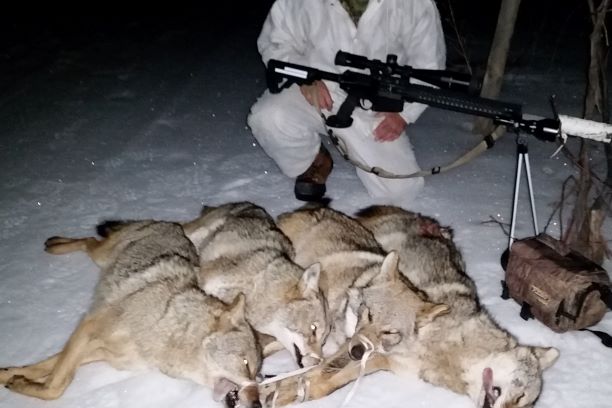
I shoot 80 PSPs out of my .243.
I have about 2000 coyotes to shoot before I have to get into another bullet.
I have about 2000 coyotes to shoot before I have to get into another bullet.


What speed are you getting with that bullet?Hello Predator masters
First time post long time reader.
I recently got into the night scene with a thermal monocular and nv scope with IR light. Been running it on my 223 gas gun and been getting lots of runners… 53gr vmax
Shots usually 100-400 yards.
I have a 6.5 cm I have been considering switching to, however I do my best to save pelts. 100gr eld vt
So what do you think? Light and fast or the slower heavy hitter?
I hunt the high line of Montana
Thanks

Funny I did a calculation of RPM which is simply based on Velocity and the rate of twist which is not caliber specificTwist rate on the varmint bullets doesn't just matter for accuracy/bullet stability. It also contributes to terminal performance (penetration/wound channel). Alot of the gas guns are 1/8 twist. With lighter fast bullets the higher rotation rate has been less consistent entry wounds(in my experience). Currently I'm running the old 52 gr Amax in my 1/12 twist 223, drt on almost all the coyote so far. When I ran them in a 1/8 223 they were 50/50 drt.
Velocity | RPM 1-7.5 ROT | RPM 1-12 ROT | RPM 1-14 ROT |
4000 | 384,000 | 240,000 | 205,714 |
3900 | 374,400 | 234,000 | 200,571 |
3800 | 364,800 | 228,000 | 195,429 |
3700 | 355,200 | 222,000 | 190,286 |
3600 | 345,600 | 216,000 | 185,143 |
3500 | 336,000 | 210,000 | 180,000 |
3400 | 326,400 | 204,000 | 174,857 |
3300 | 316,800 | 198,000 | 169,714 |
3200 | 307,200 | 192,000 | 164,571 |
3100 | 297,600 | 186,000 | 159,429 |
3000 | 288,000 | 180,000 | 154,286 |
I have very few runners but then ive turned down shots. A 30 gr bullet traveling at 3800 fps is lethal. I just hate the thought of a coyote running off wounded and speeding four or five days with a painful lingering death. Plus I pride myself in how good my pelts look. If im not almost certain that I can make a clean kill I pass. I call in enough coyotes. We all know when to pass and when we know a sure thing17remhunter - I also respect and admire coyotes/predators… which is why I don’t want to track/sometimes lose runners. Better to put them down quickly and possibly need to sew than to wound. Just my thoughts
Thanks SGT. You gave me a lot to think about!Funny I did a calculation of RPM which is simply based on Velocity and the rate of twist which is not caliber specific
(ROT = Rate of twist express in 1 (turn)- inches of barrel, only spelled out for those whom are not familar with it. Commonly referred to as twist or twist rate)
Now if one actually studies bullet flight.
Precession plays in, and well as jacket thickness related to centrifugal forces with a "cup and core" bullet design. Depending on the bullet construction and design there is a point that the factors RPM, Velocity, Centrifugal forces plays works to cause a failure. Be that by "blowing up" (either on target, or in flight) or simply by the precession takes over and causes the dispersion to increase (accuracy failure). The further the distance to the target the greater the effect of precession on bullet, this explains to a degree why a fast twist AR shoot a 55gr or less fine at 200 yards or less but beyond that it goes to crap. Thin jackets such as actual varmint bullets (usually targeted at the PD Groundhogs shooters) vs FMJ or "normal" hunting bullets, have a tendency come apart easily as described above.
I know many will ask so what's the answer? simply put it's up to the exact bullet some do well with "excessive" spin some not so much. The other factor according to Frank Green of Bartlein barrels which he points to as a theory, is the land and groove geometry. Example 5R is stated to produce less of a burr on the tail of a bullet once it leave the muzzle, while others discount this. Personally I have a tendency to agree with Mr. Green I am a fan of the 5R (5 groove radius) rifling, but it doesn't mean any other rifling geometry is wrong. If it shoots to your preference then it's fine).
Bottom line is there is a sweet spot that they like to spin at producing good terminal effects and accuracy. It's based on the materials used and design. This doesn't discount bullet alignment or even "Jump" or lack of. So there isn't a simple straight forward answer. The reamer and the barrels concentricity is just as important.
The fact that so many variable are involved is what makes the question of "why" this X bullet is not accurate or has the terminal effect one desires to answer.
Are their rules of thumbs to go by? Sure, but be prepared for exceptions.
For DRT sometimes the answer is simply slow down the velocity slightly to achieve a better result. Or switch to slightly more robust design. That can mean manufacturer or just a slightly heavy bullet (usually but not always means a slightly thicker jacket)
 sierrabullets.com

I know many will ask so what's the answer? simply put it's up to the exact bullet some do well with "excessive" spin some not so much. The other factor according to Frank Green of Bartlein barrels which he points to as a theory, is the land and groove geometry. Example 5R is stated to produce less of a burr on the tail of a bullet once it leave the muzzle, while others discount this.



An 80 gr eldx at 3150 fps out of a 22 creed changes that.I use Hornady Vmax 55 grain .223 with my AR15. I get runners and spinners all the time.
Every single this happens on a 35 lb coyote, it reinforces the reason why a 12 gauge shotgun with 00 buck in my home defense gun.