

Byron South
New member
I was very recently asked for some advise on scouting and calling bobcats. I thought I would bring my reply in here for others to view and add to. I love calling them bobcats.
Scouting for bobcats is tough. Being that they are very reclusive and mostly nocturnal combined with the fact that they like lots of cover makes it tough to see them at all. Also they are very light on their feet and don't leave good tracks unless the ground is very soft. In scouting for bobcats I just basically look for areas that typically holds them. Thickets, creek bottoms, and old cut over timber are prime places. They also like to hang out around old abandoned houses, barns, brush piles, and turkey roost.
When calling bobcats there are a few things to keep in mind that will also up your odds. Bobcats like to stalk the source of the sound. They need cover to do this. If it is too open they easily hang up peering through the brush and many times will spot you before you spot them. In calling bobcats I like to use electronics for two reasons. 1. It makes them put the sneak on the caller and makes them easier to spot, as they aren't keeping the cover between you and him, as he would be if you were using a hand call. 2. Bobcats are notorious for hanging up, or quitting a call. With electronics you can play the sound continuously. This helps keep them focused and coming better. The volume should be medium to low as bobcats don't typically come far to a call and often times you don't know when they are very close.
I have called bobcats with just about every kind of distress sound imaginable but the best and most reliable sounds are the busier, higher pitched sounds like a woodpecker or other bird sounds. Also on the top of the list is the busier cottontail sounds. If your calling with a hand call, keep it busy and if your calling with electronics just let it play.
Don't expect to see a bobcat coming from way out there. They typically just appear as they are masters at stalking and instinctually know how to use cover to their advantage. They also don't get in much of a hurry sometimes, so be patient. On more occasions than I would like to admit I have gotten up from a stand only to have a bobcat sitting very close watching the show. My advice is, when you do get up, do so very slowly and really scan the cover. They often times just sit there if you don't move real fast. It's almost like they know you can't see them if they remain still. Once your eyes meet though be ready as they will often turn and leave.
Decoys are also very effective and act as a visual stimulate to encourage a bobcats approach. It doesn't take much though. A simple feather or two hanging by a string is often used with great results, as are some of the commercial decoys.
Listen to your surroundings when calling in tighter cover also. Blue Jays, Mocking birds, squirrels and other small vocal critters often get very agitated when they spot a bobcat. Often times you will be forewarned of a bobcats approach by these critters chirping or barking. You can many times track his progress even though you can't see him by these animals’ warnings and agitated state. Blues Jays and mocking birds often follow them in keeping them in sight and making lots of noise. Just last week Rod Haydel and I were hunting together when a squirrel gave away a bobcat. We were facing the wrong way but the warning barks from the squirrel gave us time to reposition and we called the bobcat to about 25 yards.
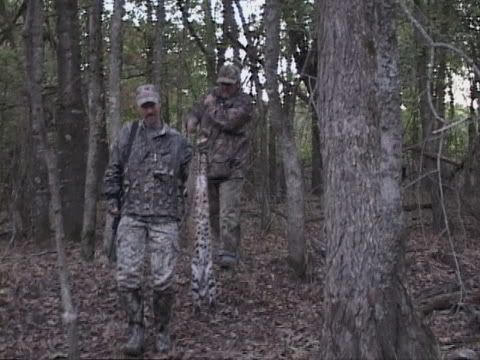
In good cat country I would plan on spending 20-30 minutes on stand with the last five or so in total silence. Bobcats typically don't come far to the call and will usually show in the first 10 or so, but be ready as they can also be there very fast. The extra time on stand is good because often times they slow down the closer they get and will often hang around or hang up even if your busted and don't know it. The extra time allows you the chance he may get careless and let his guard down thinking you are not a threat (They aren't near as spooky as a coyote).
A bobcat sense of smell is also not near as good as a coyotes and they know this. However, I have had them show adverse reactions to my scent on a few occasions.
Basics for cats.
1. Call in tighter cover.
2. Use busy constant higher pitched sounds.
3. Decoy’s are a plus.
4. Listen to your surroundings.
5. Be patience and steadily scan for the slightest movement.
6. When you get up after calling move slow and really get a good look before you leave.
Hope this helps.
Good luck with the bobcats.
Byron
Scouting for bobcats is tough. Being that they are very reclusive and mostly nocturnal combined with the fact that they like lots of cover makes it tough to see them at all. Also they are very light on their feet and don't leave good tracks unless the ground is very soft. In scouting for bobcats I just basically look for areas that typically holds them. Thickets, creek bottoms, and old cut over timber are prime places. They also like to hang out around old abandoned houses, barns, brush piles, and turkey roost.
When calling bobcats there are a few things to keep in mind that will also up your odds. Bobcats like to stalk the source of the sound. They need cover to do this. If it is too open they easily hang up peering through the brush and many times will spot you before you spot them. In calling bobcats I like to use electronics for two reasons. 1. It makes them put the sneak on the caller and makes them easier to spot, as they aren't keeping the cover between you and him, as he would be if you were using a hand call. 2. Bobcats are notorious for hanging up, or quitting a call. With electronics you can play the sound continuously. This helps keep them focused and coming better. The volume should be medium to low as bobcats don't typically come far to a call and often times you don't know when they are very close.
I have called bobcats with just about every kind of distress sound imaginable but the best and most reliable sounds are the busier, higher pitched sounds like a woodpecker or other bird sounds. Also on the top of the list is the busier cottontail sounds. If your calling with a hand call, keep it busy and if your calling with electronics just let it play.
Don't expect to see a bobcat coming from way out there. They typically just appear as they are masters at stalking and instinctually know how to use cover to their advantage. They also don't get in much of a hurry sometimes, so be patient. On more occasions than I would like to admit I have gotten up from a stand only to have a bobcat sitting very close watching the show. My advice is, when you do get up, do so very slowly and really scan the cover. They often times just sit there if you don't move real fast. It's almost like they know you can't see them if they remain still. Once your eyes meet though be ready as they will often turn and leave.
Decoys are also very effective and act as a visual stimulate to encourage a bobcats approach. It doesn't take much though. A simple feather or two hanging by a string is often used with great results, as are some of the commercial decoys.
Listen to your surroundings when calling in tighter cover also. Blue Jays, Mocking birds, squirrels and other small vocal critters often get very agitated when they spot a bobcat. Often times you will be forewarned of a bobcats approach by these critters chirping or barking. You can many times track his progress even though you can't see him by these animals’ warnings and agitated state. Blues Jays and mocking birds often follow them in keeping them in sight and making lots of noise. Just last week Rod Haydel and I were hunting together when a squirrel gave away a bobcat. We were facing the wrong way but the warning barks from the squirrel gave us time to reposition and we called the bobcat to about 25 yards.
In good cat country I would plan on spending 20-30 minutes on stand with the last five or so in total silence. Bobcats typically don't come far to the call and will usually show in the first 10 or so, but be ready as they can also be there very fast. The extra time on stand is good because often times they slow down the closer they get and will often hang around or hang up even if your busted and don't know it. The extra time allows you the chance he may get careless and let his guard down thinking you are not a threat (They aren't near as spooky as a coyote).
A bobcat sense of smell is also not near as good as a coyotes and they know this. However, I have had them show adverse reactions to my scent on a few occasions.
Basics for cats.
1. Call in tighter cover.
2. Use busy constant higher pitched sounds.
3. Decoy’s are a plus.
4. Listen to your surroundings.
5. Be patience and steadily scan for the slightest movement.
6. When you get up after calling move slow and really get a good look before you leave.
Hope this helps.
Good luck with the bobcats.
Byron