
Which .223 Dies For AR?

Stringbean

New member
Sorry, I’m fairly new to reloading and couldn’t find any info on this topic with the search function.

Would I be better off using the small base die sets marketed for use when loading for AR’s, or would I be good with a standard full length die set? I’m assuming a neck sizer would be out of the question.

If using a small base die, what kind of life do you get out of the brass?

Thanks
 
I personally use a small base FL die on range brass the first time and then a standard 223 Full length die set from then on. I use the same small base die for prepping range/once fired brass before forming to 20P and 6x45.
 
If you are loading range pick up, use a small base die.

If you are reloading for the rifle you fired the brass from, use and standard die.

You can expect several firings from range pick up brass small base sized.

The more firing you do, the more spring back you will have. You likely have not learned about bumping brass shoulders back only a certain amount for brass life. No reason to go into the weeds now.
 
Good question, it has a lot to do with tolerances in each chamber.
Same gun model, early in the production run may be ok, while later production run with worn out chamber reamer may need SB die.
Agree with comments on range brass vs own rifle brass.
I have one 243 chamber that needs a SB die - it doesn't like some factory loads either.
 
I've loaded for .223 for over forty years, thousands and thousands of cases sized from new to range pick up and I've never had any issue using the loads in bolt guns or semi-autos.

About the only brass I can see using a small base die on would be known military surplus brass fired in a SAW.
 
Thanks for all the replies. Everything I’ll be loading will be either once fired brass from the same rifle or new brass. I’ll stick with a standard full length die.

I have a D-Tech build that I’ve had for at least 20 years and probably put less than 200 rounds through it. I’ve decided to get it out and start reloading for it. Most of my reloading equipment is 25+ years old and it hasn’t seen much use either.
 
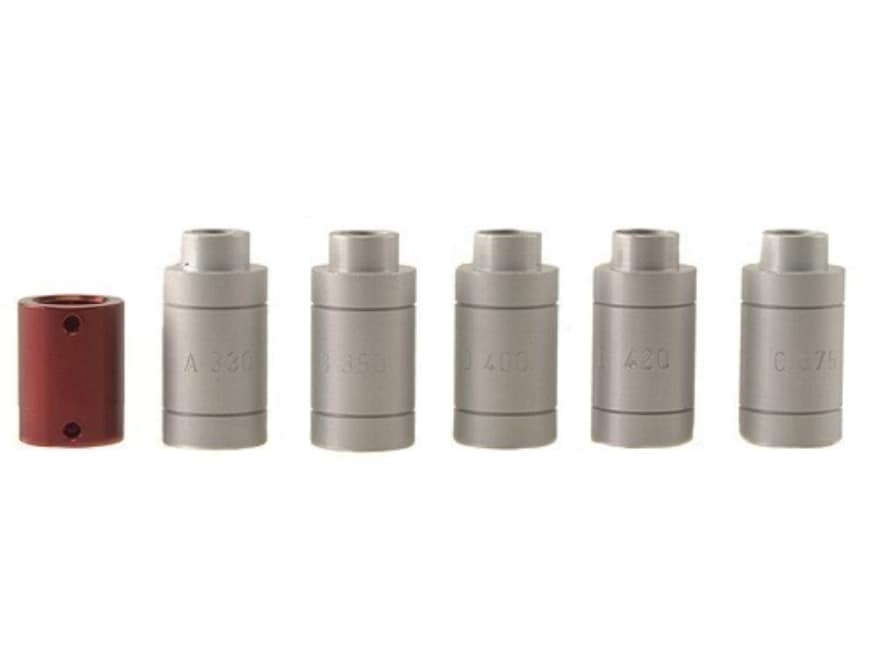
Might as well get in the weeds if your gonna dive in. One of the keys to brass life is not over working it. With these guages you can measure the fired brass from the case head to a point on the shoulder. The set has different guage bushing for different case sizes. Set sizing die dept or press cam over to only set the shoulder back enough to allow the cartridge to chamber reliably. .005" is probably a good starting point on a semi auto.
 
I use a standard RCBS .223 rem FL die for 3 AR's and 3 bolt guns, one 20p AR. I use range brass and have commercial brass designated for 1 bolt gun. With range brass I have one rule if it doesn't size and drop fit into a Lyman ammo checker, it's scrap. If you size(trim when needed) and check each case with a ammo checker you will never have a fitment issue(especially important with gas guns). A couple brands of common 223/556 range brass are heavier(about 10 grs) I do sort those out as I often use range brass on prairie dog shoots. Between heat and thicker brass pressures can increase, I don't want to damage bolts. If you start with new commercial brass, fire it only in SAAMI spec chambers( basically only your rifle(s) you should have no need for a SB die. A common issue with picking up or buying unprocessed range brass are crimped primers, you will need a tool and extra step to prep for priming. Something to consider for a new reloader. With relative cheap new 223 brass, like Starline or even a premium brass like Sig you will save time and frustration as a startup loader. Get an ammo checker and a reloading book.
Properly lubing cases and a few seconds of dwell time in the die will result in more consistent sizing.
 
@spotstalkshoot hit's it pretty much on the head ...
Small based dies "could" be useful "IF" the brass came from a Light Machine Gun such as the M249. But after the first sizing it would prove to be best to use a regular FL die. Many went down this road years and years ago. This lead a lot to make claims that SB dies simply worked the brass too much when used as the ONLY dies to size the cases.
Now there will be a few whom will argue with what I have stated. No problem they have witnessed what I haven't, or have a differing view point. Doesn't make either side of the argument right or wrong. it's just a method.

I would advise to stick with what @spotstalkshoot stated. .... It is sage advice.
Personally I only have a FL die for that caliber. Yes I sort out the mil handstamps from commercial. I don't weigh the cases ever not that there is any fault to doing so. But found if I simply load the Military head stamps at least a grain lower it works for me.
 
Last edited:
My best range brass(free) comes from club carbine classes, all semi-auto and most classes don't allow reloaded ammo. So all once fired, but as noted you may(likely with fmj ammo) have to remove primer crimp. And check headstamps for IMI and other heavy case brass.
 
Back
Top