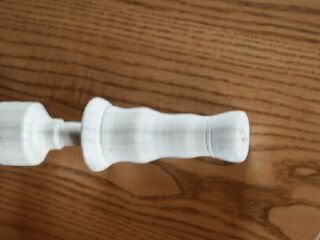
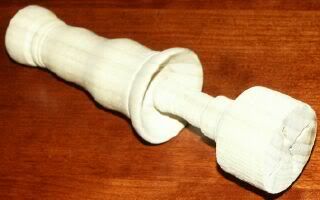
Jim,
First, that's a really nice lookin call. /ubbthreads/images/graemlins/smile.gif What kind of wood is that? (oops, pinewood, I missed that)
NVWalt makes calls using the "cut-off" method, he wrote a great how-to which you can find
here.
The biggest difference between Walt's method, and yours, is he "cuts off" the mouthpiece end
after he has done the inside of the bell.
As for the JC reeds, AP Jones (of all predator calls) once posted there are around 25 different "wintress" style reeds available through JC, and several more from the Wintress company itself.
Each has slightly different sound and characteristics, even though they all look pretty much the same.
If I were you I'd get the sample pack, there's not as many to buy, and you can figure out which one you like best.
Also that way you'll be able to make yourself a few calls, all with different sound, instead of a whole pile that all sound alike.
One last piece of advise, use the reed sleeves, they will make your life SOOOO much easier.
If you don't use them, sometimes the reed petal will get "snagged" on the grain of the wood inside the call.
Sometimes this just makes the call sound funny, but sometimes it won't make a sound at all, and in the worst case the petal can become damaged to the point of uselessness.
When you use the sleeves, you should install them from the bell end, after you have sealed the inside of the call, (with the wide end of the tapered sleeve towards the bell), and the same for the reed.
This way you can step drill, in from the bell end again, and not end up with a big hole at the mouthpiece end of the call (using the cut-off method you'll have to be very careful not to drill too deep, and lose the step). If this is too cofusing, let me know, I'll whip up a drawing and send it to you.
Have fun, making calls is a great hobby. /ubbthreads/images/graemlins/smile.gif
Krusty