I suspect there isn't just one answer. And that the reasons are somewhat localized - there may be a different combination of causes in some places than others.
The factors I believe I have witnessed in my local areas would include, disease, drought, fire/habitat degradation and not least - development. Just over all loss of habitat. I don't believe predation has been a factor at all in my area. Just the opposite, lack of jacks has been one of the factors in a dramatic decrease in coyote numbers.
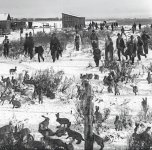
There were studies done on jacks back in the 70's when they were thick and considered a real problem for cattlemen. One of the more interesting ones I read, involved radio collared jacks and tracking their movements, over several years. It was found that for this particular population, at that particular point in time, they were actually quite migratory. In late winter they would travel as far as 25 miles from all around to gather in one spot and stay there for a couple of months. Dispersing again in the spring. Several theories as to why, including a huge orgy/sex/mating gathering, safety in numbers, etc. When jacks gather in dense numbers in deep snow they pound out trails that allow them to run top speed zigging and zagging through the brush. I've witnessed that myself hundreds of times. I have also witnessed jacks in deep snow without pounded down trails get picked off easy peasey by coyotes.
But, anyway... We call these late winter yarding areas the winter orgy grounds. If you know where they are, you can get into incredible numbers at that time of year. Even within the last couple of years, a couple of these spots have still had pretty good numbers at that time of year. I think it was two years ago we shot about fifty each in one day. In Utah.
I personally know of two of these traditional winter orgy spots that have been destroyed by development. It's just one factor among many, but I believe it's an under appreciated factor. At least in my area.
- DAA