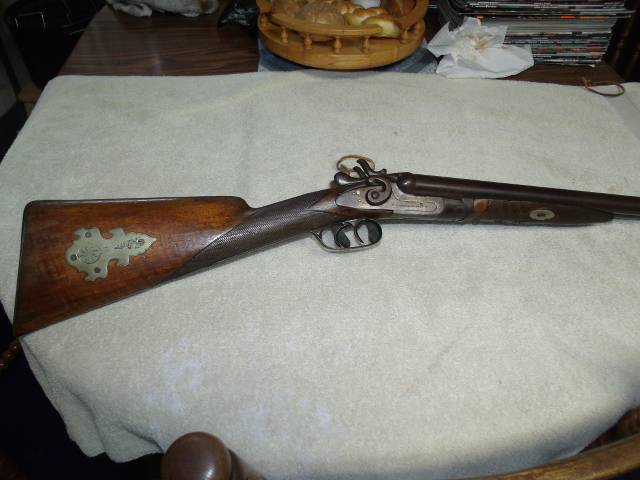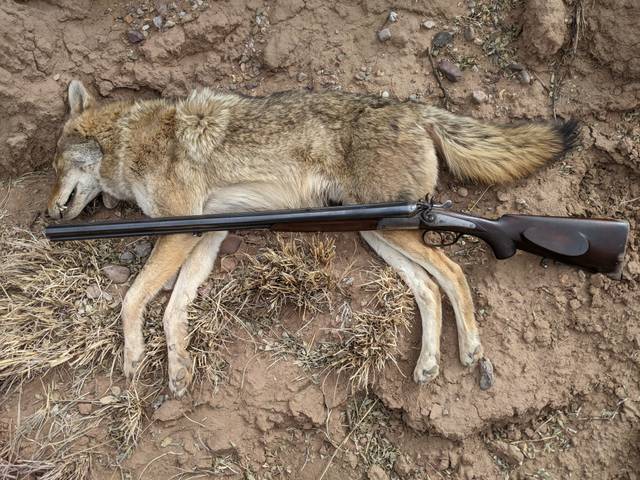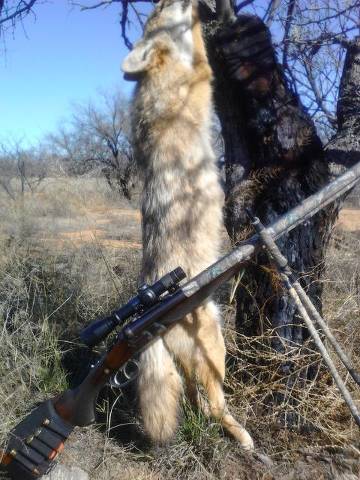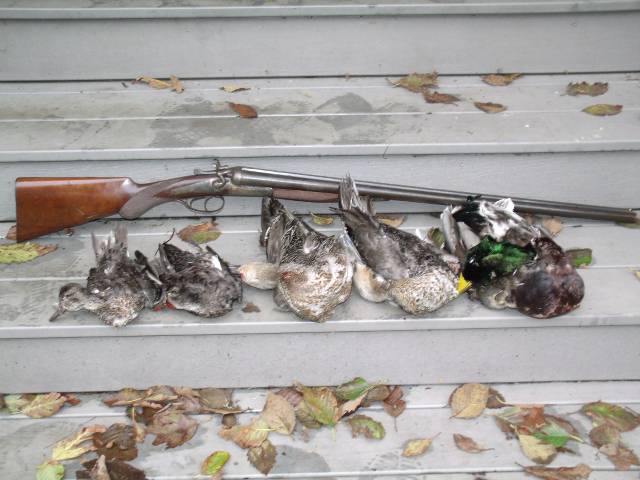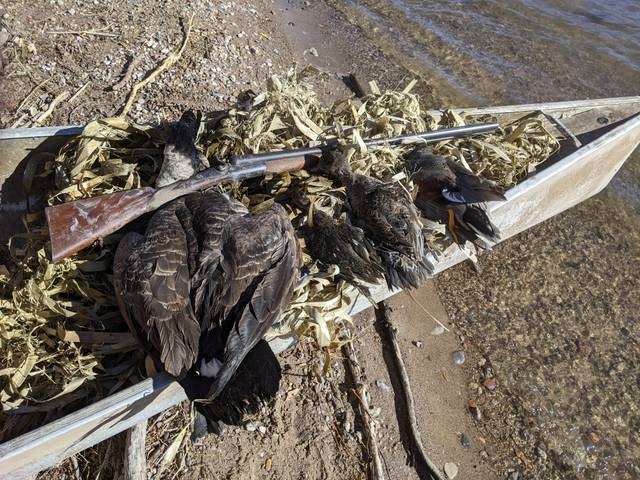

Found this thread on another forum and it brought out some really interesting posts & pictures. Let's see some of yours.
In 1950 or 51, I started hanging out at a gunsmith shop who enjoyed mentoring youngsters. Working part time after school, finances were very limited but my friend had a good eye for old (cheap) guns that provided great affordable candidates to be used in his "Gunsmithing 101" night school. My first project was a well worn Model 92 Winchester 38-40 with a shot out barrel that he rescued from the scrap bin. What an opportunity he provided for a many a youngster and I was fortunate enough to have had him for a lifelong friend. He carefully supervised replacing the barrel, reblueing and hand rubbed oil finishing of the stock, patiently stepping in on the more complicated operations. I sure miss you Werth, RIP.
Next project was restoration of a 58 cal. percussion rifled musket, civil war era. That one didn't require a lot of restoration other than lapping the barrel, which was in very good condition. Unfortunately, as someone else once said, "it was capable of minute of backstop" accuracy only, and that was on medium to large size backstops. Enjoyed playing with it a while but gave up on it before I learned that I was using approximately 3 times the normal powder charge used w/patched ball. No wonder it was inaccurate!

In 1954 my boss picked up an old 12 ga. percussion shotgun and my gunsmith friend/mentor supervised the considerable restoration as a high school graduation present! What a boss and friend! The old gun was over 100 years old, barrels were full of ant nests, nipples were corroded away, one hammer was cracked badly, but complete except for the missing ram rod, fortunately all springs were good and stock was not cracked. Once restoration was completed, it had to be proofed because I had every intention of shooting it. Tapped the nipple holes with 5/16 sae and made new nipples from machine bolt and used a dowel for the ram rod, attached a piece of copper tubing, flared on end and poured full of lead.
Range day, I was having 2nd thoughts about the proofing, but, as instructed, poured a fired 12 ga. shotgun shell full of FFFg powder in each barrel, tamped down under half a kleenex, then 1.5 oz of #6 shot w/other half of kleenex over shot wad gently pushed into place. Lashed the old gun down to an old 18 wheeler tire and placed cap on one barrel. Using 20' or so of nylon line while hiding behind the target house reluctantly pulled the string. The blast didn't sound like any 12 ga. I had ever heard as I ran from my hidey hole, fanning away the large cloud of smoke before I could even see the results, I was almost afraid of what I was about to see!
The recoil had flipped both the shotgun and the tire 180* with tire on top. Careful inspection revealed everything had held. I must admit to arguing with myself about maybe just proofing that one barrel, considering all the work and time spent on the hand rubbed oil finish, but reluctantly flipped it over and fired the other barrel, which also passed the test. Shot a lot of blackbirds and dove with the old gun over the years.


One afternoon, the whitewing doves were flying good and I made it a practice of only firing only one barrel, removing cap on the loaded barrel and reloading 2nd barrel after having many birds catch me w/both barrels empty while reloading. That way, if a floater came by, all I had to do was cap the loaded barrel and shoot. That worked very well, until it didn't. I got caught packing the powder in an empty barrel when a floater drifted by in easy range. I just left the rod in the partially loaded barrel, slapped a cap on and fired at the "gimme".
Don't know who was the most surprised, me or the bird, but I had gotten confused as to which barrel was loaded and shot the ramrod at the bird. The ramrod was tumbling end over end, making a distinctive whistling noise as it passed inches in front of the bird. He was executing some of the most admirable aeronautics even a stunt pilot would admire as he flew off into the sunset without even a ruffled feather. I swear I heard him chuckle a bit. Luckily, after looking around to see if anyone was watching, I retrieved my ramrod which was impaled in a soft furrow of the plowed field, dusted it off and was able to finish out the day.
Let's see some of the old guns you guys have played with over the years.
In 1950 or 51, I started hanging out at a gunsmith shop who enjoyed mentoring youngsters. Working part time after school, finances were very limited but my friend had a good eye for old (cheap) guns that provided great affordable candidates to be used in his "Gunsmithing 101" night school. My first project was a well worn Model 92 Winchester 38-40 with a shot out barrel that he rescued from the scrap bin. What an opportunity he provided for a many a youngster and I was fortunate enough to have had him for a lifelong friend. He carefully supervised replacing the barrel, reblueing and hand rubbed oil finishing of the stock, patiently stepping in on the more complicated operations. I sure miss you Werth, RIP.
Next project was restoration of a 58 cal. percussion rifled musket, civil war era. That one didn't require a lot of restoration other than lapping the barrel, which was in very good condition. Unfortunately, as someone else once said, "it was capable of minute of backstop" accuracy only, and that was on medium to large size backstops. Enjoyed playing with it a while but gave up on it before I learned that I was using approximately 3 times the normal powder charge used w/patched ball. No wonder it was inaccurate!
In 1954 my boss picked up an old 12 ga. percussion shotgun and my gunsmith friend/mentor supervised the considerable restoration as a high school graduation present! What a boss and friend! The old gun was over 100 years old, barrels were full of ant nests, nipples were corroded away, one hammer was cracked badly, but complete except for the missing ram rod, fortunately all springs were good and stock was not cracked. Once restoration was completed, it had to be proofed because I had every intention of shooting it. Tapped the nipple holes with 5/16 sae and made new nipples from machine bolt and used a dowel for the ram rod, attached a piece of copper tubing, flared on end and poured full of lead.
Range day, I was having 2nd thoughts about the proofing, but, as instructed, poured a fired 12 ga. shotgun shell full of FFFg powder in each barrel, tamped down under half a kleenex, then 1.5 oz of #6 shot w/other half of kleenex over shot wad gently pushed into place. Lashed the old gun down to an old 18 wheeler tire and placed cap on one barrel. Using 20' or so of nylon line while hiding behind the target house reluctantly pulled the string. The blast didn't sound like any 12 ga. I had ever heard as I ran from my hidey hole, fanning away the large cloud of smoke before I could even see the results, I was almost afraid of what I was about to see!
The recoil had flipped both the shotgun and the tire 180* with tire on top. Careful inspection revealed everything had held. I must admit to arguing with myself about maybe just proofing that one barrel, considering all the work and time spent on the hand rubbed oil finish, but reluctantly flipped it over and fired the other barrel, which also passed the test. Shot a lot of blackbirds and dove with the old gun over the years.
One afternoon, the whitewing doves were flying good and I made it a practice of only firing only one barrel, removing cap on the loaded barrel and reloading 2nd barrel after having many birds catch me w/both barrels empty while reloading. That way, if a floater came by, all I had to do was cap the loaded barrel and shoot. That worked very well, until it didn't. I got caught packing the powder in an empty barrel when a floater drifted by in easy range. I just left the rod in the partially loaded barrel, slapped a cap on and fired at the "gimme".
Don't know who was the most surprised, me or the bird, but I had gotten confused as to which barrel was loaded and shot the ramrod at the bird. The ramrod was tumbling end over end, making a distinctive whistling noise as it passed inches in front of the bird. He was executing some of the most admirable aeronautics even a stunt pilot would admire as he flew off into the sunset without even a ruffled feather. I swear I heard him chuckle a bit. Luckily, after looking around to see if anyone was watching, I retrieved my ramrod which was impaled in a soft furrow of the plowed field, dusted it off and was able to finish out the day.
Let's see some of the old guns you guys have played with over the years.